National Dish Jordan: Aseer Tamar (Recipe)
In this article
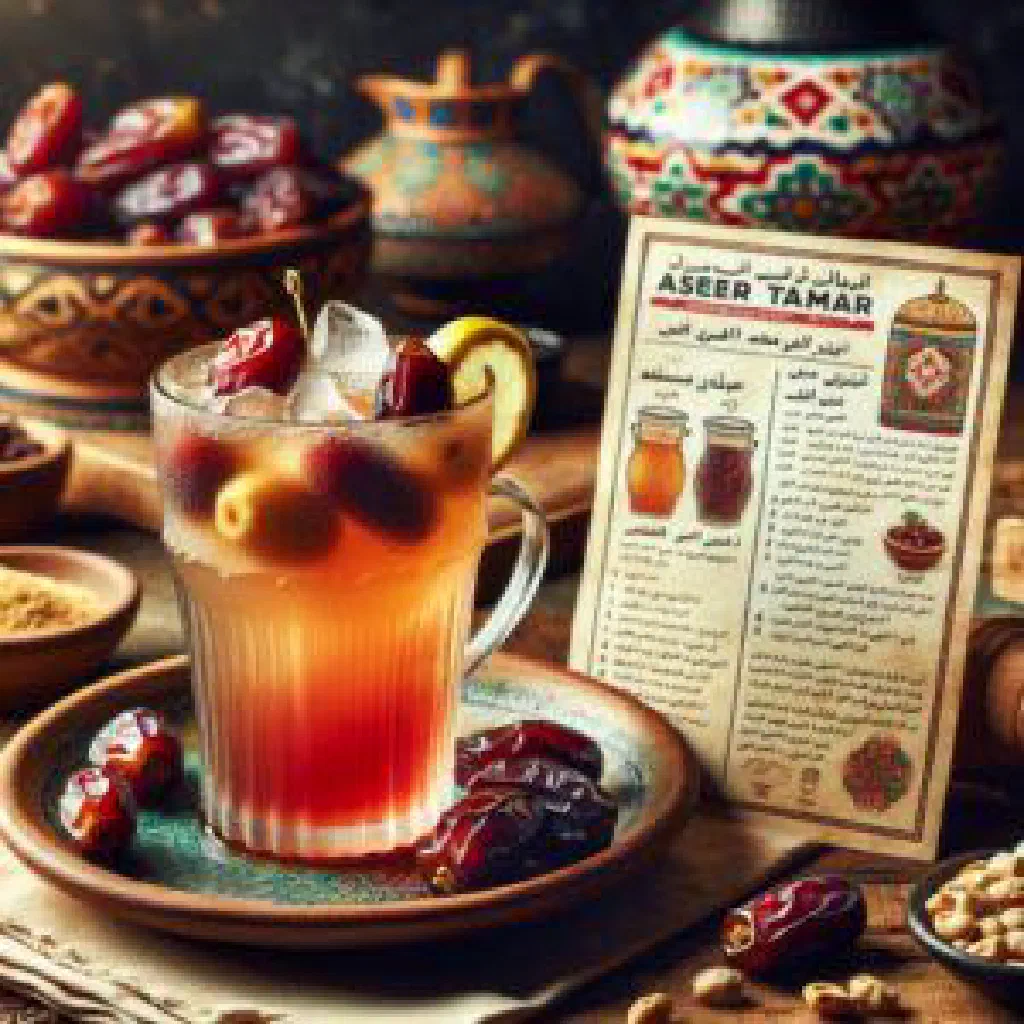
Aseer Tamar is dates blended with water — nothing else required. The result is thick, creamy and intensely sweet without a grain of added sugar, and it is what Jordanians drink first when breaking the Ramadan fast, since dates restore blood sugar faster than almost anything.
About Aseer Tamar
Aseer Tamar is one of Jordan’s favourite refreshing drinks, the name means literally “date juice”. Soft, sweet dates are blended with water into a wonderfully creamy, naturally sweetened drink, enjoyed above all during Ramadan at the breaking of the fast. Whether plain, with a squeeze of lemon or with a splash of milk, aseer tamar brings the sweetness of the desert oasis directly to the glass.
Ingredients (serves 1–2)
- 150 g soft, pitted dates (Medjool, for example)
- 500 ml cold water
- 1 tablespoon lemon juice
- Ice cubes, to serve
- Optional: 100 ml milk for a creamier version
- A pinch of cinnamon, optional
Shopping for the ingredients
Medjool dates are the best choice, large, soft and caramel-flavoured. Cheaper Deglet Nour dates work but need longer soaking. Whatever you buy, they must be soft; dry, hard dates give a thin, gritty drink even after blending.
Preparing the dish
Pit the dates and check for stray stones, which will destroy a blender. If they are at all firm, soak them in warm water for twenty minutes first. A high-powered blender gives the smoothest result; otherwise strain afterwards.
Step-by-step instructions
- Pit the dates and check carefully for stones.
- Soak in warm water for 20 minutes if they are not very soft; drain.
- Blend with 250 ml of the water until completely smooth.
- Add the remaining water and blend again.
- Strain through a fine sieve if you want it perfectly smooth.
- Stir in the lemon juice, which balances the sweetness.
- Add the milk and cinnamon if using.
- Chill thoroughly and serve over ice.
Gluten-free / lactose-free version
Made with water, aseer tamar is naturally gluten-free and lactose-free. Only the optional milk needs replacing, almond or oat milk both suit the dates well and give the same creaminess.
Tips for vegans and vegetarians
The drink is vegan when made with water or a plant milk. It contains no added sugar at all, which is worth noting: everything sweet in it comes from the fruit.
More tips and tricks
Soak firm dates before blending, or the drink stays gritty. Do not skip the lemon, pure date juice is cloying, and the acid is what makes it drinkable in quantity. And serve it very cold, since it is thick and rich.
Adapting the recipe to your taste
Cardamom or cinnamon are the traditional spices. A banana blended in makes it thicker and closer to a smoothie. Tahini added gives the popular date-and-sesame version, which is substantial enough to count as a meal.
Ingredient substitutions
Any soft date works; dried figs give a different but pleasant result. Coconut milk in place of dairy makes it richer. Orange juice can replace the lemon.
Drink pairing ideas
Aseer tamar is the drink, and at iftar it precedes the meal, traditionally the fast is broken with dates and water, of which this is simply the blended form. Nothing else is needed alongside it.
Serving and presentation ideas
Serve aseer tamar cold in tall glasses over ice, with a dusting of cinnamon and perhaps a whole date on the rim. During Ramadan it is poured into jugs and set on the table before sunset, ready for the moment the fast ends.
A bit of history
Date palms have been cultivated in the Jordan Valley for thousands of years, and dates are woven through the religious and social life of the region, the Prophet’s tradition of breaking the fast with them is why they open every iftar. Blending them into a drink is a modern convenience applied to a very old practice. It offers a genuine window onto Jordanian cuisine.
More recipe ideas
Summary: Aseer Tamar
Aseer Tamar is soft dates blended with water and sharpened with lemon, thick, creamy and sweetened by nothing but fruit. Soak firm dates first, add the lemon, and serve it ice cold.