National Dish Jordan: Knafeh (Recipe)
In this article
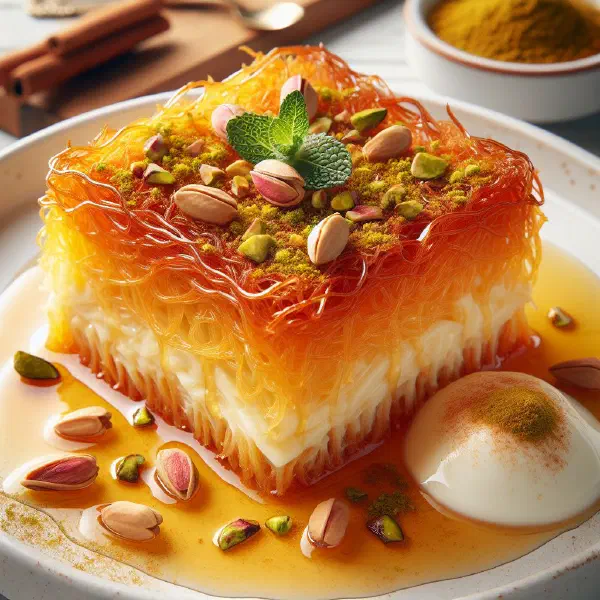
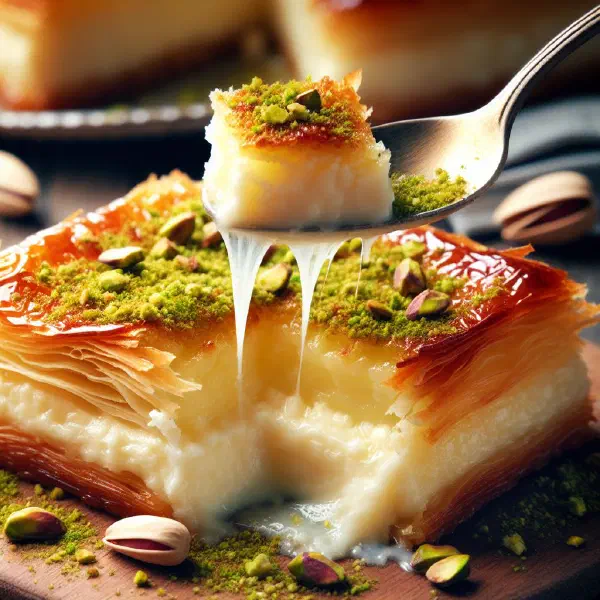
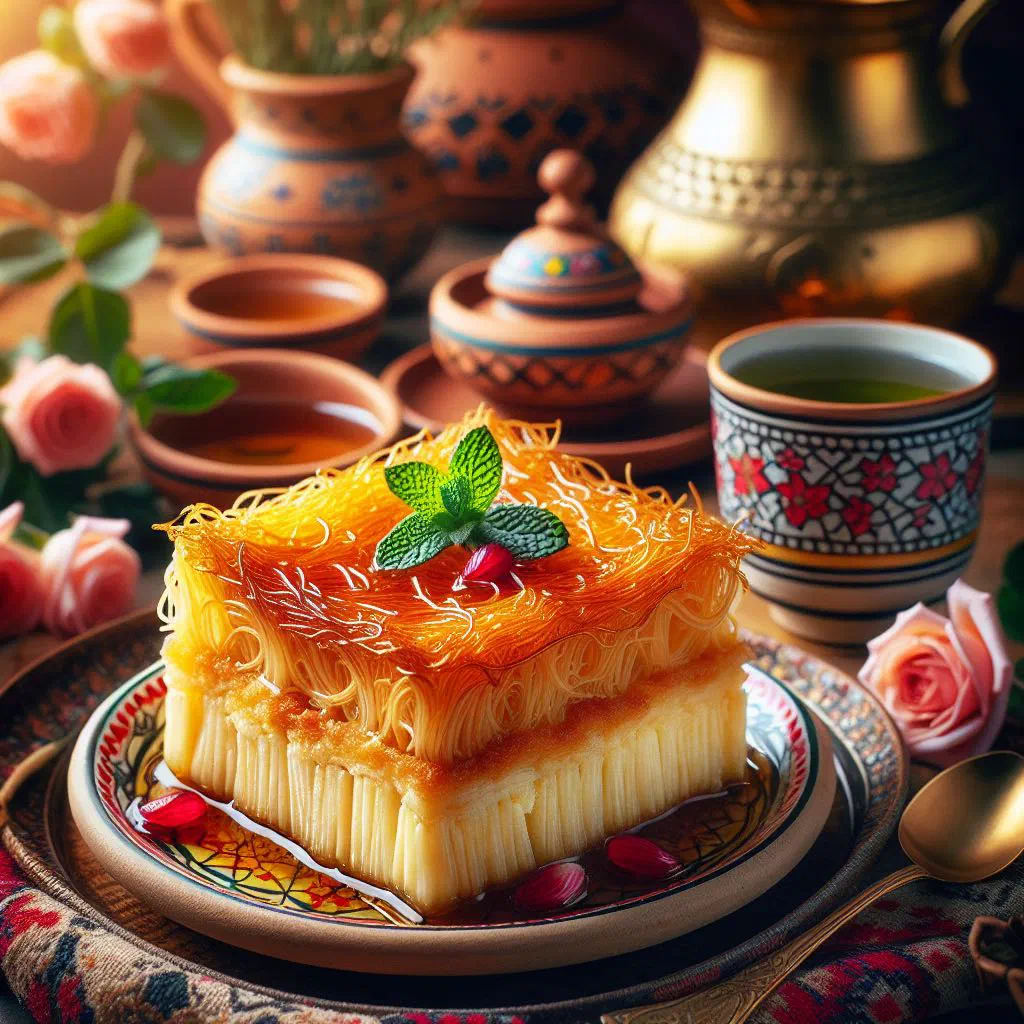
Discover Knafeh, one of Jordan’s most cherished sweets. This glorious dessert layers wispy, crisp pastry strands over a heart of molten cheese, all drenched in a fragrant sugar syrup and finished with a scatter of green pistachios. Warm, gooey and gently perfumed with rose water, it is the kind of treat that turns any gathering into a celebration. Bring the flavours of a busy Amman sweet shop straight to your own kitchen.
About Knafeh
Knafeh is far more than a dessert; it is a cultural experience. This traditional sweet has its roots in Arab cuisine and holds a particularly special place in Jordan. Made using methods passed down from one generation to the next, the art of Knafeh lies in precision and a genuine love of detail. The combination of crisp pastry strands, melted cheese and sweet syrup makes it a memorable indulgence, equally at home at family feasts and festive occasions.
Ingredients (serves 1–2)
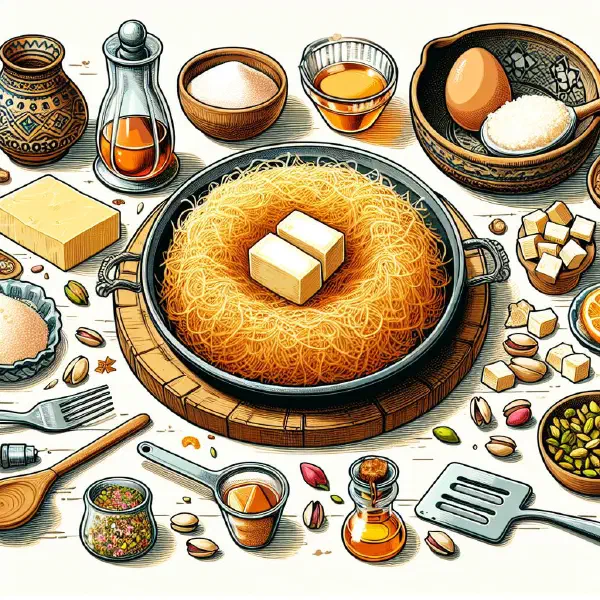
- 200 g knafeh dough (fine pastry strands)
- 100 g melting cheese (such as mozzarella)
- 50 g butter
- 100 g sugar
- 70 ml water
- 1 tsp rose water or orange blossom water
- Chopped pistachios, to decorate
Shopping for the ingredients
The ingredients for knafeh are available in most Middle Eastern or international grocery shops. When buying the knafeh dough, make sure it is fresh and well sealed to preserve its all-important crispness. The cheese can vary according to preference, but mozzarella is often recommended because it melts so well. For the syrup you will want a good-quality sugar to strike the perfect balance between sweetness and aroma. Many of these items feature across Jordanian cuisine, so they are worth keeping in the store cupboard.
Preparing the dish
To get the very best result from your knafeh, careful preparation is essential. Begin by thawing the knafeh dough if it is frozen, then tease it apart into shorter strands. Melt the butter gently in a small pan until fully liquid, then toss the dough carefully through the butter. Take care that every strand is evenly coated so you achieve that signature crisp texture once baked.
Step-by-step instructions
- Preheat the oven to 180°C.
- Grease a baking dish with a little butter.
- Spread half of the knafeh dough evenly across the base of the dish.
- Lay the melted cheese in an even layer over the pastry.
- Cover with the remaining dough strands and press down lightly.
- Bake for around 30–40 minutes, until the top is golden brown.
- Meanwhile, boil the water and sugar together to make the syrup, then stir in the rose water.
- Pour the syrup over the hot knafeh and garnish generously with chopped pistachios.
Gluten-free / lactose-free version
For a gluten-free version of knafeh you can use gluten-free flour or specialist doughs designed for gluten-free baking. Do check that every ingredient you reach for is clearly labelled gluten-free. When it comes to lactose-free options, a good lactose-free cheese that still melts well works beautifully. That way anyone with an intolerance can enjoy this delicious sweet without missing out.
Tips for vegans and vegetarians
For a vegan version of knafeh, use a plant-based cheese that is suitable for baking and melts nicely. When making the syrup, you might also swap white sugar for raw cane sugar or another plant-based sweetener to round out the flavour. Vegetarians can stick to the traditional ingredients, simply keeping an eye on the type of cheese they choose. These small adjustments let you tailor knafeh to a range of dietary needs without giving up its glorious flavour.
More tips and tricks
When it comes to the perfect knafeh, timing is everything. Keep a close watch on the oven to avoid over-browning the top. A pinch of cinnamon stirred into the sugar syrup can lend the dish an intriguing extra note. For the best possible experience, serve the knafeh lukewarm so the aromas have room to unfold and the cheese stays wonderfully soft and stretchy. Feel free to adjust the method to suit your own tastes.
Adapting the recipe to your taste
Knafeh can be adapted in countless ways to please different palates. You might fold extra fruit such as apple or berries through the cheese layer for a fresher note. For those with a serious sweet tooth, add more syrup or finish with a drizzle of honey. Experiment with different nuts, walnuts or almonds as a topping give each bite an appealing crunch, much like the nut-filled Maamoul enjoyed across the region.
Ingredient substitutions
If you cannot find knafeh dough, you can use yufka or filo pastry instead to achieve a similar crisp texture. For the syrup, alternative sweeteners such as agave nectar are worth considering for a lighter finish. You can also experiment with different cheeses to find your ideal melt and flavour, just as you would when perfecting a Kunafa Nabulsia. These swaps turn knafeh into a truly personal dish you can vary again and again.
Drink pairing ideas
A delicious knafeh pairs wonderfully with an aromatic tea, such as mint tea or a black tea spiced with cardamom. A cup of Arabic coffee is another excellent choice, its gentle bitterness balancing the sweetness of the dessert. For something refreshing, fruit juices such as pomegranate or orange nectar taste right and echo the bright colours of Middle Eastern cooking.
Serving and presentation ideas
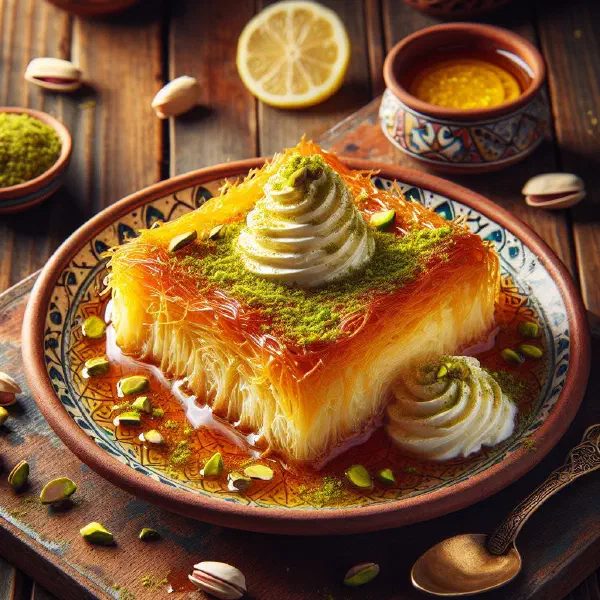
To present knafeh at its best, arrange it on a colourful serving platter and decorate with a few more chopped pistachios and a whisper of rose water. Serving it in small individual portions adds an elegant touch and encourages guests to come back for more. Decorative plates or bowls that reflect the colours and culture of the region help to create a festive atmosphere. With these small finishing details, your knafeh becomes even more inviting.
A bit of history
Knafeh has a long and fascinating history stretching back to the Islamic Golden Age. The sweet was originally made in the city of Nablus in Palestine and quickly found its way across many Arab countries, Jordan among them. To this day it remains a symbol of hospitality in Arab culture. No celebration or festival feels complete without it, and knafeh endures as a beloved dessert that has won hearts across the region, sitting proudly alongside classics like Basbousa and Atayef.
More recipe ideas
Summary: Knafeh
Knafeh is a majestic dish that appeals to the palate while charming the senses with its colour and aroma. With its simple preparation and endless scope for adaptation, it suits any occasion, whether a holiday feast or a relaxed evening with friends. The enduring popularity of knafeh shows in its many variations and in the sheer joy it brings. Do not hesitate to give this wonderful sweet a try and let its flavour work its magic.