National Dish Jordan: Zaatar Manakish (Recipe)
In this article
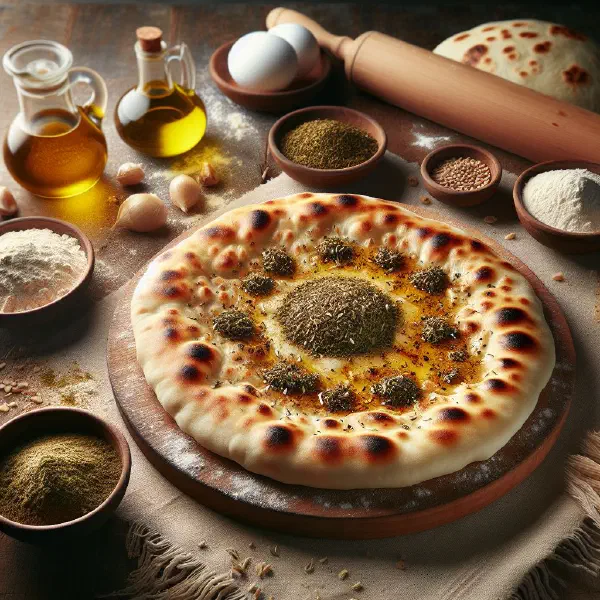
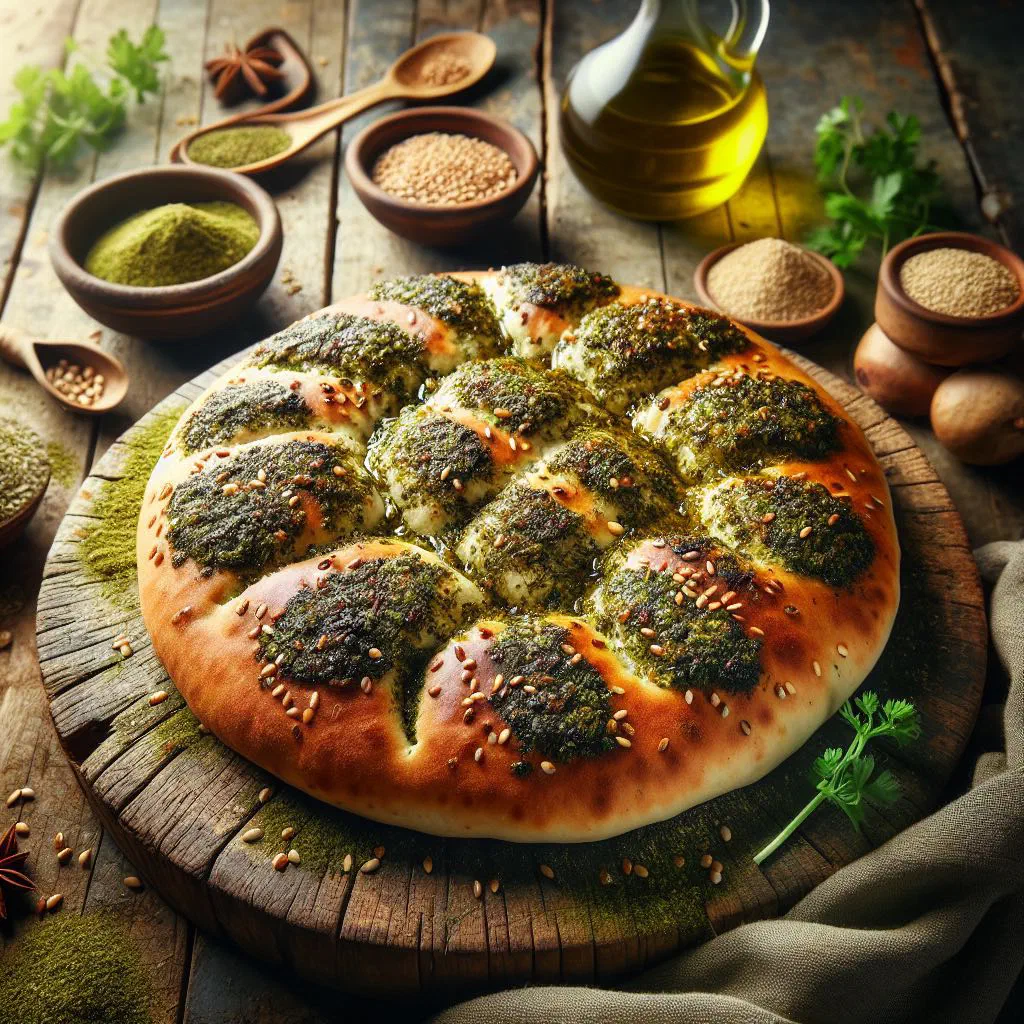
Discover Zaatar Manakish, a fragrant flatbread that captures the everyday soul of Jordanian cooking. A thin round of dough is brushed with a heady paste of zaatar and fruity olive oil, scattered with toasted sesame and baked until golden and crisp at the edges. Sold from bakeries and street corners across the country, it makes a perfect breakfast, a light lunch or a snack to share, simple, wholesome and utterly moreish.
About Zaatar Manakish
Zaatar Manakish is a traditional Jordanian flatbread topped with a distinctive blend of zaatar, olive oil and freshly toasted sesame. This combination gives the dish its unique, savoury character, a flavour that appeals to locals and visitors alike. It is often served at breakfast or as a snack, and it remains one of the best-loved street foods in Jordan. The simplicity of the ingredients makes zaatar manakish not only delicious but wonderfully accessible for any cook.
Ingredients (serves 1–2)
- 200 g plain flour
- 100 ml water
- 1 teaspoon salt
- 4 tablespoons zaatar
- 3 tablespoons olive oil
- 2 tablespoons sesame seeds
Shopping for the ingredients
To find fresh, good-quality ingredients for zaatar manakish, head to a local food market or an Arabic grocery. Zaatar is a special spice blend, usually made from a combination of thyme, oregano and other herbs, and it is well worth seeking out the real thing. The olive oil should be of good quality too, as it noticeably deepens the flavour of the dish. Look for fresh sesame seeds to achieve the best possible texture and aroma. Many of these staples also appear in a classic Zeit Wa Zaatar breakfast spread.
Preparing the dish
Preparing zaatar manakish is simple and straightforward. Start by gathering all your ingredients and measuring out the right quantities. Next, make the dough by mixing the flour, water and salt together thoroughly until you have a smooth, even consistency. Leave the dough to rest for around 30 minutes so it becomes more elastic and easier to roll out.
Step-by-step instructions
- Make the dough and leave it to rest.
- Roll the dough out on a floured surface into a thin layer.
- Combine the zaatar with olive oil to form a paste.
- Spread the zaatar paste evenly over the rolled-out dough.
- Scatter the sesame seeds evenly over the zaatar topping.
- Bake the flatbread in a preheated oven at 220°C for 10–15 minutes, until golden brown.
Gluten-free / lactose-free version
To make zaatar manakish gluten-free, simply use a gluten-free flour. There are now plenty of high-quality gluten alternatives that bake beautifully. Lactose-free milk alternatives can also be used where needed. Check the ingredients of your zaatar blend to make sure it contains no lactose, and you can enjoy the dish completely free of it.
Tips for vegans and vegetarians
Zaatar manakish is naturally a vegan dish, as all its ingredients are plant-based. If you would like to make it more substantial, add grilled vegetables or olives as a topping. A little vegan cheese can also make for an interesting variation. Experiment with different herbs and spices to give your manakish a personal touch, much as you might with a fresh Fattoush salad alongside.
More tips and tricks
For the best result, avoid rolling the dough too thinly; it should keep a little thickness so it holds the topping well. It is also worth letting the flatbread rest briefly after baking, so the flavours have time to develop. If you prefer a crisper texture, bake the bread a touch longer. You can also experiment with different kitchen tools to achieve the shape you want.
Adapting the recipe to your taste
When making zaatar manakish, you are never tied to a fixed recipe. Feel free to adjust the amount of zaatar to suit your personal taste. If you like a bit of heat, add chilli or paprika powder. Fresh herbs such as parsley or coriander work well as a topping too, bringing a bright, fresh note.
Ingredient substitutions
If you do not have every ingredient to hand, there are several alternatives worth considering. In place of zaatar, for example, a mix of dried oregano and basil can do the job. Instead of olive oil you might use another vegetable oil of your choosing. Be adventurous and try different flavour combinations to discover interesting new pairings, the same spirit that livens up a bowl of Baba Ganoush.
Drink pairing ideas
Refreshing drinks pair wonderfully with zaatar manakish. A classic Arabic lemonade or a cup of mint tea complements the flavours perfectly. For an alcohol-free option you might also offer pomegranate juice, which is both fresh and healthy. The right pairing can lift the whole experience and underline the warm, aromatic character of Jordanian cooking.
Serving and presentation ideas
Thoughtful presentation can make eating zaatar manakish all the more enjoyable. Serve the flatbread on a large wooden board and cut it into handy pieces so everyone can help themselves. Add some fresh herbs or vegetable sticks to bring colour and a lively note. Take care to arrange the sides attractively, too, for an inviting overall spread.
A bit of history
Zaatar manakish has its roots in the traditional kitchens of the Middle East, and of Jordan in particular. The dish is thought to have been part of Arab gastronomy for centuries, combining nourishing ingredients with an easy preparation. Traditionally it was baked in stone ovens, which contributed to its distinctive texture. It is served not only in family homes but widely in restaurants and cafés, and it has earned a reputation around the world as a much-loved snack, a proud example of Jordanian cuisine.
More recipe ideas
Summary: Zaatar Manakish
Zaatar manakish is a delicious and versatile option, perfectly suited to snacks or light meals. With its unique combination of fresh ingredients and bold aromas, it brings the taste of Jordan straight to your table. The preparation is easy enough for beginners yet rewarding for experienced cooks, so anyone can give the recipe a go. Enjoy this traditional dish and let yourself be won over by the delicious world of Jordanian cooking.