National Dish Kazakhstan: Beshbarmak (Recipe)
In this article
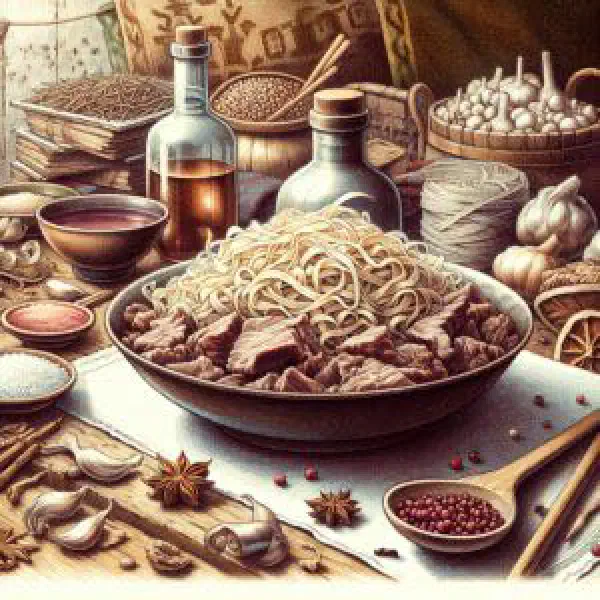
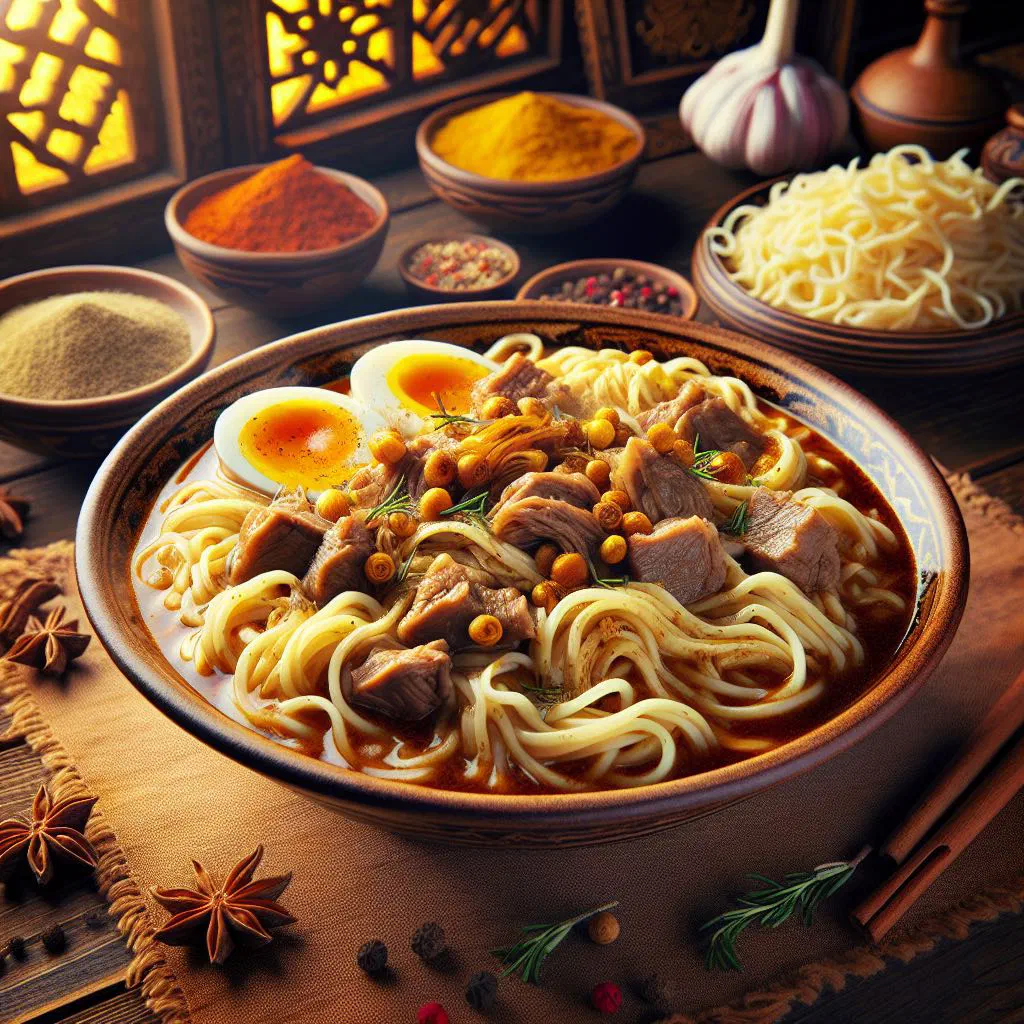
Beshbarmak means five fingers, and that is how it is eaten. Boiled meat is sliced thin, laid over squares of hand-rolled dough, and topped with onions softened in the broth. The broth itself, sorpa, is drunk from bowls afterwards.
About Beshbarmak
Beshbarmak is the national dish of Kazakhstan and of the Kyrgyz too, which causes some friendly dispute. Horse and lamb are the traditional meats; beef is the everyday one. The dough squares are rolled thin and boiled in the meat broth so they take up its flavour.
It is a dish for guests. The host distributes cuts according to the seniority of those present, and the sheep’s head goes to the most honoured guest.
Ingredients (serves 1–2)
- 200g beef or lamb
- 2 onions
- 200g wheat noodles
- 1 carrot
- 2 bay leaves
- Salt and pepper to taste
- A bunch of fresh parsley
Shopping for the ingredients
Meat on the bone gives a much better broth, which is half the dish. Kazy, the horsemeat sausage, is the festive addition and is sold in Central Asian shops. The noodles should be flat squares roughly 5 cm across; fresh lasagne sheets cut down are a reasonable substitute.
Preparing the dish
Simmer the meat gently for an hour and a half, skimming. Keep the broth. Boil the dough squares in some of that broth rather than plain water, which is the step that makes the difference. Soften the sliced onions in hot broth rather than frying them.
Step-by-step instructions
- Cook the meat in a large pot with water, the bay leaves and a pinch of salt for about 1.5 hours, until tender.
- Cut the cooked meat into bite-sized pieces.
- Cook the wheat noodles in some of the meat broth according to the packet instructions.
- Soften the sliced onions in a ladleful of hot broth with black pepper.
- Serve the meat and noodles on a large platter and spoon the onions over the top.
- Pour a little of the meat broth over the dish and garnish with parsley.
Gluten-free / lactose-free version
The meat and broth contain no gluten or dairy; the noodles do. A gluten-free pasta sheet cut into squares works, though it will not absorb the broth in the same way.
Tips for vegans and vegetarians
Beshbarmak is meat and broth and does not translate. Central Asian vegetarian options are limited historically, though manty with pumpkin filling is a genuine traditional dish and worth knowing.
More tips and tricks
Boil the noodles in the broth, not water. Soften the onions in broth rather than oil. And serve the sorpa separately in bowls afterwards, which is the correct order and the part guests look forward to.
Adapting the recipe to your taste
Horsemeat and kazy are the festive version. Naryn is the related dish with everything cut into fine threads. A whole boiled onion in the pot adds sweetness.
Ingredient substitutions
Beef, lamb and horse all work. Fresh pasta sheets replace hand-rolled dough. Any long simmer produces a usable broth.
Drink pairing ideas
Ayran or kumys, fermented mare’s milk, are the traditional pairings. Black tea with milk throughout. Vodka appears at celebrations.
Serving and presentation ideas
Serve it on one large communal platter, meat over noodles, onions over meat. Everyone eats from the same dish with their hands. The broth follows in individual bowls, which is when the meal properly ends.
A bit of history
Beshbarmak comes from nomadic life on the steppe, where boiling was the practical method and a slaughtered animal fed a whole gathering. The rules about who gets which cut are old and still observed at formal meals. It anchors Kazakh cuisine alongside plov and kuurdak.
More recipe ideas
Summary: Beshbarmak
Beshbarmak is boiled meat over broth-cooked dough squares, topped with onions and served with the broth afterwards. Use bone-in meat, cook the noodles in the broth, and eat it with your hands.