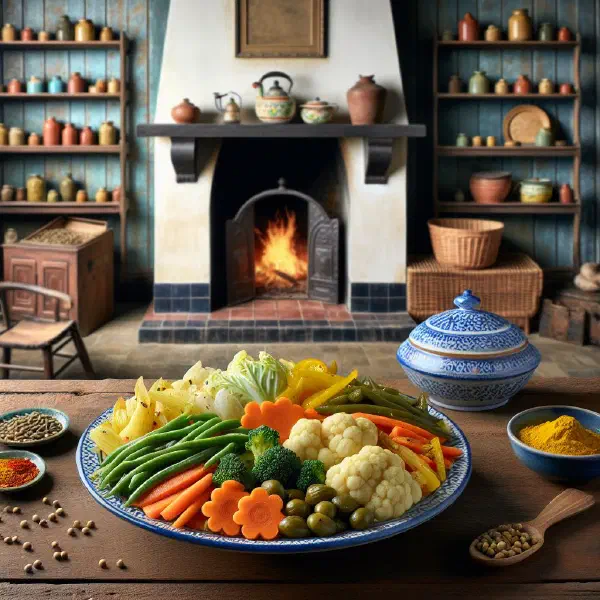
National Dish Kenya: Achari (Recipe)
In this article
Meet Achari, the tangy pickled vegetable dish that brings a jolt of colour and heat to the Kenyan table. Crisp vegetables are steeped in vinegar and a warm blend of toasted spices until every bite crackles with flavour. It works beautifully as a side next to a hearty stew, and just as well as a sharp little snack straight from the jar. Best of all, it takes barely twenty minutes of work before the fridge does the rest.
About Achari
Achari is a spiced, pickled vegetable dish that has become firmly rooted in Kenyan cooking. Fresh produce, a punchy mix of hot spices and a generous splash of vinegar combine into a flavour that is impossible to mistake for anything else. It is an excellent side dish and a refreshing snack between meals, sharp enough to wake up the palate. With achari you bring the aromas of Kenya directly into your own kitchen.
Ingredients (serves 1–2)
- 200 g mixed vegetables (carrots, cucumber, peppers)
- 50 ml vinegar (white wine or cider vinegar)
- 1 teaspoon mustard seeds
- 1 teaspoon cumin seeds
- 1 teaspoon ground turmeric
- 2–3 fresh chillies (to taste)
- 1 teaspoon sugar
- Salt to taste
- Fresh coriander, to garnish
Shopping for the ingredients
When shopping for achari, make a point of choosing fresh vegetables. Almost anything works here, but a colourful selection gives the finished jar far more visual appeal. The spices matter just as much, since they carry the dish’s distinctive character. Ask at your local spice shop for authentic Indian spices to get the very best aroma out of the blend.
Preparing the dish
Getting achari ready is quick and refreshingly straightforward. Begin by washing and peeling the vegetables, then cutting them into thin strips or small pieces. Depending on how crunchy you like the finished dish, you can blanch the vegetables briefly or leave them completely raw. The spices need attention too: dry-toast the mustard seeds and cumin to release their aromatic oils. These small steps are what guarantee a properly delicious result.
Step-by-step instructions
- Arrange the prepared vegetables in a bowl.
- In a small pan, combine the vinegar, sugar, salt, turmeric and chopped chillies.
- Toast the mustard and cumin seeds in a dry frying pan until they begin to smell fragrant.
- Pour the spice mixture over the vegetables and mix thoroughly.
- Transfer everything to a jar or airtight container and chill for at least 2 hours.
- Garnish with fresh coriander just before serving.
Gluten-free / lactose-free version
Achari is naturally gluten-free and lactose-free, which makes it an easy win for a great many people. You need not change a single thing to make it suitable for anyone avoiding gluten or dairy. Do choose your ingredients carefully, though, and steer clear of ready-made products that may hide gluten-containing additives. Enjoy this wholesome dish without a second thought.
Tips for vegans and vegetarians
Achari is an ideal dish for vegans and vegetarians, since it relies entirely on plant-based ingredients. Adapt the recipe freely to your own preferences by swapping in different vegetables or trying alternative spices. Experiment with extra herbs and seasonings to uncover new flavour combinations. A scattering of toasted nuts or seeds adds a welcome extra crunch.
More tips and tricks
To get the most out of your achari, plan to make it the day before you need it. The longer the vegetables sit in the vinegar and spices, the more intense the flavour becomes. Serve it well chilled so those bright, fresh notes really come through. Play with the number of chillies to dial the heat up or down, the possibilities here are endless.
Adapting the recipe to your taste
Achari is remarkably adaptable, which means you can reshape the recipe around your own preferences without much effort. You might try additional aromatics such as ginger or garlic to deepen the flavour. Different vegetables work well too. Think cauliflower, courgette or even green asparagus. Give your creativity free rein and build an achari that suits your palate exactly, much as cooks do with a colourful Kachumbari.
Ingredient substitutions
If you cannot track down particular ingredients for achari, there are plenty of alternatives to fall back on. Instead of vinegar, for example, lime juice lends the dish a fresher, rounder acidity. For the vegetables, raw radishes or turnips work nicely and add a new dimension of colour and taste. Be adventurous and try out different combinations until you find your favourite.
Drink pairing ideas
Several drinks pair well with achari and round off its spicy edge. A cooling mango lassi offers a lovely contrast to the chilli heat. Alternatively, a chilled beer or a light white wine will harmonise the flavours nicely. For an alcohol-free option, a gingery Chai Ya Tangawizi or a simple ginger lemonade enriches the whole experience.
Serving and presentation ideas
Presentation makes a real difference to how much you enjoy achari. Serve it in an attractive glass jar so the colourful pieces of vegetable are on full display. Garnish with fresh coriander leaves or sesame seeds to lift it visually. Keep the colours bright and inviting, and set out warm Chapati alongside for scooping.
A bit of history
Achari has its roots in Indian cooking and was carried into Kenya by immigrant communities who shaped so much of the country’s coastal food. It is a dish often associated with family gatherings and festive occasions. The pickling method has proved itself across generations, allowing vegetables to be kept edible for far longer than they otherwise would. In that sense achari is a symbol of both tradition and invention within Kenyan cuisine.
More recipe ideas
Summary: Achari
All in all, achari is a tasty and versatile dish that brings the delicious flavours of Kenya within easy reach. Let it inspire you and give it a go at your next get-together, or simply make a jar for yourself. The recipe adapts so readily to personal taste that everyone can create their own perfect achari.