National Dish Kuwait: Knafeh (Recipe)
In this article
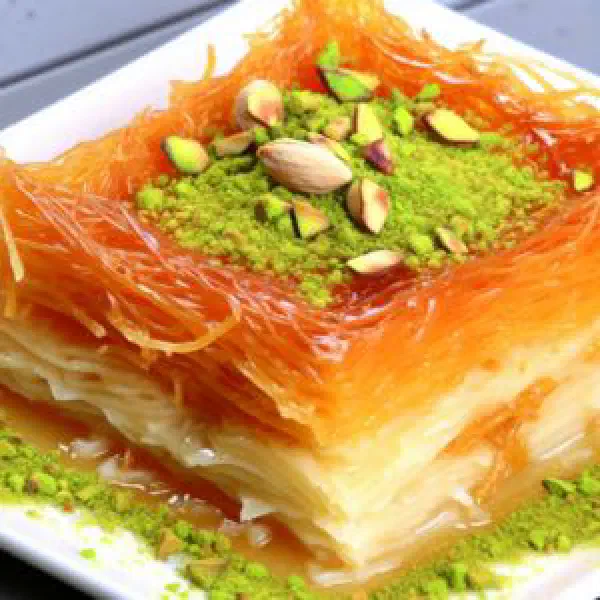
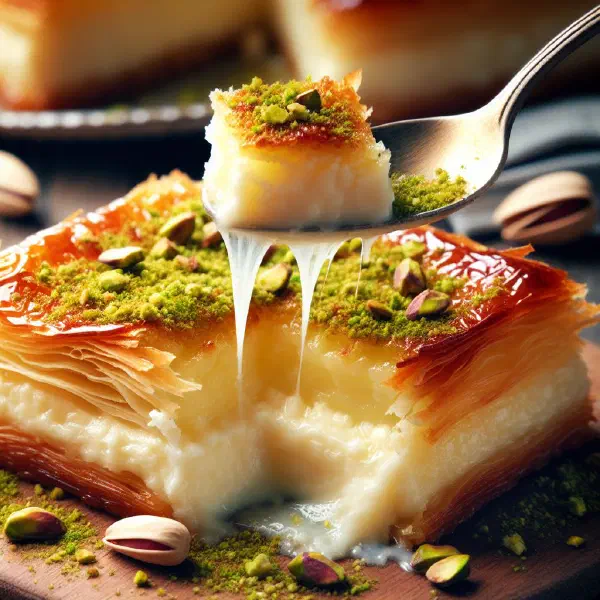
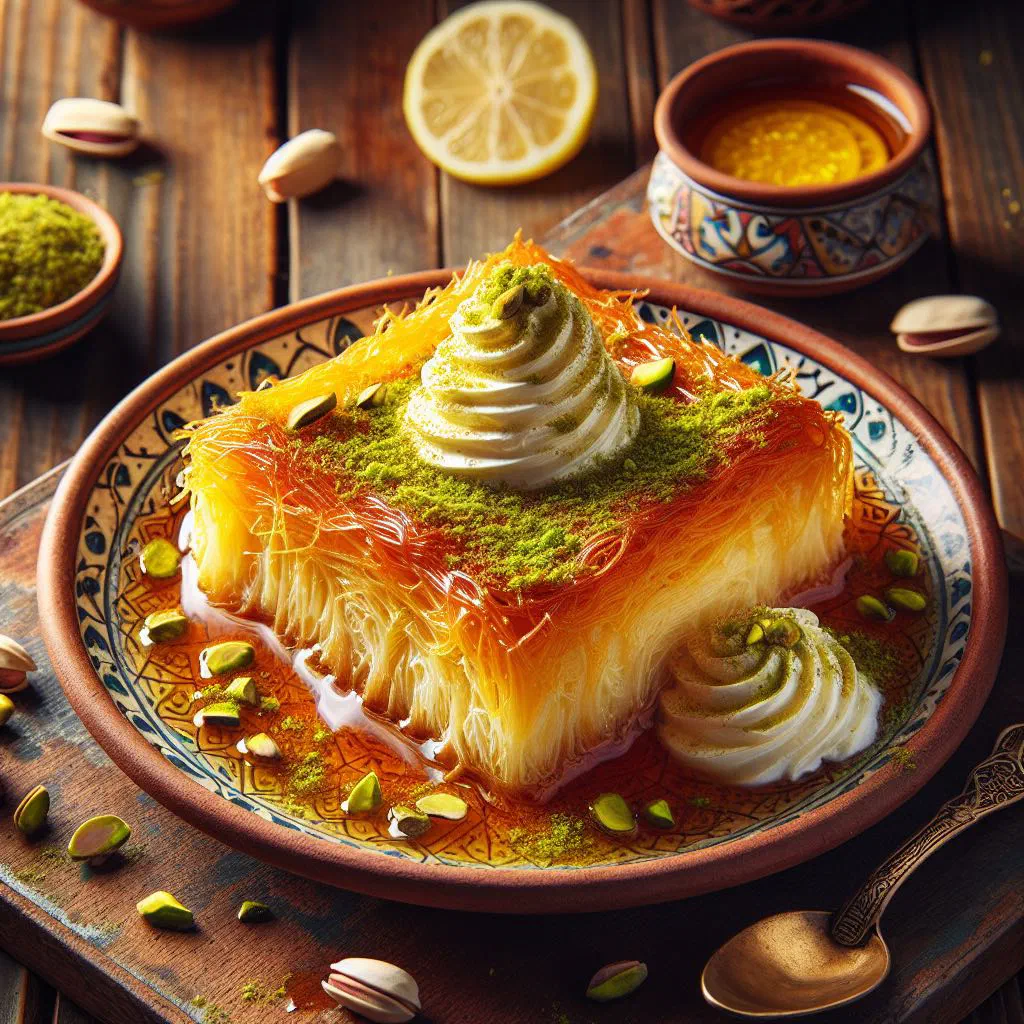
Discover Knafeh, the heavenly Kuwaiti sweet that turns cheese, delicate pastry strands and fragrant sugar syrup into pure celebration. Crisp and golden on the outside, molten and creamy within, it is finished with a shower of pistachios and a whisper of rose water. This dessert brings the perfume of the Middle East straight to your table.
About Knafeh
Knafeh is far more than a dessert; it is a festive occasion in its own right, woven deep into the culture of Kuwait. The combination of fine pastry strands and a luscious, creamy filling makes for a taste experience quite unlike any other. Traditionally it is drenched in aromatic sugar syrup, which lends the sweet its seductive shine. Served at celebrations or as the closing flourish of a meal, knafeh carries the scent of the Orient wherever it goes.
Ingredients (serves 1–2)
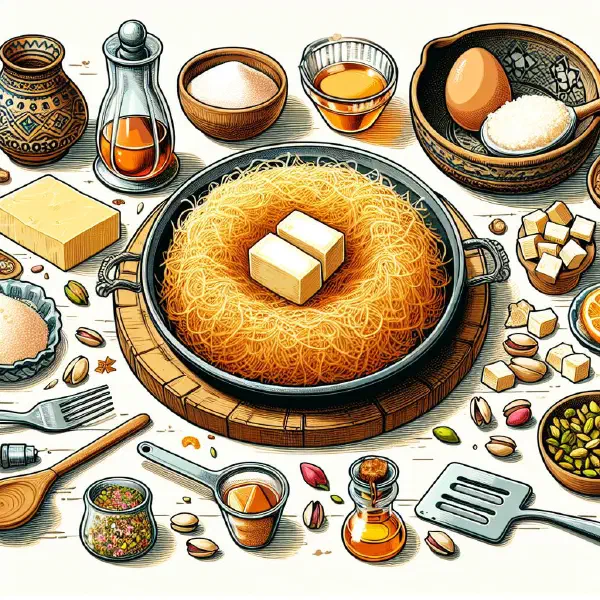
- 200 g knafeh pastry (kataifi)
- 150 g creamy cheese (mozzarella or ricotta, for example)
- 50 g butter, melted
- 100 g sugar
- 100 ml water
- 1 teaspoon rose water
- A pinch of salt
- Pistachios, chopped, to decorate
Shopping for the ingredients
With knafeh it pays to be fussy about quality. The star ingredient is the knafeh pastry, sold in many grocery shops and easily found in Middle Eastern stores. Choose fresh, good-quality cheese so the filling turns out properly creamy. Ordinary household sugar is perfectly fine for the syrup, but a splash of rose water gives it a distinctive, fragrant character.
Preparing the dish
Before you start making knafeh, gather every ingredient and have it ready to hand. It makes the whole process considerably easier. Make sure the pastry strands are well loosened and teased apart so they are simple to work with. You can also chop the pistachios in advance, ready to scatter over the finished dessert as a topping.
Step-by-step instructions
- Preheat the oven to 180°C.
- Toss the knafeh pastry in a large bowl with the melted butter until every strand is coated.
- Press half the pastry evenly into a greased baking tin.
- Spread the cheese in an even layer over the pastry base.
- Cover with the remaining pastry and press down lightly.
- Bake for about 30–40 minutes, until the top is golden brown.
- While it bakes, heat the sugar, water and rose water in a small pan until the sugar has dissolved into a syrup.
- Pour the syrup evenly over the hot knafeh and scatter with chopped pistachios.
Gluten-free / lactose-free version
For a gluten-free knafeh, use one of the gluten-free pastry alternatives now stocked by many supermarkets. In place of dairy cheese, nut-based vegan alternatives stand in nicely for the traditional filling. For a lactose-free version, simply reach for lactose-free cheese or a plant-based cheese. That way nobody with a gluten or lactose intolerance has to miss out on this treat.
Tips for vegans and vegetarians
Vegans and vegetarians can adapt knafeh with very little effort by turning to plant-based fillings. Nut butter or plant-based cream cheese will give you a texture close to that of conventional cheese. The sweet is easily veganised further by swapping dairy butter for a plant-based butter. Adjustments like these open up a new flavour profile and enrich the wider Kuwaiti cuisine.
More tips and tricks
To get the very best from your knafeh, pay attention to the tin you use. A round, shallow dish helps everything cook evenly. Another tip is to let the knafeh cool slightly before serving, since the pastry absorbs the syrup far better once the heat has come off. You can also add flavourings such as cardamom or cinnamon to give the dish a personal signature.
Adapting the recipe to your taste
The knafeh recipe bends easily to individual preferences. If you have a serious sweet tooth, increase the sugar in the syrup or add a spoonful of honey. Different nuts make excellent toppings too, almonds or walnuts, say, bringing new textures and aromas into play. Experiment with various cheeses or fillings until you land on your own favourite version.
Ingredient substitutions
Knafeh offers plenty of scope for creative substitutions. If you cannot find knafeh pastry, similar doughs such as filo pastry or strudel pastry will do the job, the same approach that works so well for Balah El Sham. The cheese can be replaced with almost any melting cheese, depending on what you prefer. For the vegan version, cashew or soya yoghurt makes a good base for the filling.
Drink pairing ideas
Knafeh is at its best alongside lightly Middle Eastern-inspired drinks. A sweet mint tea or a refreshing jasmine tea harmonises perfectly with the sweetness of the dessert. If you prefer something with more zip, a glass of lemonade, or a homemade Rose Water Lemonade, works beautifully. Drinks like these amplify the whole experience and make the feast that much more memorable.
Serving and presentation ideas
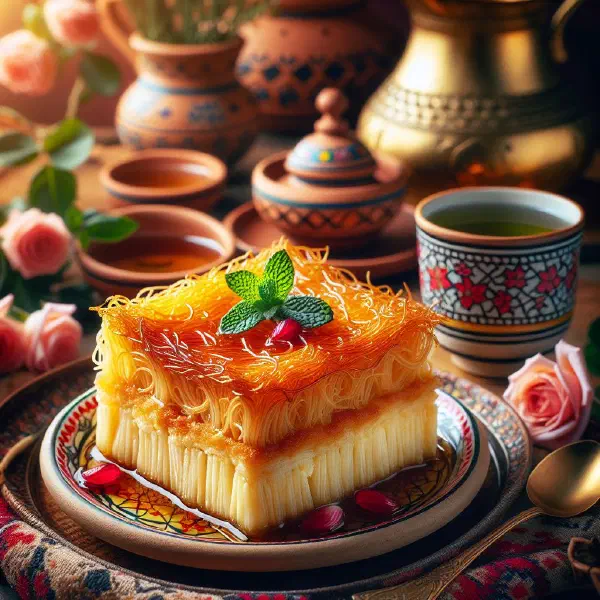
Presentation can elevate knafeh enormously. Serve it on a large, flat platter and decorate generously with a good handful of chopped pistachios. A sprig of fresh mint adds a welcome flash of colour as a garnish. A twist of lemon zest or a cinnamon stick laid across the top lends the dish an elegant finishing touch.
A bit of history
The roots of knafeh reach deep into Arab food culture and are closely bound up with the history of the Middle East. The dessert is widely believed to have originated in the city of Nablus in present-day Palestine, where its preparation was refined over centuries. It stands for festive occasions and plays a meaningful part in Arab hospitality and tradition. Over the years the recipe has evolved across many countries, absorbing local flavours and ingredients, much as sweets like Louqaimat have done.
More recipe ideas
Summary: Knafeh
In short, knafeh is not merely a delicious sweet but a piece of the cultural heritage of Kuwait and the wider Middle East. Bring together the finest ingredients and the right technique and the result is a memorable mouthful. Whether as a dessert for special occasions or a sweet indulgence on an ordinary day, knafeh always earns its place on the table. Give it a go and let the sweetness of the Orient win you over.