National Dish Kuwait: Quzi (Recipe)
In this article
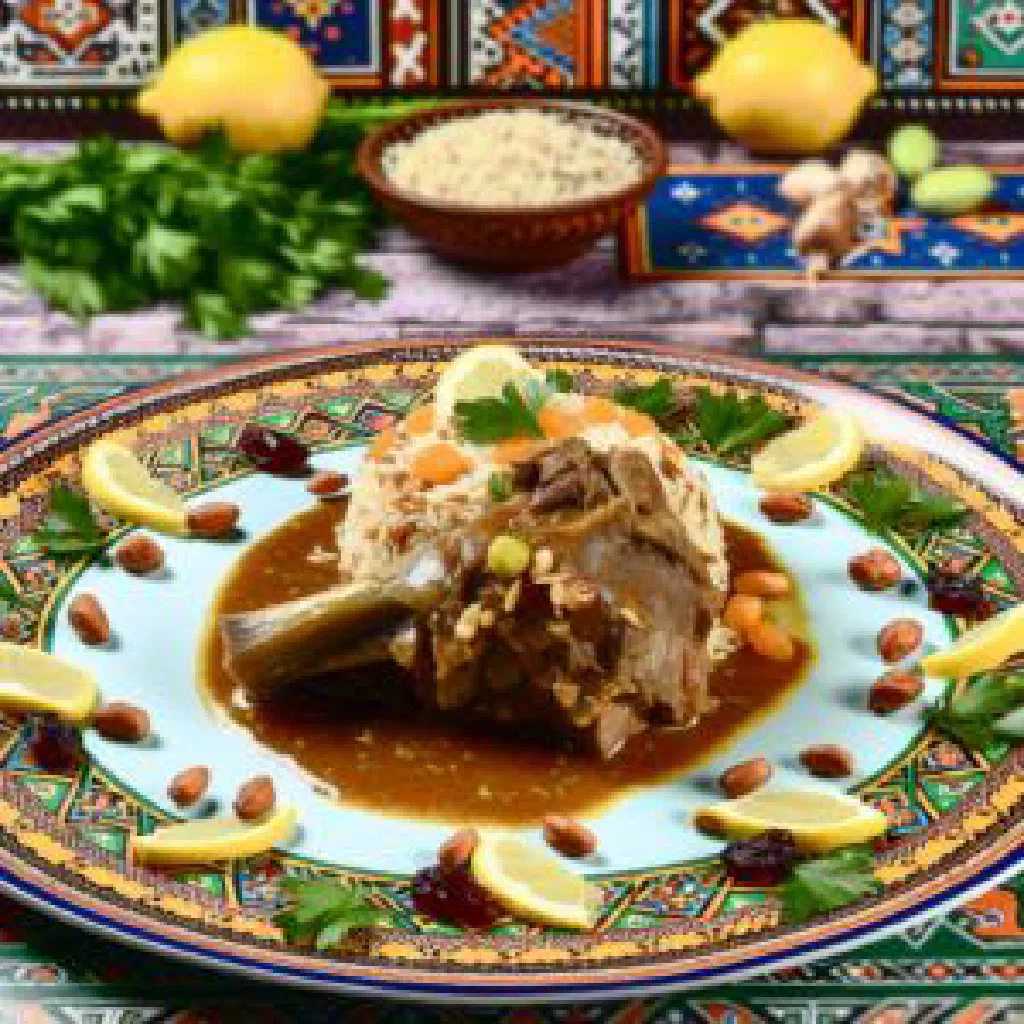
Meet Quzi, the festive centrepiece of Kuwaiti cooking: fragrant rice, slow-cooked lamb and a shower of roasted nuts, all perfumed with cardamom and cinnamon. It is the dish that appears when a family has something to celebrate, and the aroma alone tells you a feast is coming. Generous, unhurried and deeply satisfying, it brings a taste of the Gulf straight to your own table.
About Quzi
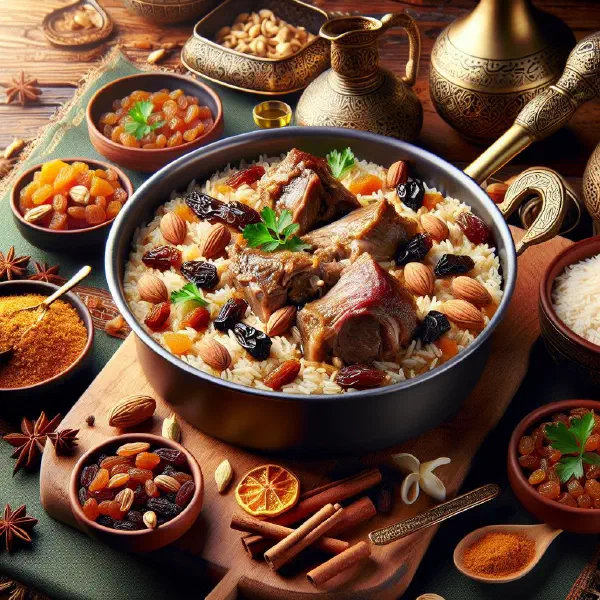
Quzi is a traditional Kuwaiti dish built from aromatic rice, tender lamb and a generous handful of warm spices. It counts among the national dishes of Kuwait and turns up again and again at large gatherings and celebrations. The dish gathers the flavours of the Arabian Peninsula in a single pot and reflects the country’s rich culinary heritage. Quzi is loved not only because it tastes wonderful, but because it carries real meaning in Kuwaiti tradition.
Ingredients (serves 1–2)
- 300 g lamb, diced
- 1 cup basmati rice
- 2 cups water
- 1 onion, finely chopped
- 3 garlic cloves, chopped
- 1 teaspoon cinnamon
- 1 teaspoon cumin
- 1 teaspoon cardamom
- ½ cup roasted nuts (almonds or cashews)
- Salt and pepper to taste
- 1–2 tablespoons olive oil or ghee
Shopping for the ingredients
To make Quzi properly, sourcing the right ingredients matters. Most of the spices you need are stocked in well-supplied supermarkets or at Middle Eastern grocers. Choose fresh lamb wherever you can, as the quality of the meat has a real bearing on the finished flavour. Specialist items can also be ordered online if you want to keep the aromas as authentic as possible.
Preparing the dish
Everything should be prepped thoroughly before you start cooking. That means cutting the lamb into evenly sized pieces and finely chopping the onion and garlic. Rinsing the basmati rice well is just as important, as it washes away excess starch and gives a much better texture. If you are using nuts, toast them first. It deepens their aroma and lifts the whole dish.
Step-by-step instructions
- Heat the olive oil or ghee in a large pot and add the chopped onion.
- Fry the onion until golden brown, then add the garlic and the lamb.
- Brown the meat well on all sides, then stir in the spices (cinnamon, cumin, cardamom, salt and pepper).
- Pour in the water and bring to the boil, then reduce the heat and let the meat simmer for 1–2 hours.
- Rinse the rice thoroughly and add it to the pot once the lamb is tender.
- Cover the pot and cook the rice over low heat for about 20 minutes, until soft.
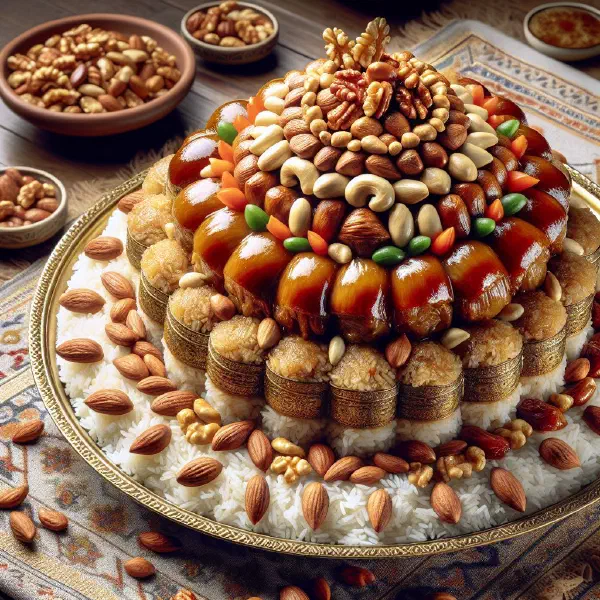
- Scatter the roasted nuts over the dish just before serving.
Gluten-free / lactose-free version
Quzi is easily made gluten-free and lactose-free, the main thing is to watch out for gluten hiding in ready-made spice blends. Sticking to less processed ingredients makes it simple to meet these dietary needs. Swapping the ghee for a plant-based oil removes the lactose without costing you any richness. Just check the labels on your spices and store-cupboard items before you buy.
Tips for vegans and vegetarians
For a vegan or vegetarian Quzi, replace the lamb with a plant-based protein such as chickpeas or tofu. Either option keeps the dish nourishing and full of flavour. Vegetables like carrots, peas or peppers can be added for extra colour and variety, much as they are in a hearty Saloona. The spices and the fragrant rice carry the dish regardless of what goes in alongside them.
More tips and tricks
A few small habits make a noticeable difference to Quzi. Marinating the lamb overnight intensifies the flavours and gives you more tender meat. Garnishes such as fresh coriander leaves or sprouts add a bright note to a rich plate. Above all, be patient: slow cooking is what produces the depth of flavour this dish is known for.
Adapting the recipe to your taste
Quzi takes happily to personal tweaks. It is also worth experimenting with the type of rice, or with the ratio of rice to meat, to change the texture and balance. Treat the recipe as a starting point and find the combination that suits you best.
Ingredient substitutions
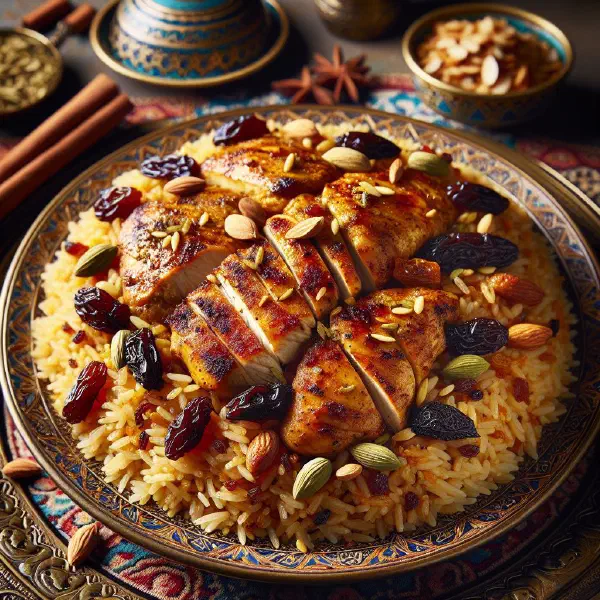
If some of the ingredients are hard to come by, there are practical alternatives. Chicken works well in place of lamb and gives a lighter result, the same swap that defines Khabsa Djaj. The basmati rice can be replaced with other long-grain varieties, though cooking times may need adjusting. The nuts are close to essential for the flavour, but roasted seeds make a reasonable stand-in if you prefer.
Drink pairing ideas
The right drink rounds off the Quzi experience nicely. A fresh mint tea or a lightly sweet pomegranate juice complements the dish and refreshes the palate between mouthfuls. Sparkling water works well too, softening the edge of the spices. For something more traditional, Arabic Coffee is the classic finish to a Kuwaiti feast.
Serving and presentation ideas
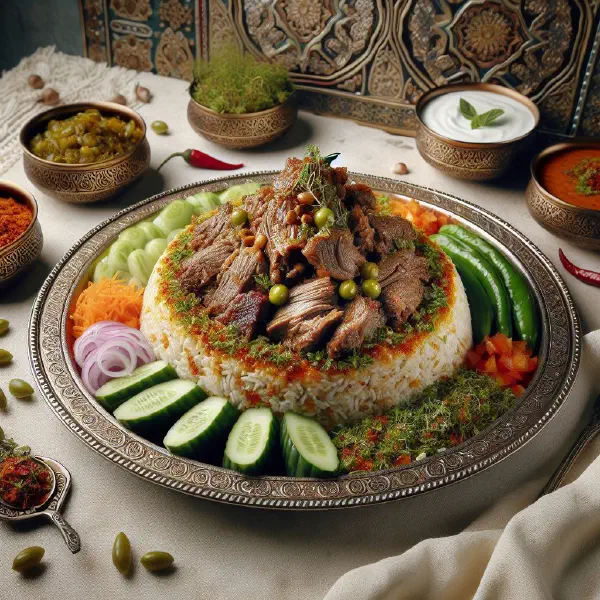
Presentation matters a great deal with Quzi. Serve it on a large platter, or in traditional Kuwaiti serveware if you have it, for a touch of authenticity. A scattering of fresh herbs such as coriander or mint makes the plate look as good as it smells. The right dishes and a thoughtfully set table turn the meal into a proper occasion.
A bit of history
Quzi has a long and interesting history woven into Kuwaiti culture. The dish reflects the culinary influences of the wider region and has been refined across generations. Shaped by Bedouin tradition, it is served most often at festive gatherings, which underlines its cultural weight. Cooking it has always been a social act, family and friends gather around the pot, much as they do for Machboos and other pillars of Kuwaiti cuisine.
More recipe ideas
Summary: Quzi
Quzi is an aromatic, nourishing dish that comes into its own on festive occasions. With carefully chosen ingredients and a generous hand with the spices, it delivers layer after layer of flavour. From the prep through to the presentation, there are countless ways to shape it around your own tastes. Take the inspiration and bring a piece of Kuwaiti culture to your table by cooking this wonderful dish yourself.