National Dish Kyrgyzstan: Beshbarmak (Recipe)
In this article
Beshbarmak in Kyrgyzstan is made with hand-rolled dough rather than bought noodles, and the difference is real: the squares are irregular, slightly thick, and they soak up the broth in a way factory pasta does not. Kyrgyzstan and Kazakhstan both claim it and neither will concede.
About Beshbarmak
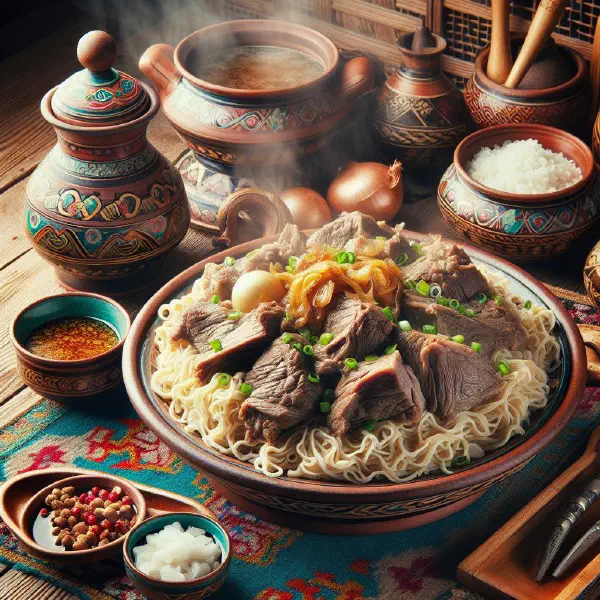
Beshbarmak, five fingers, is eaten with the hands from a communal dish. Meat is boiled slowly, the broth becomes shorpo, and squares of dough are cooked in it. Onions softened in the hot broth go over the top.
Horse is the prestige meat. Lamb and beef are what most households use.
Ingredients (serves 1–2)
- 300 g lamb or beef (such as shoulder or brisket)
- 150 g flour
- 1 egg
- Water (as needed)
- 1 onion
- 1 clove of garlic
- Salt and pepper, to taste
- Fresh parsley or coriander, to garnish
Shopping for the ingredients
Meat on the bone, always, since the broth is half the meal. Shoulder, brisket or ribs. Plain flour for the dough. If you can find kazy, the horsemeat sausage, it is what makes a festive beshbarmak.
Preparing the dish
Make the dough while the meat simmers and let it rest thirty minutes, which makes it far easier to roll thin. Roll it as thin as you can manage and cut squares of about 6 cm. Cook them in the meat broth, not plain water.
Step-by-step instructions
- Place the meat in a large pot, cover with water and bring to the boil. Simmer for 1–2 hours until tender.
- Meanwhile, combine flour, egg and water and knead into a smooth dough. Leave it to rest for 30 minutes.
- Roll the dough out thinly, cut it into squares, then cook them in some of the meat broth.
- While the noodles cook, slice the onion thinly and soften it in a ladleful of hot broth with black pepper.
- Lift the cooked meat from the broth, pull it into small pieces and arrange with the broth and the onions.
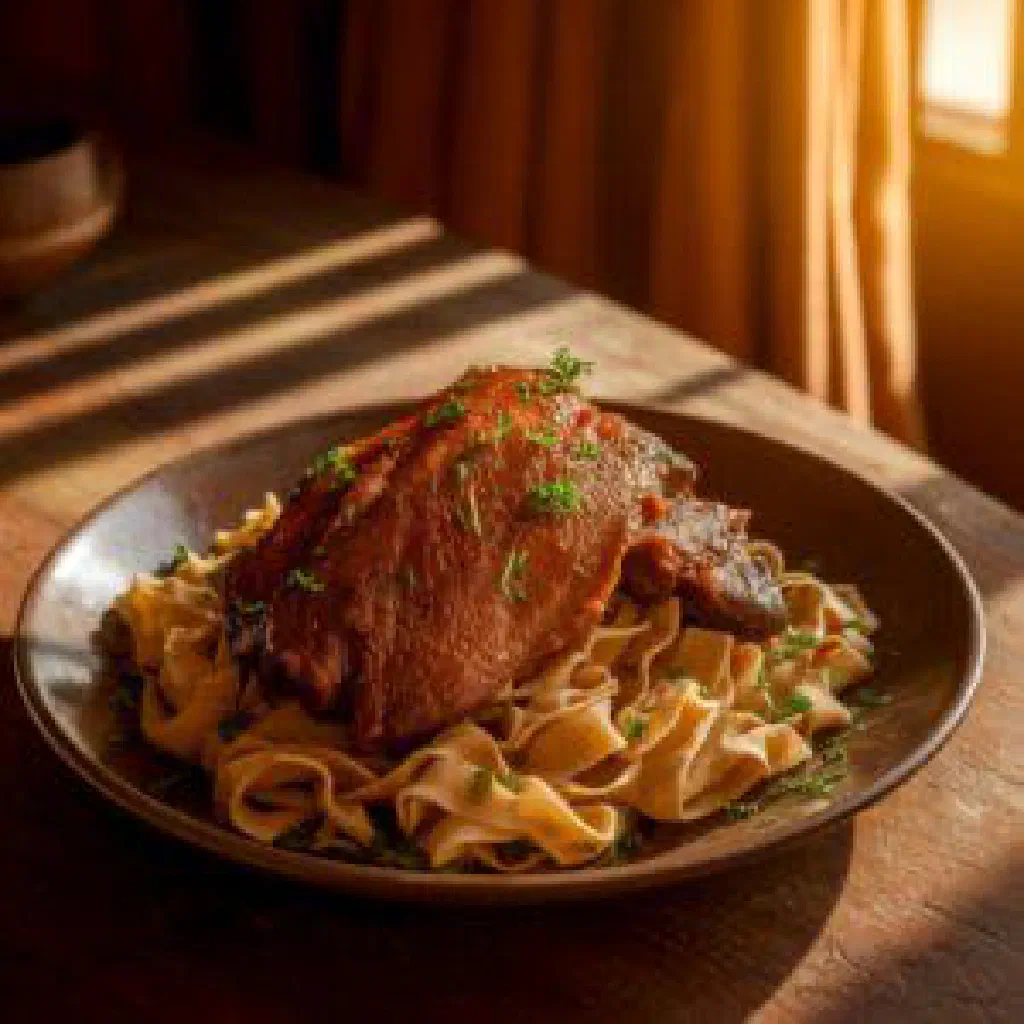
- Spread the noodles onto a platter, lay the meat over the top and spoon over the broth. Garnish with fresh herbs.
Gluten-free / lactose-free version
Meat and broth contain no gluten or dairy; the dough does. A gluten-free pasta cut into squares works, though it will not take up the broth the same way.
Tips for vegans and vegetarians
The dish is meat and its broth. Manti with pumpkin filling is a genuine Central Asian vegetarian dish and a better route than trying to adapt this one.
More tips and tricks
Cook the dough in the broth. That is the point and using water wastes it. Soften the onions in broth rather than frying them. And skim the pot in the first fifteen minutes so the shorpo stays clear enough to drink at the end.
Adapting the recipe to your taste
Kazy and horse fat are the festive additions. Shorpo served as a separate first course is standard. A whole onion boiled in the broth adds sweetness.
Ingredient substitutions
Fresh lasagne sheets cut into squares save the rolling. Beef, lamb and horse all work. Water is fine if you have no stock; the meat makes its own.
Drink pairing ideas
Kymyz, fermented mare’s milk, is the traditional pairing and an acquired taste. Maksym or jarma in summer. Black tea throughout.
Serving and presentation ideas
One large communal platter, dough underneath, meat over it, onions on top. Everyone eats with their hands. The broth comes afterwards in bowls, which is the proper conclusion to the meal.
A bit of history
Beshbarmak comes from nomadic life, where boiling was practical over an open fire and one slaughtered animal fed a gathering. The rules about which cut goes to whom are still observed at formal meals. It anchors Kyrgyz cuisine alongside lagman and kuurdak.
More recipe ideas
Summary: Beshbarmak
Beshbarmak is boiled meat over hand-cut dough squares cooked in the broth, topped with onions. Roll the dough thin, cook it in the broth, and serve the shorpo afterwards.