National Dish Laos: Tam Mak Houng (Recipe)
In this article
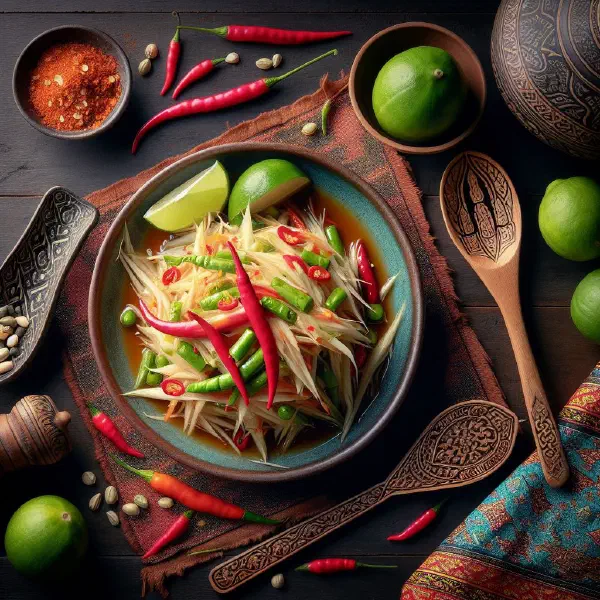
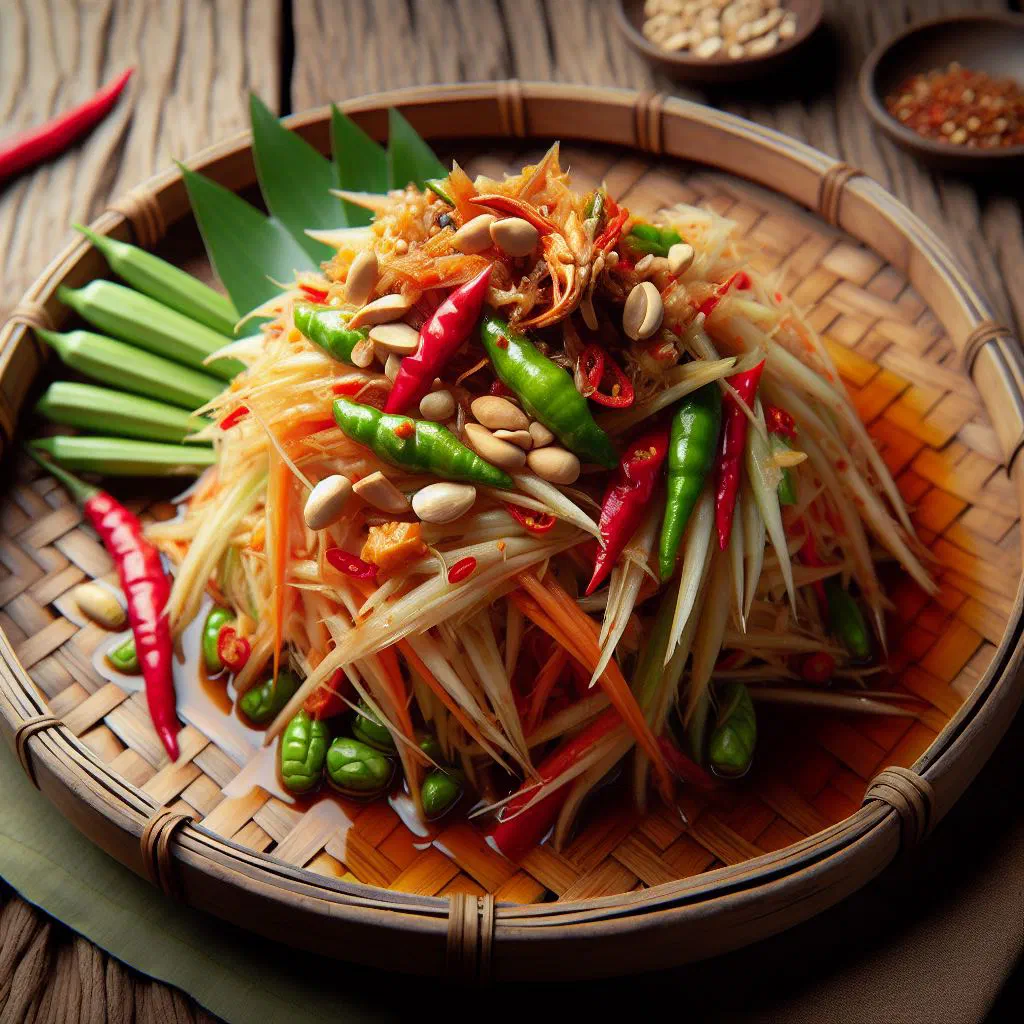
Meet Tam Mak Houng, the fiery green papaya salad that sits right at the heart of Laotian home cooking. Crunchy shreds of unripe papaya are pounded together with garlic, chillies and a punchy dressing until every strand soaks up the flavour. It is a dish built on the famous Laotian balance of sweet, sour, salty and hot, bright, refreshing and bursting with texture. Bring a taste of a Vientiane market stall straight to your own kitchen.
About Tam Mak Houng
Tam Mak Houng, better known abroad as Laotian green papaya salad, is the savoury emblem of Laotian food culture. This national dish speaks to the simple yet richly flavoured way of life found across Laos. The combination of fresh green papaya, crunchy peanuts, hot chillies and a punchy dressing makes it not only a feast for the senses but a genuinely memorable eating experience. What sets it apart is its finely judged mix of sweetness, acidity, salt and heat, a hallmark of Laotian cooking that it shares with cousins like Som Tam.
Ingredients (serves 1–2)
- 1 medium green papaya
- 2 small carrots
- 2–3 cloves of garlic
- 2–4 Thai chillies (to taste)
- 1–2 tomatoes
- 1 handful of long beans
- 50 g roasted peanuts
- 2 tablespoons fish sauce
- 1 tablespoon palm sugar or brown sugar
- 1 lime, juiced
- Small bunch of fresh coriander (optional)
Shopping for the ingredients
Fresh green papaya and long beans are best found at an Asian grocery or a well-stocked supermarket with a good range of exotic produce. Choose a papaya that is firm and not yet ripe, so the salad keeps its signature crunch. It is also worth reaching for a good-quality fish sauce, as it shapes the flavour of the whole dish. Most of the other ingredients are easy to source in a regular supermarket.
Preparing the dish
Before you start cooking, wash and peel the green papaya and the carrots. Use a special papaya peeler or a julienne cutter to shred the vegetables into fine strips, so the dressing can soak in properly. The Thai chillies and garlic should be pounded to an even paste in a mortar and pestle to release their aromas.
Step-by-step instructions
- Pound the garlic and chillies in a mortar until they form a paste.
- Dice the tomatoes small and add them with the long beans to the mortar, bruising them lightly.
- Shred the papaya and carrots into fine strips and tip them into a large bowl.
- Roughly chop the peanuts and set them aside.
- Mix the paste from the mortar with the fish sauce, sugar and lime juice to make a dressing.
- Pour the dressing over the papaya strips and toss everything together thoroughly.
- Garnish with the peanuts and, if you like, a little fresh coriander.
Gluten-free / lactose-free version
Tam Mak Houng is naturally lactose-free, as it contains no dairy at all. To keep it fully gluten-free, check the label on your fish sauce, since some blends contain traces of wheat, a certified gluten-free fish sauce, or tamari for a vegetarian version, sidesteps the problem entirely. With those small swaps in place, everyone at the table can enjoy this bright, crunchy salad without a second thought.
Tips for vegans and vegetarians
To make Tam Mak Houng vegan, simply replace the fish sauce with soy sauce or tamari, which give a similar salty depth. Take care to avoid the small dried shrimp that some traditional recipes add, and leave out any animal-based seasonings. Fresh vegetables, herbs and a generous hand with the lime keep the flavour lively and authentic, so this classic adapts easily to a fully plant-based table.
More tips and tricks
If you want an even more authentic result, add a few small dried shrimp or crab, which appear often in Laotian Tam Mak Houng and lend a further traditional touch. Make sure to prepare the salad just before serving so it keeps all its freshness. Pounding rather than simply tossing the ingredients is the secret to the dish. It bruises the vegetables just enough to draw the dressing deep into every strand.
Adapting the recipe to your taste
You can control the heat of the salad easily by adjusting the number of chillies you use. If you are not a fan of coriander, leave it out or swap it for fresh mint instead. Vegetarians can replace the fish sauce with soy sauce or tamari, while those who like a sweeter profile can add a touch more palm sugar. This way you can build a version that fits your own taste exactly.
Ingredient substitutions
If you cannot find green papaya, use green kohlrabi or courgette as an alternative, shredded into fine strips in the same way. They taste a little different but offer a similar crunchy texture. Roasted cashews stand in nicely for peanuts, and a squeeze of extra lime can make up for any dressing you hold back. Substitutions like these help you adapt the recipe to what is in season.
Drink pairing ideas
A cold beer or a glass of ice-cold green tea are the drinks most often served with Tam Mak Houng in Laos. They help balance the heat of the dish while complementing its rich, layered flavours. Sticky rice on the side, as in Khao Niew, is the classic partner, soaking up the dressing and cooling the palate between fiery bites.
Serving and presentation ideas
Serve the Tam Mak Houng on a large plate or in a bowl, dressed with fresh herbs. Finish with a wedge of lime and perhaps a few edible flowers for a colourful, inviting look. A basket of warm sticky rice alongside turns it into a proper meal, and grilled meats such as Kai Yang make it a wonderful centrepiece for sharing.
A bit of history
The origins of Tam Mak Houng run deep in Laotian food culture. The salad grew out of the need to make the most of the ingredients to hand, and out of the pounding technique that fully releases their aromas. Today it is a source of national pride, enjoyed both as an everyday dish and at festive gatherings, a defining plate of Laotian cuisine that travels well beyond the country’s borders.
More recipe ideas
Summary: Tam Mak Houng
Tam Mak Houng is a prime example of the sheer variety of flavour that Laotian cooking has to offer. With fresh ingredients and a harmonious blend of seasonings, this papaya salad is an exotic addition to any table. Shape the recipe to your own liking and enjoy a very good explosion of flavour, sweet, sour, salty and hot, all in a single mouthful.