National Dish Latvia: Skābēta Kāpostu Zupa (Recipe)
In this article
Few things chase away a grey winter afternoon quite like Skābēta kāpostu zupa, Latvia’s much-loved sauerkraut soup. Gently sour, deeply savoury and packed with root vegetables, it is the kind of bowl that warms you from the inside out. The ingredients are humble, cabbage, potatoes, carrots, yet the result tastes of centuries of Baltic home cooking. Simmer a pot and you will understand why Latvian families have never let this recipe go.
About Skābēta Kāpostu Zupa
Skābēta kāpostu zupa is a traditional Latvian dish defined by its pleasantly tangy character. This sauerkraut soup brings together fresh, wholesome ingredients to create something that nourishes and comforts in equal measure. It is most often served as a warming meal during the cold months, and it remains a firm favourite in countless Latvian households. Anyone setting out to explore Latvian cuisine should start here, ideally with a thick slice of Rupjmaize on the side.
Ingredients (serves 1–2)
- 200 g sauerkraut
- 2–3 potatoes
- 1 onion
- 2–3 carrots
- 1–2 bay leaves
- 1–2 tablespoons vegetable oil
- Salt and pepper, to taste
- Water or vegetable stock
Shopping for the ingredients
The ingredients for Skābēta kāpostu zupa are refreshingly easy to track down. Almost everything on the list is stocked by any supermarket or weekly market. When buying the sauerkraut, look for a good-quality version that will sit happily alongside the spices rather than overwhelming them. Fresh vegetables lift the whole dish, so choose potatoes, carrots and onions that are as fresh as you can find.
Preparing the dish
Getting ready to cook takes only a few minutes. Begin by washing the vegetables thoroughly, then peel the potatoes and carrots and cut them into small, even dice. The onion should be finely chopped so it melts into the broth and lends the soup a fuller aroma. These simple preparations are the key to a well-balanced result, and they are done long before the pot comes to the boil.
Step-by-step instructions
- Heat the vegetable oil in a large pan and add the chopped onion. Fry until translucent.
- Add the diced potatoes and carrots and sauté for around 5 minutes.
- Stir in the sauerkraut and the bay leaves and mix everything together well.
- Pour in enough water or vegetable stock to cover all the ingredients, then bring the soup to the boil.
- Reduce the heat and let the soup simmer for about 30 minutes, or until the vegetables are tender.
- Season with salt and pepper and remove the bay leaves before serving.
Gluten-free / lactose-free version
Skābēta kāpostu zupa is naturally gluten-free and lactose-free, which makes it an excellent choice for anyone with an intolerance. Do check that the vegetable stock you use is also certified gluten-free, as stock cubes are a common hidden source. Making your own stock from scratch is the surest way to keep every ingredient within your requirements. That way you can enjoy the soup’s full aroma without a moment’s worry about allergens.
Tips for vegans and vegetarians
Vegans and vegetarians will find this soup adapts beautifully to their way of eating. Simply use vegetable stock in place of chicken or beef stock and the dish is entirely vegan. You can also add extra vegetables such as peppers or celery to boost the nutritional value and widen the range of flavours. The soup stays every bit as tasty and satisfying, much like a bowl of Pelekie Zirni made without bacon.
More tips and tricks
To make Skābēta kāpostu zupa even more fragrant, try adding spices such as caraway or paprika. These lift the flavour notes to another level and echo the seasoning used across the Baltics. A pinch of sugar can help balance the acidity of the sauerkraut if you find it too sharp. Experiment with the quantities until you have arrived at your own perfect version.
Adapting the recipe to your taste
The flexibility of this soup means you can shape it entirely around your own preferences. If you would like a thicker consistency, increase the quantity of potatoes or blend a few of them into the broth. Prefer a little heat? A pinch of chilli or an extra grind of pepper does the job nicely. Cooking to your own taste not only improves the flavour but makes the whole meal more enjoyable.
Ingredient substitutions
If some of the ingredients are missing from your kitchen, there are plenty of alternatives that keep the character of the dish intact. Sweet potatoes in place of ordinary potatoes, for example, add a gentle sweetness that plays well against the sour cabbage. Courgette or pumpkin can also be worked into the recipe creatively. Staying flexible means you can still put a delicious soup on the table, much as you would when improvising a Tomatu Zupa.
Drink pairing ideas
Skābēta kāpostu zupa goes well with a wide range of drinks. A cool, refreshing beer sits nicely against the hearty flavours of the broth. If you would rather avoid alcohol, a fruity sparkling water or a homemade fruit juice works well, and traditionalists often reach for a glass of Kvass. These pairings round out the meal and make it more enjoyable still.
Serving and presentation ideas
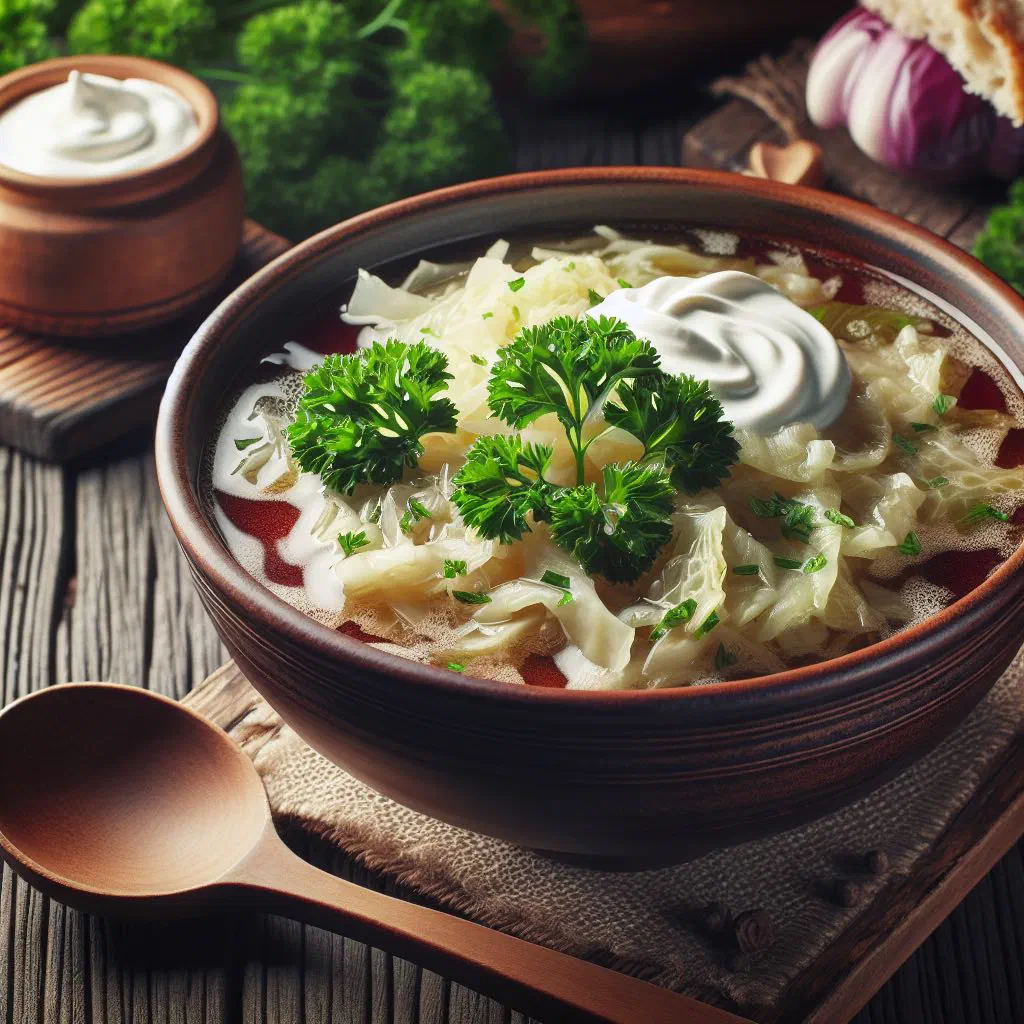
Thoughtful serving can raise the whole experience considerably. Ladle the soup into handsome deep bowls and garnish with fresh herbs such as dill or parsley. A spoonful of plant-based cream or a squeeze of lemon juice adds both colour and brightness. Small details like these make the dish look inviting on the table as well as taste better in the bowl.
A bit of history
Skābēta kāpostu zupa has a long tradition in Latvian cooking. Sauerkraut was historically an important staple, particularly through the cold season, because it keeps for months and retains valuable nutrients. The use of regional, seasonal produce is a hallmark of this soup, as it is of dishes like Skabeti Kaposti. It reflects the character of Latvia and the resourcefulness of its home cooks.
More recipe ideas
Summary: Skābēta Kāpostu Zupa
Skābēta kāpostu zupa is a genuine pleasure and a perfect way to discover Latvia’s culinary heritage. Built from simple ingredients and open to endless variation, this sauerkraut soup is nourishing and warming as well as delicious. It is essential eating for anyone drawn to Latvian food. Give it a try and let those tangy, comforting aromas win you over.