National Dish Latvia: Skābēti Kāposti (Recipe)
In this article
Discover Skābēti kāposti, the tangy fermented cabbage that sits at the very heart of the Latvian larder. Crisp white cabbage is layered with sweet grated carrot, thin slices of apple and a scattering of caraway, then left to sour slowly in its own brine. The result is bright, refreshing and quietly addictive, a dish that has carried Latvian households through long northern winters for centuries, and one that tastes every bit as good on a summer table.
About Skābēti kāposti
Skābēti kāposti is a traditional Latvian dish known above all for being both filling and genuinely good for you. Its foundation is fermented sauerkraut, a preparation that has been a favourite in Latvia for hundreds of years. It is a wonderful way of preserving cabbage while keeping, and even improving upon, its nutritional benefits. The dish works equally well as a side alongside a main course or as a snack in its own right, which is exactly why it appears on so many Latvian tables.
Ingredients (serves 1–2)
- 500 g fresh cabbage or sauerkraut
- 2–3 carrots, grated
- 1–2 apples, thinly sliced
- 1 onion, finely chopped
- 2–3 garlic cloves, chopped
- 2 tablespoons salt
- 1 tablespoon sugar
- 500 ml water
- Pepper and caraway seeds, to taste
Shopping for the ingredients
When shopping for skābēti kāposti it pays to be fussy about quality. Fresh cabbage is decisive, since it determines both the flavour and the final texture of the ferment. Your carrots should be crisp and firm, while the apples bring a gentle sweetness that balances the acidity. Wherever possible, choose regional produce, the fresher the vegetables, the livelier the fermentation and the better the taste, much as with the hearty produce behind Cepti Kaposti.
Preparing the dish
To prepare skābēti kāposti properly, it is important to get all the ingredients ready before you begin. Start by grating the carrots and slicing the apples thinly. Chop the onion and garlic finely so the aromas distribute evenly through the mixture. These simple steps ensure the flavours merge harmoniously during the days of fermentation ahead, rather than sitting in isolated pockets.
Step-by-step instructions
- Tip all the prepared ingredients into a large bowl.
- Heat the water with the salt and sugar until both have fully dissolved, then pour it over the vegetables.
- Stir thoroughly so everything is evenly coated with the brine.
- Transfer to a preserving jar or a sealable container, making sure the vegetables are completely submerged in the liquid.
- Leave to ferment in a cool place for at least three to five days.
- Once the fermentation time is up, the skābēti kāposti are ready to serve.
Gluten-free / lactose-free version
Skābēti kāposti is naturally gluten-free and lactose-free. It consists almost entirely of vegetables, which makes it an excellent choice for anyone managing food intolerances. Do take care, however, that no additional ingredients, certain ready-made spice blends in particular, sneak gluten into the jar. Keep the seasoning simple and the dish stays suitable for everyone at the table.
Tips for vegans and vegetarians
This recipe for skābēti kāposti is ideal for vegans and vegetarians, as it contains no animal products whatsoever. To make it more interesting still, experiment by adding different vegetables or plant-based seasonings. Beetroot or spinach are both worth trying, adding extra colour and nutrients to the jar. The dish then becomes not only healthy but genuinely striking to look at.
More tips and tricks
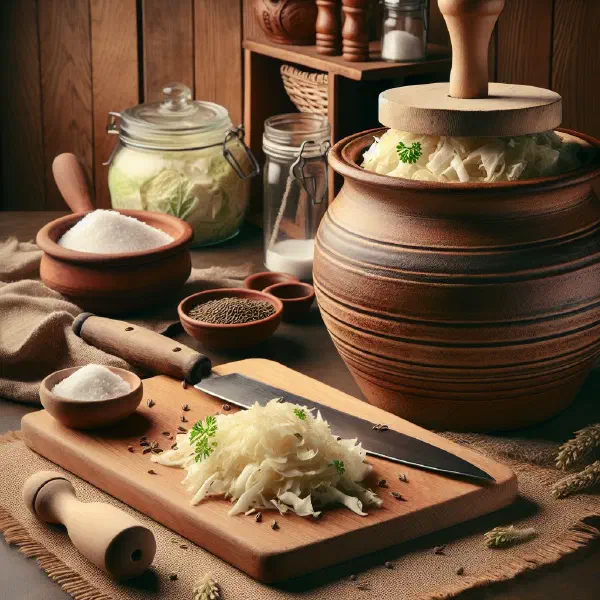
For the best results with skābēti kāposti, mix the ingredients thoroughly before packing them into the jar. A wooden pestle or tamper helps here, pressing the vegetables down so the brine covers them completely, exposed cabbage is the main cause of a failed ferment. Let the mixture sour until it reaches the level of acidity you enjoy, and taste it every day or two so you can catch the exact moment it is right.
Adapting the recipe to your taste
One of the great virtues of skābēti kāposti is how readily the recipe adapts. Vary the herbs and spices however you please. If you like a bit of heat, add a little chilli or fresh ginger. For a sweeter version, use more apple or stir in a spoonful of honey, although strict vegans will want to reach for maple syrup instead. In this way you can create your own version of this deeply traditional dish.
Ingredient substitutions
If you do not have particular ingredients to hand, or need to work around allergies, there are plenty of alternatives for skābēti kāposti. Instead of carrots you can use beetroot, which gives a different flavour and a beautiful deep colour. Apples can be swapped for pears, which offer a similar sweetness. Variations like these enrich the dish in interesting ways while leaving its essential character intact, the same spirit of thrifty improvisation that shapes Pelekie Zirni.
Drink pairing ideas
To round off your skābēti kāposti, give some thought to what you pour alongside. A refreshing sparkling mineral water or a light beer complements the sharp, sour notes beautifully. For an alcohol-free option, homemade apple juice picks up the sweetness of the apples in the ferment, while a glass of traditional Kvass makes a wonderfully authentic partner. These combinations will make the whole eating experience more rewarding.
Serving and presentation ideas
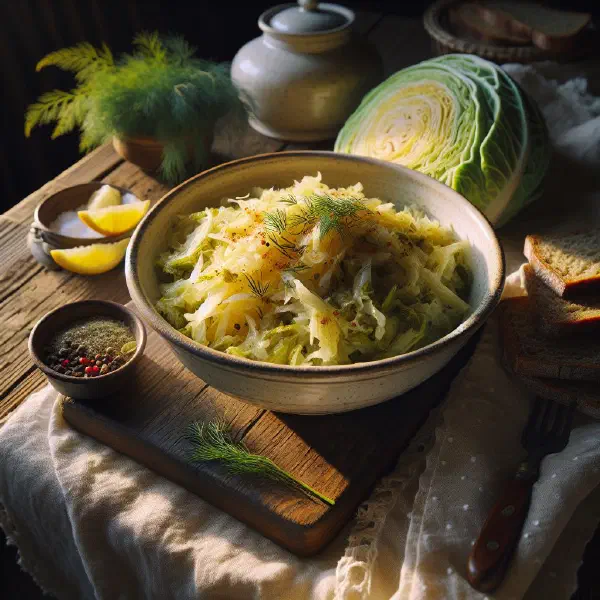
The presentation of skābēti kāposti can be lifted considerably with a little care. Use attractive serving platters or shallow bowls so the fermented vegetables look as appealing as they taste. Fresh herbs such as dill or parsley scattered over the top add colour and a note of freshness. A slice of dark Rupjmaize on the side turns it into a proper spread, and a thoughtful arrangement will impress your guests as much as it encourages everyone to share.
A bit of history
Skābēti kāposti has a long tradition in Latvia and shows how different cultures learned to preserve vegetables through fermentation. The method is not merely a practical solution for storing food through the winter; it also gives the cabbage a unique, complex flavour that nothing else quite replicates. In Latvia, sauerkraut has long been regarded as an essential part of traditional feasts and holidays. The dish is a symbol of Latvian cuisine, of closeness to the land and of the rhythm of the changing seasons.
More recipe ideas
Summary: Skābēti kāposti
In short, skābēti kāposti is not simply a straightforward and delicious dish. It embodies a genuine piece of Latvian culture and tradition. With fresh ingredients and an unhurried, low-effort method, you can bring an authentic taste of Latvia into your own kitchen. This dish offers no end of ways to enjoy it. Let it inspire you and give skābēti kāposti a try.