National Dish Liberia: Collard Greens with Rice (Recipe)
In this article
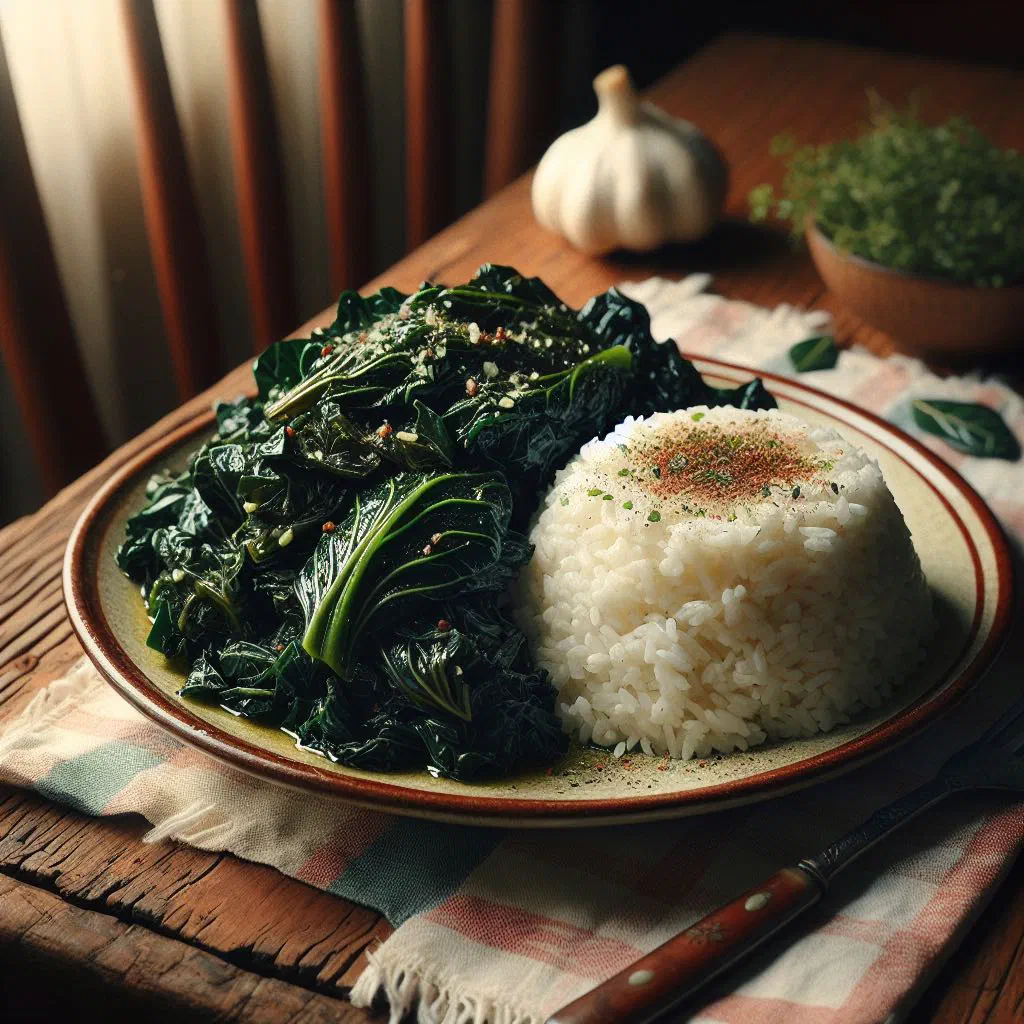
Discover Collard Greens with Rice, one of Liberia’s most comforting everyday plates. Tender green leaves are gently braised with onion, garlic and warm spices, then spooned over a bed of fluffy rice. It is nourishing, thrifty and quietly delicious, the sort of meal that fills a kitchen with good smells long before anyone sits down to eat. A wholesome introduction to the flavours of West Africa.
About Collard Greens with Rice
Liberian cooking is known for aromatic, wholesome dishes, and few are more representative than Collard Greens with Rice. The recipe pairs the goodness of dark leafy greens with the substance of rice, producing a genuinely nourishing meal. The greens are usually simmered in seasoned water, often with onions or tomatoes added to deepen the flavour. That balance of leaf and grain makes the dish equally at home as a main course or as a generous side.
Ingredients (serves 1–2)
- 200 g fresh collard greens
- 150 g rice (brown or jasmine)
- 1 onion, finely chopped
- 1–2 cloves of garlic, chopped
- 2 tablespoons vegetable oil
- 1 teaspoon salt
- 1/2 teaspoon black pepper
- 1/2 teaspoon paprika
- 500 ml water
Shopping for the ingredients
When shopping for Collard Greens with Rice, freshness of the leaves matters most. Look for firm, deep green leaves with no discolouration or brown patches. The rice is a matter of taste: brown rice brings more nutrients, while jasmine rice contributes a lovely fragrance. Everything else, onions, garlic, oil and basic spices, is easy to find in any well-stocked supermarket, and African grocers often carry the freshest greens of all.
Preparing the dish
Preparation begins with cleaning the collard greens thoroughly. Strip out the thick central stems, as they stay tough and are harder to digest. Shred the leaves into small pieces so they cook evenly. It also helps to rinse the rice before cooking to wash away surplus starch and stop the grains clumping together. Finally, chop the onion and garlic finely. They carry much of the flavour in this dish.
Step-by-step instructions
- Heat the vegetable oil in a large pan over a medium heat.
- Add the onions and fry for 2–3 minutes until softened.
- Stir in the chopped garlic and fry for a further minute.
- Add the prepared collard greens and fry for a few minutes until they wilt down.
- Pour in the water and season with salt, pepper and paprika.
- Lower the heat, cover the pan and leave to simmer for 20 minutes.
- Meanwhile, cook the rice in a separate pan according to the packet instructions.
- Once the greens are tender, serve them alongside the rice.
Gluten-free / lactose-free version
Collard Greens with Rice is naturally both gluten-free and lactose-free, which makes it an excellent choice for anyone with food intolerances. Just check that every ingredient you use, particularly spice blends and cooking oils, is free from dairy. Since rice is a staple grain that contains no gluten whatsoever, you can enjoy this dish without a second thought and still get all its flavour and nutrition.
Tips for vegans and vegetarians
For vegans, this dish is a natural fit, as it contains no animal products at all. To deepen the flavour, use vegetable stock in place of plain water. Extra plant proteins such as tofu or chickpeas can be stirred in to make the meal more substantial, much as they do in Liberian Stewed Beans. Vegetarians have every freedom to adapt the dish without altering the basic method.
More tips and tricks
To make the dish even tastier, add diced tomatoes or peppers for extra colour and depth. A squeeze of lemon juice at the end of cooking rounds out the flavour and brings a welcome freshness. It is worth experimenting with different spices to suit your own palate. Freshly chopped herbs such as parsley or coriander scattered over at the table give a final lift.
Adapting the recipe to your taste
Every element of Collard Greens with Rice can be adjusted to personal preference. If you prefer things mild, cut back on the black pepper or reach for gentler seasonings instead. Those who like heat can add chilli or cayenne pepper, in the spirit of a good Pepper Sauce. The type of rice can be varied too, giving different textures and flavours, so the recipe never has to taste quite the same twice.
Ingredient substitutions
If collard greens are hard to come by, kale or spinach make excellent stand-ins and work beautifully with the same method, as they do in a classic Spinach Stew. For a different texture in place of rice, try quinoa or couscous. These alternatives shift the flavour and broaden the nutritional range of the meal. It is well worth experimenting with different leafy greens to discover new combinations.
Drink pairing ideas
Several drinks complement Collard Greens with Rice nicely. Sparkling mineral water with lemon or lime is a light, lively partner for the dish’s savoury spicing. A fruity herbal tea or a regional red wine also works well. For an alcohol-free option with a tropical accent, fresh juices made from pineapple or papaya are ideal, and a chilled Hibiscus Tea is a fittingly Liberian choice.
Serving and presentation ideas
Presentation makes a real difference when serving this dish. Use attractive plates or shallow bowls to show it off properly. Fresh herbs used as a garnish improve the look and add a suggestion of freshness. Arrange the food in layers, rice first, the greens spooned over the top, and finish with a few strips of colourful pepper to brighten the plate.
A bit of history
The roots of Collard Greens with Rice reach back to the 19th century, when West African traditions shaped the cooking of Liberia profoundly. Leafy greens were a staple across many African cultures and were prepared in countless ways. Rice was equally prized throughout the region and formed the perfect base for nutritious meals. After generations of cooking and refinement, the dish has become a fixture of Liberian cuisine and its food culture.
More recipe ideas
Summary: Collard Greens with Rice
All told, Collard Greens with Rice is a versatile and nourishing dish valued in Liberian households and further afield alike. The recipe offers a wonderful way to experience the deep flavours and warm hospitality of Liberian cooking. With fresh ingredients and a handful of straightforward steps, you can put together a healthy and genuinely tasty meal. Give it a try and add this West African classic to your repertoire.