National Dish Libya: Bazin (Recipe)
In this article
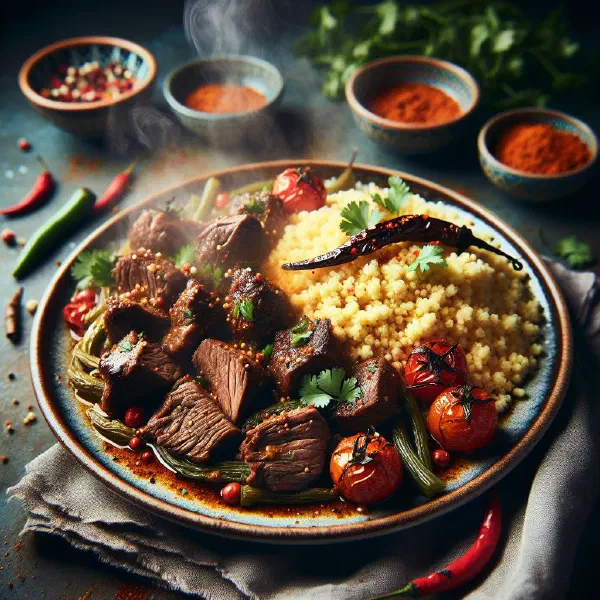
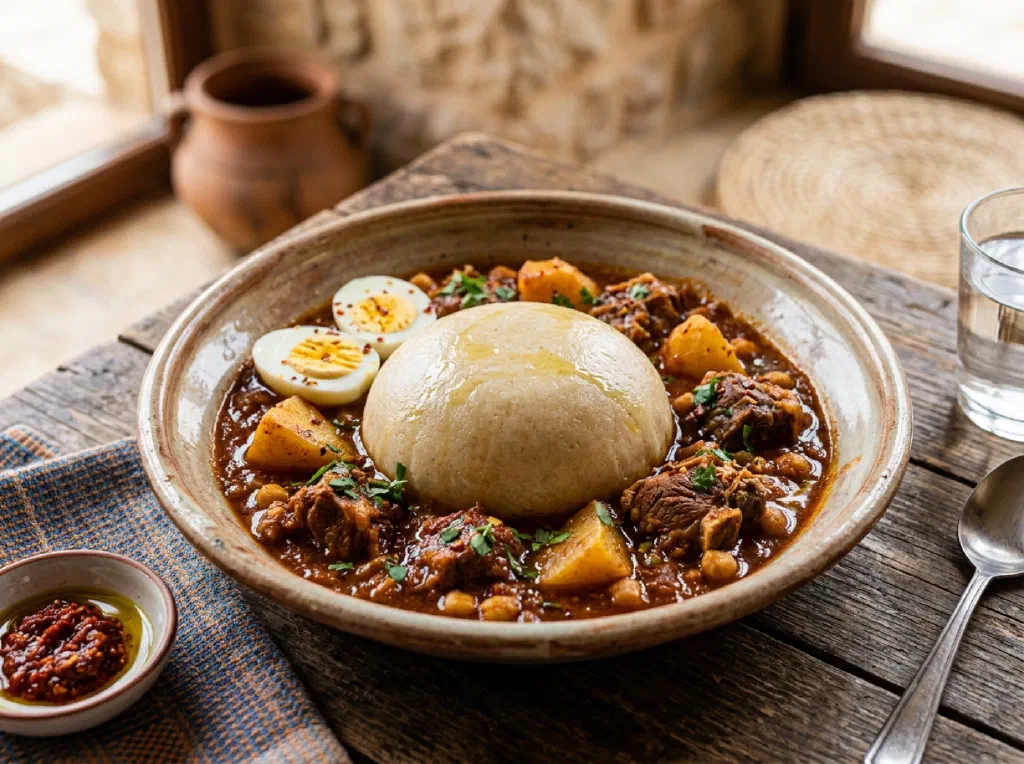
Bazin is a dome of barley dough, hard and unleavened, set in the middle of a platter with a tomato and lamb sauce poured around it. Eggs and potatoes are arranged around the base. Everyone eats from the same tray with the right hand, breaking off pieces of dough.
About Bazin
Bazin is Libya’s national dish and it is not soft. The barley dough is beaten in the pot with a wooden stick, magraf, until it becomes dense and smooth, then shaped by hand into a dome while still hot.
Barley grows where wheat struggles, which is why Libya and much of North Africa built a staple on it.
Ingredients (serves 1–2)
- 200 g barley flour
- 500 ml water
- 1 teaspoon salt
- 300 g lamb or chicken
- 2 tablespoons olive oil
- 1 large onion, finely diced
- 3 cloves garlic, finely chopped
- 1 tin of tomatoes or 5–6 fresh tomatoes, puréed
- 1 teaspoon paprika
- 1 teaspoon cumin
- 1 teaspoon ground coriander
- Salt and pepper, to taste
- Fresh parsley, to garnish
Shopping for the ingredients
Barley flour is sold in health-food shops and Middle Eastern grocers. A little plain flour mixed in makes the dough easier to work. Hararat, the Libyan spice mix, and a spoonful of filfil chuma, the chilli and garlic paste, are what make the sauce Libyan rather than generic.
Preparing the dish
Make the sauce first, since it needs a good hour. The dough is made last and must be shaped while very hot. Have a bowl of cold water beside you: you dip your hands in it to shape the dome without burning them.
Step-by-step instructions
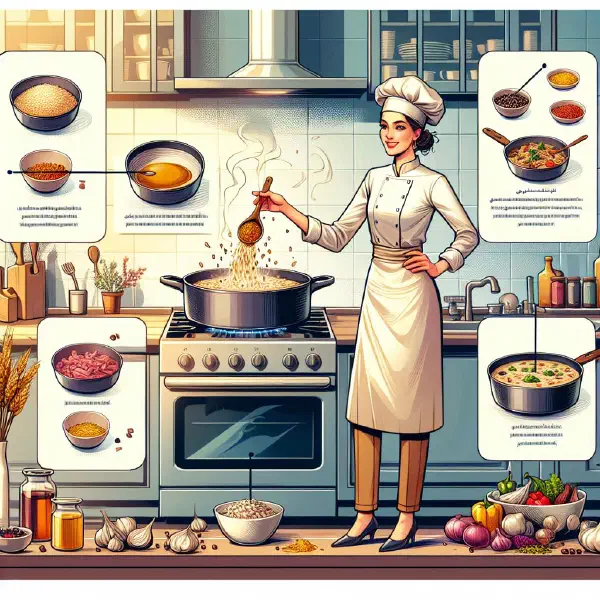
- In a pan, heat the oil and brown the meat on all sides. Add the onion and garlic and cook until translucent.
- Add the tomatoes, paprika, cumin and coriander and simmer for an hour into a thick sauce. Season with salt and pepper.
- Bring the water to the boil in a separate large pan, then add the barley flour and salt, stirring constantly.
- Keep stirring vigorously until a thick lump of dough forms and pulls away from the base of the pan.
- Turn the dough out onto a lightly greased surface and knead firmly until it becomes smooth and elastic. This can take a little time.
- Shape the Bazin dough into a dome and place it in the centre of a large, flat platter.
- Pour the sauce around the dough and garnish with fresh parsley.
Gluten-free / lactose-free version
Barley contains gluten, so bazin is not gluten-free. The sauce contains no dairy. A version made with cornmeal or cassava flour is possible but is a different dish.
Tips for vegans and vegetarians
The tomato and spice sauce works without meat: chickpeas, potato and pumpkin are all used in Libyan cooking. Chickpea stew is the established meat-free option and goes well with the same dough.
More tips and tricks
Beat the dough hard and keep beating. Bazin is meant to be dense and smooth, and a half-worked dough is grainy. Shape it hot with wet hands. And make the sauce properly thick, since it is meant to sit around the dome rather than flood the tray.
Adapting the recipe to your taste
Hard-boiled eggs and potatoes arranged around the base are standard. Filfil chuma stirred into the sauce is close to essential. A little dried mint is common.
Ingredient substitutions
A mix of barley and plain flour is easier to work than barley alone. Chicken replaces lamb. Asida is the sweeter, wheat-based cousin of the same technique.
Drink pairing ideas
Libyan tea, strong, sweet and served in three rounds with peanuts, follows the meal. Mint tea. Water alongside.
Serving and presentation ideas
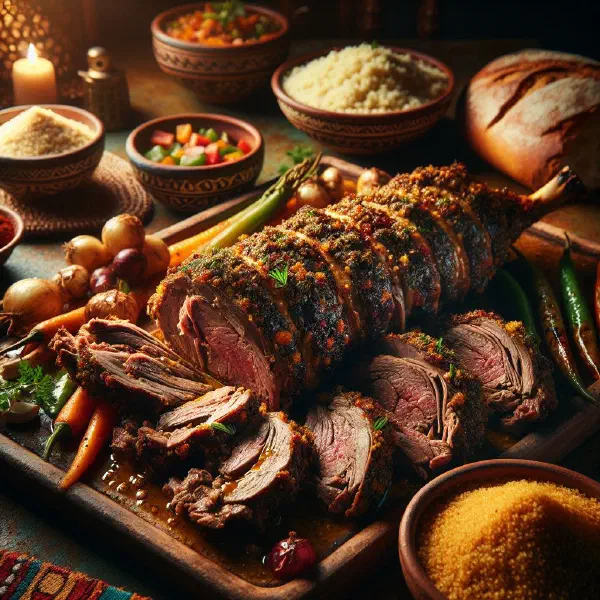
One large flat platter, dome in the middle, sauce around it, eggs and potatoes at the edge. Everyone sits around it and breaks off pieces with the right hand. It is entirely communal and there is no plating.
A bit of history
Bazin belongs to the Libyan and wider Maghrebi tradition of beaten grain doughs, and barley has been the region’s drought crop for millennia. It is festival food as much as everyday, appearing at Eid and family gatherings. It anchors Libyan cuisine.
More recipe ideas
Summary: Bazin
Bazin is a dense barley dough dome with a spiced lamb and tomato sauce poured around it. Beat the dough hard, shape it hot with wet hands, and eat it from a shared tray.