National Dish Lithuania: Pasninko Barščiai (Recipe)
In this article
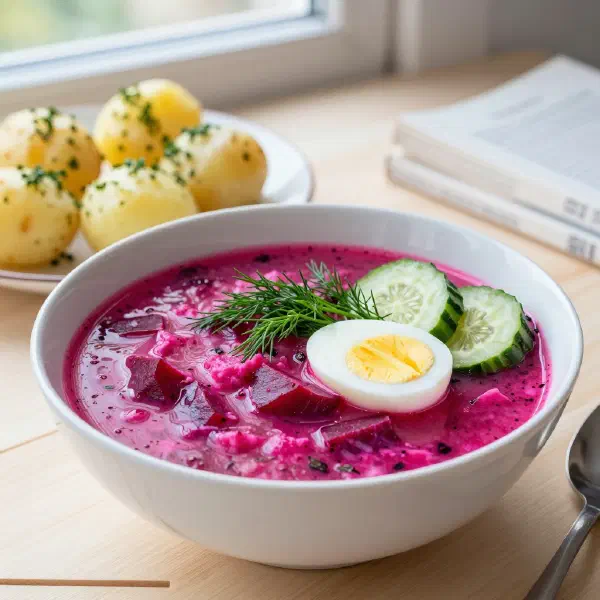
Cool, vivid and wonderfully refreshing, Pasninko Barščiai is Lithuania’s answer to a scorching summer’s day. This chilled beetroot soup blends earthy roots with crisp vegetables and tangy buttermilk to create a bowl that is as pretty to look at as it is good for you. Bright pink and flecked with fresh dill, it is the kind of dish that cools you down while packing in plenty of nourishment, a true taste of the Baltic table.
About Pasninko Barščiai
Pasninko Barščiai is an exquisite example of Lithuanian cooking, reflecting the cultural influences of the region. This cold beetroot soup is wonderfully refreshing and very good for you. Perfect for warm summer days, it offers a delicious way to cool down while taking in valuable nutrients at the same time. The combination of beetroot, fresh vegetables and soured cream makes it especially aromatic and colourful, and it sits proudly alongside other cooling classics of Lithuanian cuisine.
Ingredients (serves 1–2)
- 2 large beetroot
- 1 cucumber
- 2 spring onions
- 1 bunch of dill
- 500 ml buttermilk or yoghurt
- 1–2 tablespoons soured cream
- Salt and pepper, to taste
- 2–3 hard-boiled eggs (optional)
Shopping for the ingredients
To prepare Pasninko Barščiai, it is well worth buying fresh, good-quality ingredients. A local farmers’ market usually offers a wide choice of regional produce that is ideal for this dish. Pay particular attention to the beetroot, which should ideally be firm and juicy. Fresh herbs and vegetables are equally important to ensure the full flavour and wholesome character of this soup.
Preparing the dish
Before you begin making Pasninko Barščiai, wash and prepare all of your ingredients thoroughly. The beetroot needs to be boiled and peeled, which can take a little time. Fresh vegetables such as the cucumber and spring onions should be cut into fine pieces. The herbs should also be chopped well, to intensify the aroma and enrich the finished dish.
Step-by-step instructions
- Boil the beetroot in a pan of water until tender, then leave to cool and peel.
- Cut the cooked beetroot into small cubes and place in a bowl.
- Finely chop the cucumber and spring onions and add them to the beetroot.
- Pour in the buttermilk or yoghurt and mix well.
- Season with salt, pepper and fresh dill, and stir to combine.
- Chill the soup and, just before serving, top with a dollop of soured cream.
- Optional: quarter the hard-boiled eggs and use them as a garnish.
Gluten-free / lactose-free version
For a gluten-free and lactose-free version of Pasninko Barščiai, simply reach for lactose-free products. Instead of buttermilk or yoghurt, a lactose-free yoghurt or a creamy, gently sour plant-based alternative works beautifully. Take care to choose a lactose-free option for the soured cream too. That way the full flavour is preserved and the dish suits every kind of eater.
Tips for vegans and vegetarians
For vegans, Pasninko Barščiai is easily adapted by swapping the buttermilk and soured cream for plant-based alternatives. Almond or soya yoghurt with a squeeze of lemon juice makes a worthwhile option. You could also add extra vegetables or pulses to make the dish even more nourishing. This way you can enjoy the Lithuanian tradition entirely without animal products.
More tips and tricks
A few extra tips can help you make Pasninko Barščiai even better. Be sure to let the soup rest and chill well beforehand, so the flavours have time to develop fully. You can also try different vegetable variations to give the dish a personal touch. Feel free to experiment with the herbs and seasonings, a pinch of lemon zest rounds off the aroma wonderfully.
Adapting the recipe to your taste
The great thing about Pasninko Barščiai is just how adaptable it is. Feel free to vary the quantities of the ingredients to suit your taste. Prefer it spicier? Add a little chilli. A fan of more herbs? Experiment with different varieties to find the perfect balance. Let your creativity run free, much as you would with a hearty plate of Cepelinai.
Ingredient substitutions
If you do not have some of the ingredients for Pasninko Barščiai to hand, there are plenty of alternatives you can use. Instead of beetroot, you could try carrots or radishes, although the dish will then take on a different colour and flavour. A mix of different vegetables can give genuinely interesting results. You can also replace the soured cream with a plant-based yoghurt to create a vegan version here as well.
Drink pairing ideas
Choosing the right drink can round off the experience of Pasninko Barščiai. A light, sparkling mineral water goes wonderfully with the freshness of the soup. Alternatively, you could serve a fruity white wine or a refreshing elderflower cordial. These combinations support the flavours of the soup and make for a harmonious tasting experience.
Serving and presentation ideas
Presentation plays an important part in making Pasninko Barščiai even more appealing. Use decorative bowls and arrange the soup attractively on the table. A scattering of fresh dill and the optional eggs as a garnish give the dish a colourful appearance. Remember to serve it with a fresh piece of rye bread or crispbread to create an inviting overall picture.
A bit of history
A dish like Pasninko Barščiai has a long tradition in Lithuanian cooking. It is often prepared for celebrations and special occasions and stands for the heritage of the Lithuanian people. The use of seasonal vegetables and regional ingredients shows a close bond with nature and a respectful attitude towards food. This soup has delicious flavours and a history that reaches back to the days of the Lithuanian villages, much like the beloved cold soup Saltibarsciai.
More recipe ideas
Summary: Pasninko Barščiai
In summary, Pasninko Barščiai is an extremely versatile and flavoursome dish that is both refreshing and healthy. With its rich palette of colours and its intense aroma, it is a genuine treat. The dish is easy to adapt and suits a range of dietary needs. Let it inspire you, and enjoy this Lithuanian national dish.