National Dish Lithuania: Vėdarai (Recipe)
In this article
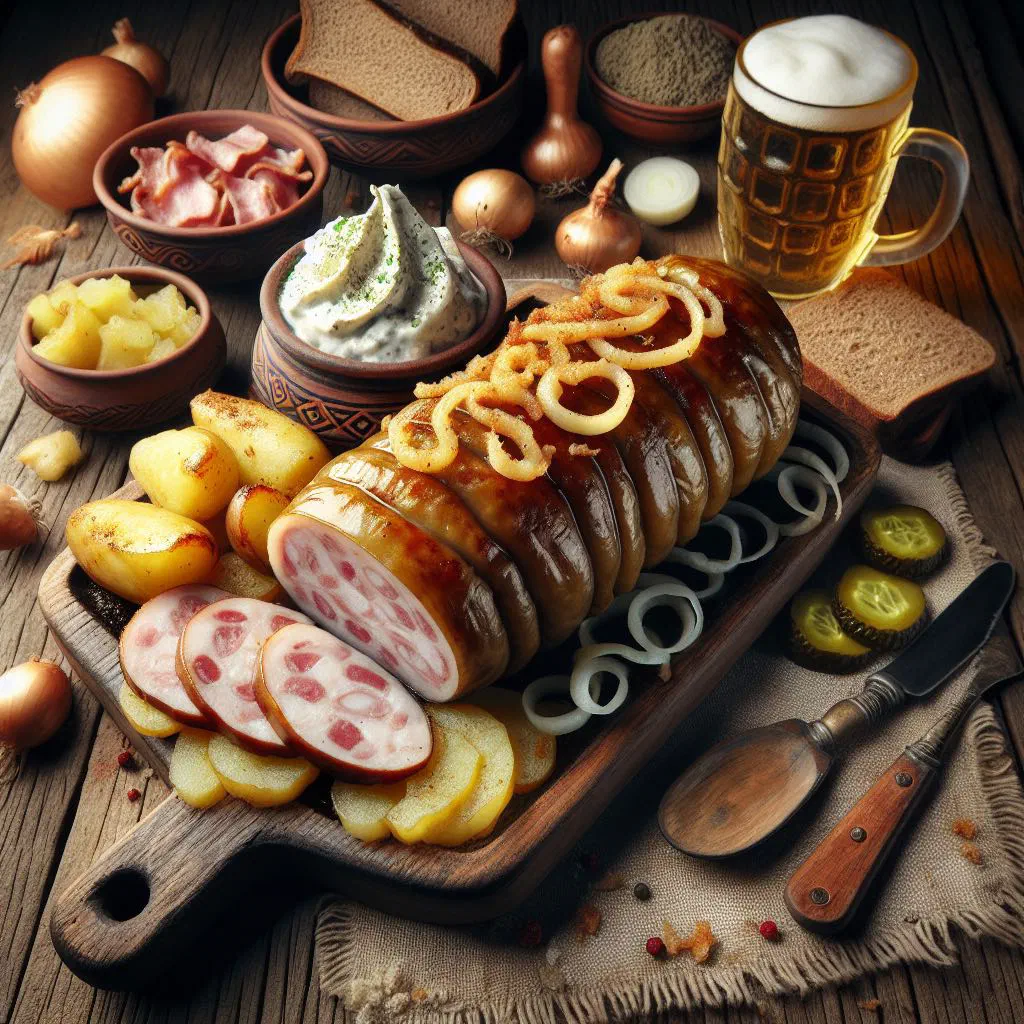
Meet Vėdarai, one of Lithuania’s most comforting rustic classics. These hearty sausages are stuffed with a savoury filling of grated potato and smoked bacon, then simmered and roasted until golden. Simple, filling and steeped in country tradition, they capture the warm, homely spirit of the Lithuanian table. Vėdarai bring a taste of the old farmhouse kitchen straight to your plate.
About Vėdarai
Vėdarai is a traditional Lithuanian dish, prized for its hearty flavour and its wonderfully simple preparation. It consists of sausages filled with a delicious mixture of potato and bacon. The use of fresh ingredients and the marriage of savoury aromas make vėdarai a memorable experience that truly represents Lithuanian cooking. It wins people over with its versatility and its deeply rooted heritage, much like the beloved Cepelinai that share its love of the humble potato.
Ingredients (serves 1–2)
- 500 g potatoes
- 200 g smoked bacon
- 1 onion
- 2 garlic cloves
- 1 tsp salt
- 1/2 tsp pepper
- 1–2 pork casings (for the sausage)
Shopping for the ingredients
When shopping for the ingredients for vėdarai, it is well worth paying attention to the quality of the potatoes. Fresh, waxy potatoes are ideal, as they hold the perfect texture during cooking. The smoked bacon is another key element and should likewise be as fresh as possible to intensify the flavour. Onion and garlic can be found easily in any supermarket, though local markets often offer the freshest options.
Preparing the dish
Preparation is a crucial step when cooking vėdarai. First, the potatoes should be peeled and cut into even pieces so they cook uniformly. The onion and garlic should be finely chopped to release their aromas to the full. The smoked bacon can be cut into small cubes, ready to be combined with the potatoes later on.
Step-by-step instructions
- Boil the peeled potatoes in a pan with salt until they are soft.
- Drain the cooked potatoes and let them steam dry thoroughly.
- Meanwhile, fry the onion and garlic in a pan with a little oil until golden brown.
- Mix the warm potatoes with the bacon, onion and garlic. Season with pepper and salt.
- Fill the prepared pork casings with the mixture and seal the ends well.
- Cook the sausages in a large pan of salted water until they rise to the surface.
- Pan-fry or roast the vėdarai in the oven to taste before serving.
Gluten-free / lactose-free version
Vėdarai can be made gluten-free and lactose-free without any trouble. Most of the ingredients, such as potatoes and bacon, are naturally free from gluten and lactose. Just make sure the pork casings you use contain no additives that might harbour gluten or lactose. That way, even people with special dietary needs can enjoy this delicious dish.
Tips for vegans and vegetarians
For vegans and vegetarians there are creative ways to enjoy vėdarai. In place of bacon, a combination of smoked tofu and seasonings can be used to achieve a similar flavour. The potato filling can be enriched further with plant-based cream or nutritional yeast to fine-tune the texture and taste. This makes the dish just as tasty and appealing for this group too.
More tips and tricks
A few tips and tricks can help you perfect vėdarai. For instance, take care not to boil the potatoes for too long, so they do not turn mushy. A smooth, even mixture of potato and bacon is important to guarantee a consistent flavour throughout the sausage. Feel free to experiment with different seasonings to give the dish your own personal touch.
Adapting the recipe to your taste
The recipe for vėdarai is easy to adapt to personal preference. If you would like to work in more vegetables, carrots or celery can be added to the filling, for example. A spicy kick from paprika or chilli can also give the dish an interesting twist.
Ingredient substitutions
If something for vėdarai is not available, there are plenty of alternatives you can turn to. Instead of pork casings, vegetarian sausage skins or even vegetables such as peppers can do the job. For anyone who would rather not eat potatoes, sweet potatoes or cauliflower make healthy alternatives. These ingredients bring a different flavour and new nutrients to the dish, just as they do in a warming Vegetable Stew.
Drink pairing ideas
Plenty of drinks pair beautifully with vėdarai and complement its aromas perfectly. A fresh, light beer is a popular choice in Lithuania and harmonises wonderfully with the savoury flavours of the sausages. A dry white wine can also be an excellent match, especially when served well chilled. For an alcohol-free option, homemade lemonade or a fruity iced tea fits the bill nicely.
Serving and presentation ideas
The presentation of vėdarai can be lifted with a few simple tricks. Serve the sausages on a plain wooden board and garnish them with fresh herbs, such as parsley or dill. A couple of sides, such as salad or sauerkraut, give the dish freshness and colour, the tangy Sauerkraut is a natural partner here. Remember that we eat with our eyes first, and an attractive presentation can greatly heighten the enjoyment of the meal.
A bit of history
Vėdarai has a long history in Lithuanian cooking and is closely tied to the country’s rural traditions. Originally these sausages were prepared in winter as a way of laying in supplies. Making sausage was an art form passed down from generation to generation, alongside country staples like Bulvinė Dešra. Today vėdarai is served not only in the countryside but in the cities too, and it remains as popular as ever within Lithuanian cuisine.
More recipe ideas
Summary: Vėdarai
Vėdarai is an outstanding example of simple yet flavourful Lithuanian cooking. The combination of potato and bacon in a sausage casing is traditional and wonderfully adaptable. Whether with vegan alternatives or extra ingredients, vėdarai has something to offer every palate. It is a dish that brings together both pleasure and history in a single bite.