National Dish Malaysia: Nasi Kerabu (Recipe)
In this article
Discover Nasi Kerabu, one of Malaysia’s most eye-catching national dishes. This remarkable recipe pairs fragrant, naturally blue rice with a generous scattering of fresh herbs, crisp vegetables and tender grilled protein. It is a genuine feast for all the senses, and far easier to cook at home than its dazzling looks suggest.
About Nasi Kerabu
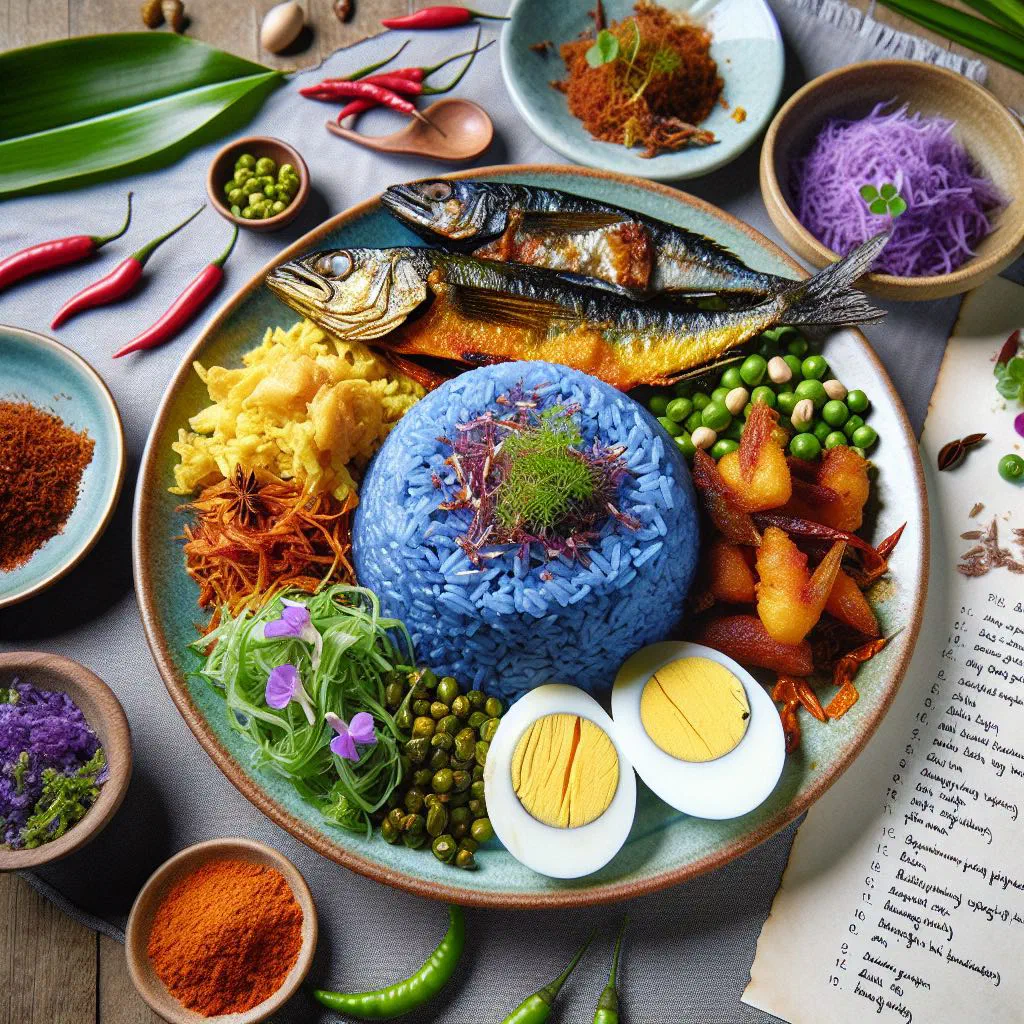
Nasi Kerabu is a traditional Malaysian rice dish that captivates with its striking blue colour and with its wonderful variety of flavours and textures. The rice takes on its characteristic hue from butterfly pea flowers, which stain the grains a vivid blue as they cook. The dish is a treat for the eyes and the palate alike, combining fresh herbs, crunchy vegetables and spicy sauces into one harmonious plate. It is an expression of Malaysia’s cultural diversity and a popular choice both for celebrations and as an everyday meal.
Ingredients (serves 1–2)
- 1 cup jasmine rice
- 1/2 cup water
- 1 tablespoon butterfly pea flowers (for the colouring)
- 1 handful fresh mint
- 1 handful coriander
- 1/2 cup grated carrots
- Chicken breast or fish fillet (optional)
- Spicy peanut sauce
- Salt and pepper to taste
Shopping for the ingredients
When shopping for nasi kerabu, it pays to choose fresh herbs and good-quality rice. Make sure the butterfly pea flowers you buy for the colouring are fresh, as they do more than dye the rice. They add a subtle floral note too. A trip to an Asian grocery is well worth it, as you will find all the necessary ingredients there in excellent quality. Whatever protein you choose, be it chicken or fish, check that it is fresh and of good quality to get the very best flavour.
Preparing the dish
Preparing nasi kerabu is not only straightforward but genuinely fun. Start by rinsing the rice thoroughly, then leave it to soak in water for 20–30 minutes. This helps it cook evenly. In the meantime, wash the fresh herbs and vegetables well and chop them finely, ready to use as garnish later. Choosing the freshest ingredients you can find makes all the difference to the overall quality and flavour profile of the dish.
Step-by-step instructions
- Put the soaked jasmine rice, 1/2 cup of water and the butterfly pea flowers into a saucepan.
- Bring the rice to the boil, then reduce the heat and cook until the water has been fully absorbed.
- Meanwhile, grill or pan-fry your chosen protein until cooked through.
- Once the rice is done, fluff it with a fork and arrange it on a plate.
- Artfully arrange the fresh herbs, vegetables and your protein on top.
- Finally, spoon a little spicy peanut sauce over the dish and serve.
Gluten-free / lactose-free version
Nasi kerabu is easy to prepare gluten-free and lactose-free. Opt for a rice-based peanut sauce that contains no gluten, and take care when selecting the ingredients for your protein element to make sure they are gluten-free as well. Fresh vegetables and herbs are always a safe choice for a gluten-free and lactose-free diet. With these small adjustments, the glorious flavour of the dish remains fully intact.
Tips for vegans and vegetarians
Nasi kerabu is a versatile dish that adapts beautifully to vegan and vegetarian diets. Instead of chicken or fish, use grilled tofu or tempeh, both of which are rich in plant protein, the same ingredients that star in Tahu Tempe. Do check the peanut sauce carefully, as some recipes are not vegan. Choosing fresh, plant-based herbs and vegetables enriches the dish while keeping it perfectly in line with your dietary needs.
More tips and tricks
A few small tricks make preparing nasi kerabu even easier. For a fuller aroma, cook the rice in coconut milk instead of water, which lends the dish an extra creaminess. A scattering of roasted peanuts as a final garnish adds a welcome crunch. You can also prepare the vegetables as hot or as mild as you like, fine-tuning the dish until the flavour is exactly right for you.
Adapting the recipe to your taste
The adaptability of nasi kerabu is one of its great strengths. You can add different vegetables depending on the season or your personal taste. Popular options include cucumber, radish or even avocado for a creamy texture. You can also adjust the heat of the sauces to suit, making the dish just as enjoyable for chilli lovers as for more sensitive palates.
Ingredient substitutions
If you cannot find certain ingredients, or simply do not like them, there are plenty of alternatives. Instead of butterfly pea flowers, you can use sweet potato purée to give the rice a natural sweetness and colour. For the peanut sauce, many recipes work with other nut butters such as cashew butter or almond butter. These swaps do more than widen your options. They open up entirely new flavours.
Drink pairing ideas
Nasi kerabu pairs wonderfully with a whole range of drinks. A refreshing pineapple or mango juice complements the flavours of the dish beautifully. For a more traditional approach, serve an Asian tea, perhaps a frothy Teh Tarik, or coconut water, both of which round off the flavours of Malaysian cuisine perfectly.
Serving and presentation ideas
Presentation plays a decisive role when serving nasi kerabu. Use colourful bowls or plates to show the dish off at its best. Arrange the fresh herbs and vegetables artfully to create a truly eye-catching plate. A beautiful garnish whets the appetite and turns your dish into a genuine work of art.
A bit of history
Nasi kerabu has its roots in Malaysian culture and is a much-loved national dish. It reflects the ethnic diversity of Malaysia and shows strong influences from Islamic and Thai cooking. Traditionally it is served with various kinds of protein and features at celebrations and festivals. Every region has its own variation, underlining the richness and variety of the country’s cuisine.
More recipe ideas
- Nasi Lemak — another beloved rice dish, combining coconut rice with an array of accompaniments.
- Satay — grilled skewers of meat served with a spicy peanut sauce.
- Roti Canai — flatbread fried until crisp, often served with a curry sauce.
- Nasi Dagang — fragrant rice steamed with coconut milk, a close cousin from Malaysia’s east coast.
Summary: Nasi Kerabu
In short, nasi kerabu is a fascinating dish that brings the flavours of Malaysia together in the most delicious way. With fresh ingredients and countless variations, it is a treat for the palate and a feast for the eyes in equal measure. Let its colours and aromas cast their spell, and give it a try today.