National Dish Malaysia: Rojak Buah (Recipe)
In this article
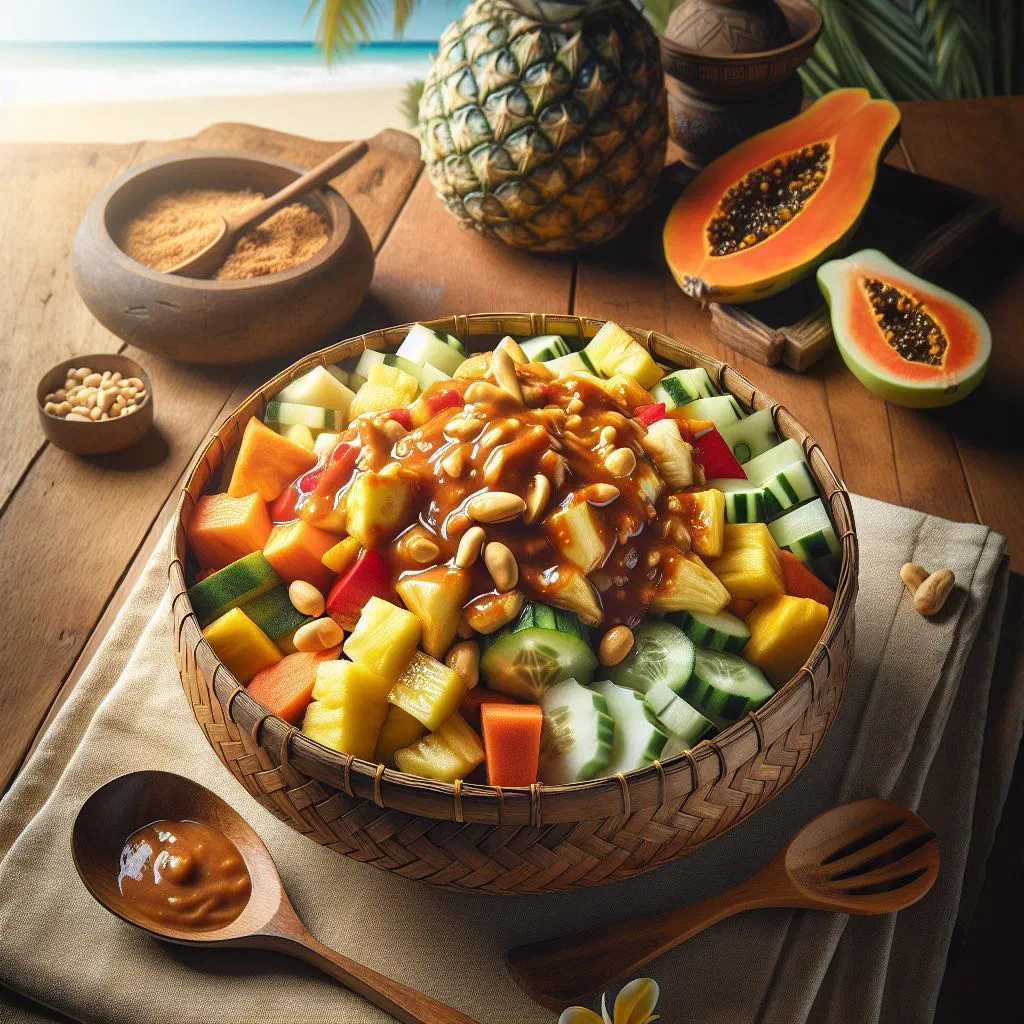
Meet Rojak Buah, Malaysia’s gloriously unconventional fruit salad, juicy tropical fruit tossed in a punchy, spiced peanut sauce. Sweet, tangy and just a little fiery, it works as a refreshing snack on a hot afternoon or as a light dessert after a big meal. It is naturally vegan and gluten-free, comes together in minutes, and is endlessly adaptable to whatever fruit you have to hand.
About Rojak Buah
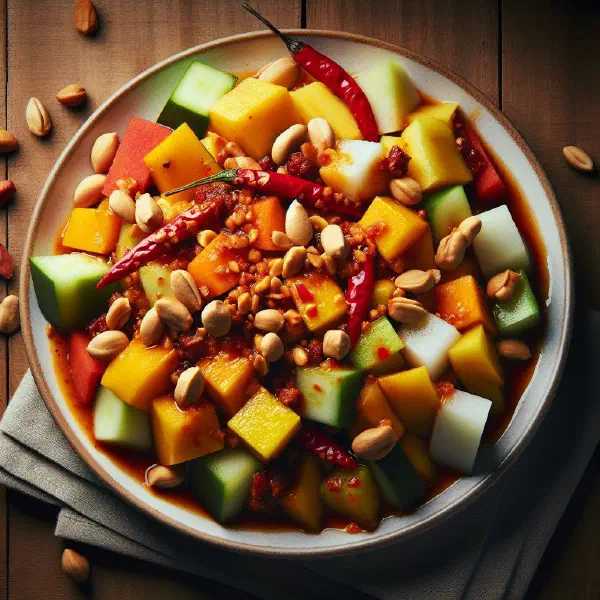
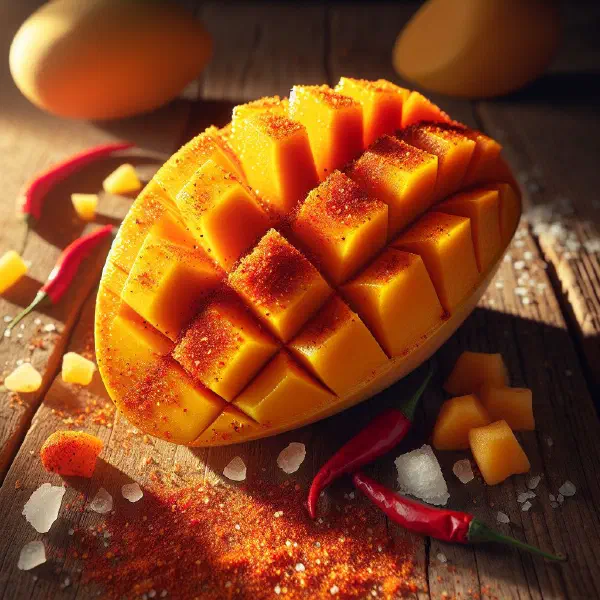
Rojak Buah is a traditional Malaysian dish that pairs fresh fruit with a distinctive, savoury peanut sauce. The bowl typically brings together sweet mango, juicy pineapple and crisp apple, a combination that delivers a truly memorable mix of flavours. The spiced peanut dressing gives the dish its signature kick and is what makes rojak buah such a popular choice as both a snack and a dessert. Flavours and textures complement each other perfectly, making this a genuine speciality of Malaysian cuisine.
Ingredients (serves 1–2)
- 1 ripe mango
- 1/2 pineapple
- 1–2 apples
- 2–3 tablespoons peanut sauce
- 1 tablespoon lime juice
- A few handfuls of chopped peanuts, to garnish
- Optional: chilli or other spices for an extra kick
Shopping for the ingredients
To make a truly delicious rojak buah, it is worth buying the freshest ingredients you can find. Visit a nearby market or a shop that specialises in tropical fruit for the best results. When choosing the fruit, make sure it is ripe and juicy. This guarantees a dish that is as appealing to the eye as it is to the palate.
Preparing the dish
The preparation for rojak buah could hardly be simpler and takes only a few steps. Wash the fruit thoroughly and cut it into attractive pieces. It is important to cut the different fruits to a similar size so the finished mixture looks harmonious. Once the ingredients are prepped, you can move on to the next step and mix up the peanut sauce.
Step-by-step instructions
- Cut the fruit: Combine all the prepared fruit in a large bowl.
- Mix the sauce: Whisk the peanut sauce with the lime juice until it reaches a smooth consistency.
- Toss: Pour the peanut sauce over the cut fruit and stir gently so the dressing coats everything evenly.
- Garnish: Sprinkle with chopped peanuts and, if you like, a little chilli.
- Serve: Rojak buah can be served straight away or chilled briefly in the fridge.
Gluten-free / lactose-free version
Rojak buah is naturally gluten-free and lactose-free, as long as you make sure the peanut sauce you use contains no gluten or lactose-based components. Check the ingredient list on the sauce to confirm there are no animal products or cereals hidden inside. That way, people with specific dietary requirements can enjoy the full flavour experience too.
Tips for vegans and vegetarians
For vegans and vegetarians, rojak buah is an excellent choice, as it is made entirely from plant-based ingredients. Just check that the peanut sauce contains no animal-derived components and pick options formulated specifically for a vegan diet. You can also swap in different fruits to tailor the dish to personal preferences, making the meal not only tasty but wonderfully varied.
More tips and tricks
A few simple tips and tricks can take rojak buah to the next level. Try adding other fruits, such as ripe papaya or grapes, to discover new flavour combinations. An extra squeeze of lime freshens and sharpens the aromas beautifully. You can also adjust the fruit mix with the seasons so you are always working with the freshest ingredients, the same fresh-and-zesty approach that makes Kerabu so appealing.
Adapting the recipe to your taste
The simplicity of rojak buah makes the recipe easy to adapt to different tastes and preferences. You can dial up the sweetness with honey or agave syrup, for example, or vary the heat with extra chilli. Tweaks like these make the dish more personal and help ensure everyone enjoys it. Experiment with the proportions and ingredients until you have created your perfect rojak buah.
Ingredient substitutions
If a particular ingredient is not to hand, there are plenty of alternatives you can reach for. Instead of pineapple, try kiwi or dragon fruit to vary the flavour. For the peanut sauce, tahini (sesame paste) makes a good substitute, though if you love that nutty dressing, the classic peanut sauce of Gado Gado or Pasembur shows just how versatile it is. Swaps like these can also help make the dish suitable for a range of diets.
Drink pairing ideas
Various drinks pair well with rojak buah and complement the fresh flavour of the fruit. Refreshing coconut water or a simple iced tea with lime rounds off the experience nicely. For a richer combination, try a tropical smoothie made with mango or pineapple, or go full Malaysian and serve it with a frothy Teh Tarik. These options keep the meal as varied as it is delicious.
Serving and presentation ideas
Presentation plays a decisive role when serving rojak buah. A beautiful bowl filled with a colourful medley of fruit whets the appetite instantly. Garnish the dish with fresh mint leaves or an extra scattering of chopped nuts for added visual impact. Serving it in clear glasses is another lovely way to show off the bright colours of the dish.
A bit of history
Rojak buah has its origins in Malaysia’s rich food culture, shaped by the country’s many ethnic communities. The interplay of sweet and savoury flavours is typical of Malaysian cooking and runs through many of its traditional dishes. Rojak means “mixture” in Malay, and the dish embodies that philosophy in its sheer variety of ingredients. Over the years it has become a favourite snack across Malaysia and is hugely popular with visitors too.
More recipe ideas
Summary: Rojak Buah
In short, rojak buah is a wonderfully versatile and delicious dish that is simple to prepare and suits practically any occasion. The combination of fresh fruit and spicy peanut sauce delivers a flavour experience quite unlike anything else. Whether as a snack or a dessert, it is a palette of aromas you should not miss. Experiment with the ingredients and make rojak buah your own culinary masterpiece.