National Dish Malaysia: Tepung Pelita (Recipe)
In this article
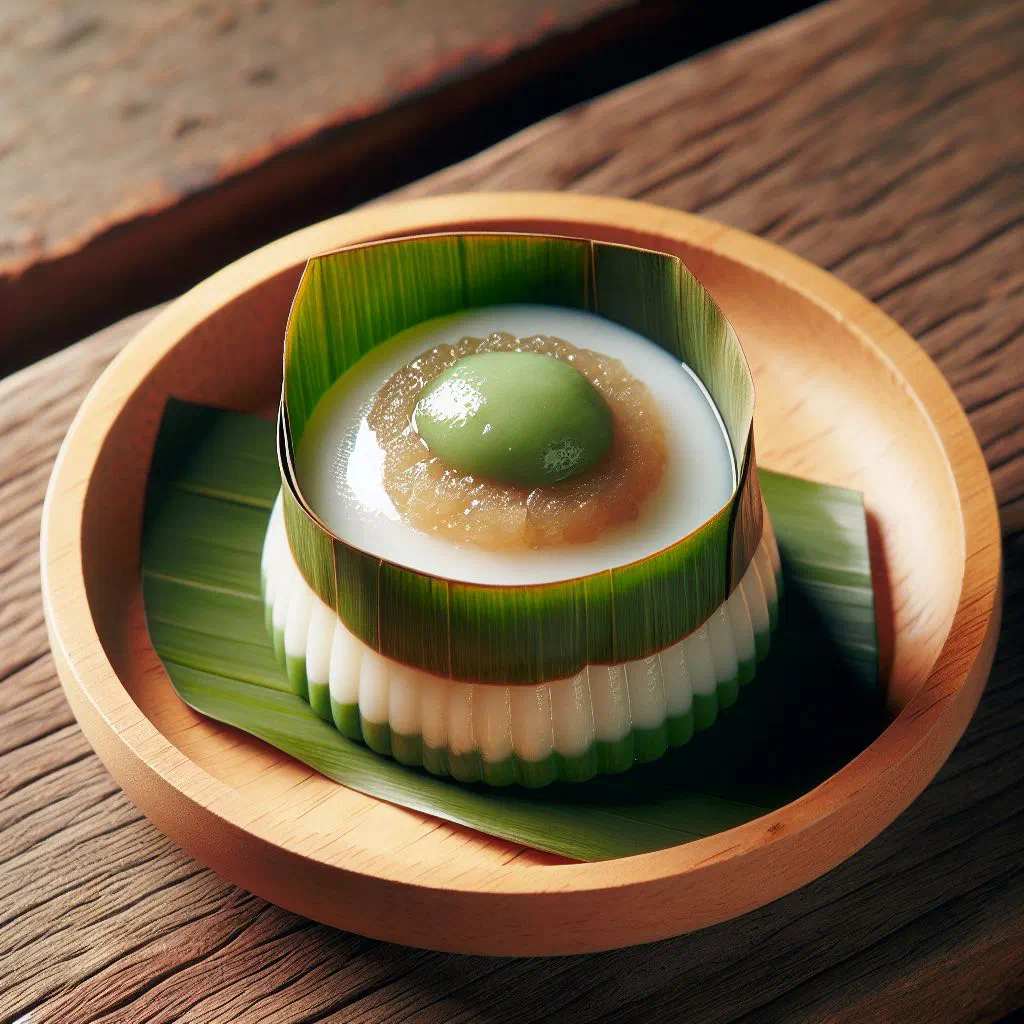
Meet Tepung Pelita, one of Malaysia’s prettiest little desserts, delicate two-layered puddings steamed in dainty banana leaf cups. A silky, lightly salted coconut cream sits atop a sweet rice flour base, making each bite-sized parcel a perfect balance of sweet and savoury. Naturally vegan, gluten-free and lactose-free, it is a treat almost everyone can enjoy, and this recipe shows you exactly how to make it at home.
About Tepung Pelita
Tepung Pelita is a much-loved Malaysian dessert that tastes wonderful and looks beautiful in equal measure. These small, steamed treats are built from two delicious layers: the lower layer is a sweet rice flour custard, while the upper layer is a creamy coconut topping. Served in small, vivid green banana leaf cups, tepung pelita offers more than a distinctive flavour but a truly special presentation as well.
Ingredients (serves 1–2)
- 100 g rice flour
- 200 ml coconut milk
- 70 g sugar
- 1 tsp salt
- 10–15 banana leaves
Shopping for the ingredients
The ingredients for tepung pelita are easy to find in most Asian grocery shops. Rice flour and coconut milk are staple items that you may well track down in a wide range of stores. Sugar and salt are everyday basics you almost certainly have in your kitchen already. It is worth buying fresh banana leaves, as they are essential to the dessert’s traditional look and aroma, the same leafy wrapping that gives Pulut Panggang its character.
Preparing the dish
Preparing tepung pelita is fairly straightforward, though a few steps are needed to achieve the perfect result. Start by preparing the banana leaves: cut them into small squares of roughly 10 cm, which makes it easier to shape the little “cups”. Be sure to warm the leaves gently, either by steaming them or passing them briefly over a flame, so they become pliable.
Step-by-step instructions
- In a bowl, mix the rice flour with a pinch of salt and 200 ml of water.
- In a separate pan, bring the coconut milk, sugar and a pinch of salt to the boil.
- Place the 10 cm banana leaf squares into a small bowl or mould.
- Spoon some of the rice flour mixture into each banana leaf cup.
- Add a spoonful of the coconut filling, then cover it with the remaining rice flour mixture.
- Steam the filled leaves over boiling water for about 25 minutes.
- Once the mixture has set, remove the tepung pelita from the steamer and leave to cool.
Gluten-free / lactose-free version
If you want to cook gluten-free or lactose-free, tepung pelita is an excellent choice. Use certified gluten-free rice flour, which is available in many shops. Coconut milk is naturally lactose-free, making it an ideal base. Simply take care not to add any other dairy products to the recipe to keep it fully lactose-free.
Tips for vegans and vegetarians
Tepung pelita is naturally vegan, as it contains no animal products whatsoever. Even so, make sure the sugar you use is unrefined, since some types of sugar are filtered through bone char. Choose unrefined sugar or coconut blossom sugar instead to guarantee the dessert stays vegan. That makes this dish a superb choice for anyone eating a plant-based diet.
More tips and tricks
To make sure your tepung pelita turns out perfectly, keep a close eye on the steaming time. If the dessert steams for too short a time, the mixture may stay too runny; steam it for too long and it can turn tough. Another tip is to flavour the coconut layer with a little pandan extract or vanilla, adding an extra layer of aroma to the dessert.
Adapting the recipe to your taste
The tepung pelita recipe is easy to adapt to personal preference. You might like to vary the sweetness by using more or less sugar, or to introduce different flavourings. Try exotic additions such as lychee or mango to give your dessert a new twist.
Ingredient substitutions
If you cannot find banana leaves, small heatproof moulds or ramekins will work instead, though this may take away some of the dessert’s traditional flavour and appearance. Alternatively, use other food-safe leaves that hold up well during steaming. For the filling, you can also swap the coconut milk for cashew cream to lend the dessert a nutty note.
Drink pairing ideas
Tepung pelita pairs beautifully with a range of drinks. Combine it with a cup of hot jasmine tea to create a relaxing moment, or serve it alongside a glass of frothy Teh Tarik, Malaysia’s famous pulled tea. Fresh coconut water or a green smoothie are excellent companions too.
Serving and presentation ideas
Thoughtful presentation can elevate the whole tepung pelita experience. Serve the little portions on an elegant plate and garnish them with fresh mint leaves or edible flowers for a lively splash of colour. You can also set out a small bowl of extra coconut cream on the side for an added wow factor.
A bit of history
Tepung pelita has its roots in Malaysian cuisine and is a favourite dessert often prepared for festivals and celebrations. Its combination of rice and coconut mirrors the country’s signature ingredients. Many people in Malaysia treasure tepung pelita for its taste and for its cultural significance. It is a symbol of the nation’s colourful and wonderfully diverse kitchen.
More recipe ideas
Summary: Tepung Pelita
Tepung pelita offers a unique taste of the Malaysian kitchen and is ideal for anyone keen to try something new. The pairing of the sweet rice layer with the creamy coconut topping makes for a memorable flavour experience. Because it suits vegans as well as people with special dietary needs, it is a wonderfully versatile dessert. Give it a go at your next opportunity and savour the rich culture of Malaysia.