National Dish Mali: Dégué (Recipe)
In this article
Meet Dégué, the sweet millet-and-yoghurt bowl that Mali has been spooning up for generations. Cool, creamy and gently sweet, it sits somewhere between a breakfast, a snack and a pudding, and it comes together in barely half an hour. If you have never cooked with millet before, this is the friendliest possible introduction: a handful of everyday ingredients, no special equipment, and a result that tastes of West Africa in the very first mouthful.
About Dégué
Dégué is a traditional Malian dish that gathers the flavours and textures of West Africa into one simple but delicious recipe. It is usually built around millet, and it is equally popular as a snack and as a nourishing breakfast. The combination of creamy yoghurt and dextrose gives dégué a delicate sweetness that has pleased many generations. Thanks to its adaptable preparation it suits all sorts of occasions and can be put together quickly.
Ingredients (serves 1–2)
- 1 cup millet
- 2 cups water
- 1 cup plain yoghurt
- 3–4 tablespoons dextrose (glucose sugar)
- A pinch of salt
- Optional: fresh fruit, to garnish
Shopping for the ingredients
To make dégué you need a small selection of fresh, good-quality ingredients. Millet is stocked by most supermarkets as well as by specialist African and Asian grocers. Look for a natural yoghurt without additives, as that guarantees the best flavour. Dextrose is easy to find too, and it is worth turning to local producers wherever you can so you get produce at its freshest.
Preparing the dish
Preparing dégué could hardly be simpler, and it needs only a little planning. Begin by rinsing the millet thoroughly so that any grit and impurities are washed away. While you do that, set out the yoghurt and stir the dextrose through it so the sweetness is evenly distributed. The method is so straightforward that you will be enjoying the fragrant millet porridge in next to no time.
Step-by-step instructions
- Rinse the millet thoroughly in a pan under cold running water.
- Add 2 cups of water to the same pan and bring to the boil.
- Add the millet and simmer over a low heat for about 15–20 minutes, until soft.
- Tip the cooked millet into a bowl and let it cool a little.
- Stir the yoghurt and the dextrose through the millet.
- Garnish with fresh fruit to taste.
Gluten-free / lactose-free version
The original dégué recipe is naturally gluten-free and is easily made lactose-free as well. Simply reach for a plant-based yoghurt alternative such as almond or coconut yoghurt. That not only lends the dish an interesting flavour note, it also makes it far kinder to anyone with an intolerance. This way you can enjoy the authentic taste of dégué without having to think twice about your diet.
Tips for vegans and vegetarians
The vegan version of dégué is both easy and delicious. Swap the yoghurt for soya or coconut yoghurt and the result is every bit as good. Check that your dextrose is vegan too, although in practice there are rarely any restrictions here. Using plant-based ingredients keeps the authentic West African flavour intact while making the dish accessible to everyone.
More tips and tricks
There is plenty of room to be creative with dégué. Experiment with additions such as nuts, seeds or dried fruit to give the dish extra crunch and depth. A pinch of cinnamon or a little vanilla can also introduce intriguing new notes. Remember that small personal touches are exactly what make the dish stand out and keep it varied from one batch to the next.
Adapting the recipe to your taste
One of the best things about dégué is its versatility. Depending on your own palate you can adjust the amount of dextrose, or replace it altogether with honey or agave syrup if you prefer a rounder sweetness. Different varieties of millet, or other grains such as quinoa, open up interesting variations too. If you enjoy grain-based puddings, the same spirit runs through Bouillie De Mil and Gateau De Mil.
Ingredient substitutions
If you do not have everything to hand, alternatives are more than welcome. In place of dextrose you can use brown sugar or an instant sweetener. Instead of millet, other grains such as buckwheat or amaranth work well and are just as nutritious, as is the fine fonio used in Couscous De Fonio. That way everyone in the household can adapt dégué to suit their own needs.
Drink pairing ideas
Dégué pairs beautifully with a whole range of drinks. A refreshing mint tea or a lightly sweetened fruit juice suits the dish well and rounds off the whole experience, a chilled glass of Bissap is a particularly good match. A glass of cold water with lemon is equally refreshing and stays in keeping with the gentle sweetness of the dégué. The right drink can lift the pleasure of a meal considerably.
Serving and presentation ideas
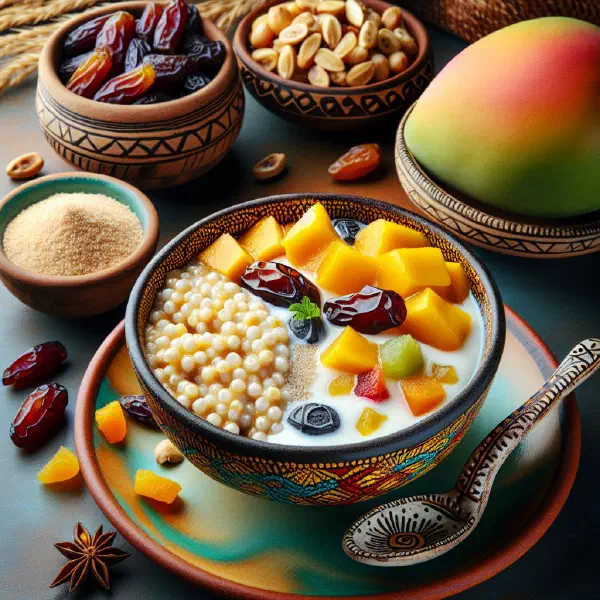
Presentation gives dégué a special lift. Serve it in a handsome, generous bowl and garnish with fresh, colourful fruit and herbs. A pleasing arrangement of colours does more than look good. It whets the appetite as well. Do not forget to set out the bowls with small spoons for easy serving, which makes the whole thing feel that much more inviting.
A bit of history
Dégué has a long tradition in Malian cooking and reflects the country’s wider food culture. The dish is a fine example of the many uses of millet, a staple grain across much of West Africa. Historically, millet served as a versatile, nourishing base for all sorts of recipes handed down through the generations. Dégué makes clear just how central shared meals and communal cooking are to Malian cuisine.
More recipe ideas
Summary: Dégué
Dégué is a versatile and nourishing dish that captures the authentic taste of Mali. It is simple to prepare and easily adapted to personal preference. With its wholesome ingredients, its ready gluten-free and lactose-free variations and its scope for creative presentation, dégué enriches the table both in the kitchen and culturally. Give it a go and enjoy a little piece of Malian life at home.