National Dish Monaco: Millefeuille (Recipe)
In this article
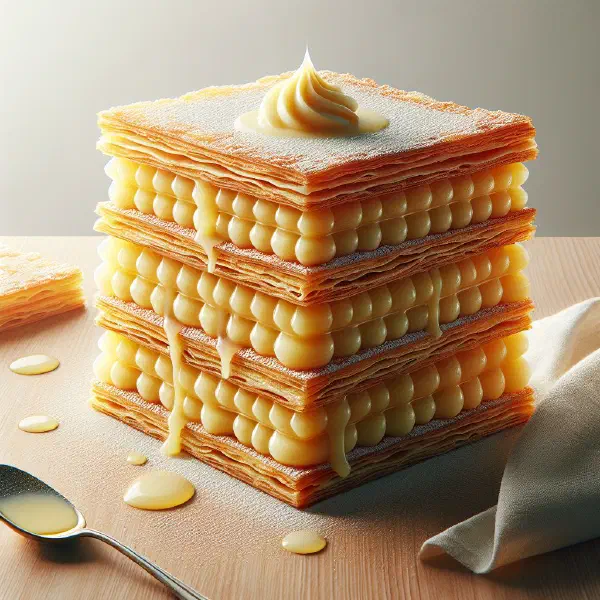
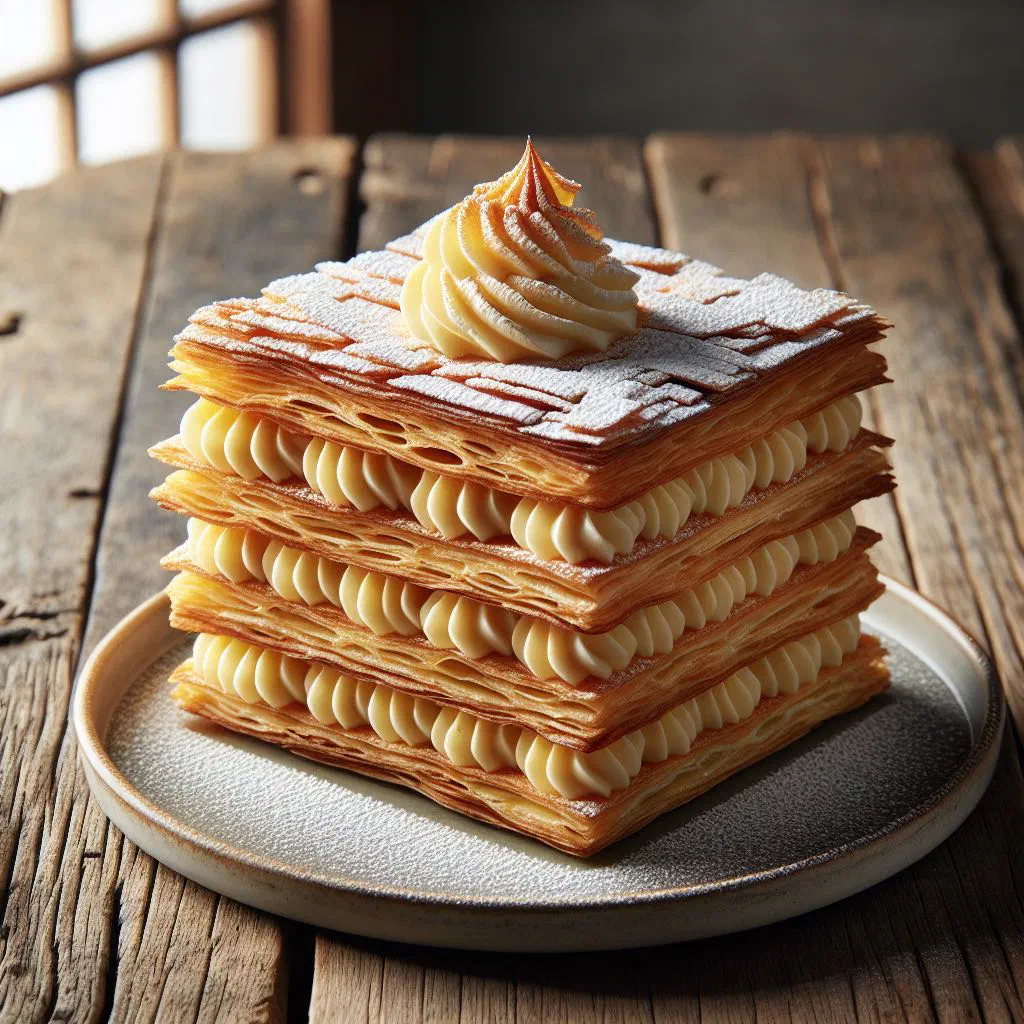
Few desserts announce themselves as elegantly as Millefeuille, the crisp, custard-filled classic beloved along the Riviera and firmly at home in Monaco. Wafer-thin sheets of golden puff pastry are layered with a silky vanilla cream and finished with a glossy glaze or a whisper of icing sugar. The contrast between the shattering crunch and the velvety filling is what makes it memorable. Save it for a celebration, or simply treat yourself on an ordinary afternoon.
About Millefeuille
Millefeuille, also known as the Napoleon, is a truly delicious dessert and a signature sweet of Monaco. It is built from several delicate layers of puff pastry, filled with a creamy custard and often decorated with a sweet glaze or a dusting of icing sugar. The combination of crisp sheets and velvety filling creates a distinctive eating experience that is much admired in the Principality. Ideal for special occasions or simply as an indulgence between meals, millefeuille is a genuine classic that deserves a place in your repertoire.
Ingredients (serves 1–2)
- 250 g puff pastry
- 500 ml milk
- 100 g sugar
- 1 sachet vanilla custard powder
- 100 g icing sugar
- 1 tablespoon water
- Butter, for greasing the tin
Shopping for the ingredients
When shopping for millefeuille, pay close attention to the quality of what you buy. Choose fresh, ready-rolled puff pastry to save yourself time during preparation. For the filling, use fresh milk and a good-quality vanilla custard powder. These ingredients contribute enormously to the depth of flavour in the finished dessert and are what separate a good millefeuille from a forgettable one. The same care pays off with other Monegasque bakes such as a Tarte Au Citron.
Preparing the dish
To make assembling millefeuille as easy as possible, set out all your ingredients and equipment before you start. Make sure your work surface is clean and every utensil you need is within reach. Lift the puff pastry carefully out of its packaging and let it come up to room temperature before you begin rolling. This makes the dough far easier to handle and helps you achieve an even thickness throughout.
Step-by-step instructions
- Cut the puff pastry into neat rectangles and lay them on a greased baking tray.
- Bake at 200 °C for around 15–20 minutes, until golden brown.
- For the filling, bring the milk and sugar to the boil together, stir in the custard powder and leave to cool.
- Place one layer of pastry on a plate, spread with custard and top with a further layer of pastry.
- Glaze the top layer with the water and icing sugar, then chill the dessert before serving.
Gluten-free / lactose-free version
Millefeuille adapts readily to a gluten-free and lactose-free diet. Use a gluten-free puff pastry, now stocked by many supermarkets, or make your own so you know exactly what has gone into it. For the filling, plant-based milks such as soya or almond work beautifully, and it is worth checking that the custard powder is lactose-free. That way anyone with particular dietary needs can still enjoy this traditional dessert.
Tips for vegans and vegetarians
Vegans can make millefeuille simply by swapping the animal products for plant-based alternatives. Oat or almond drink stands in well for dairy milk, and the filling can be made with a plant-based custard. Do check that your puff pastry contains no eggs or butter, many shop-bought blocks are made with vegetable fats and are vegan by default. With these adjustments, this Monegasque classic is open to everyone.
More tips and tricks
To make your millefeuille even more appealing, try a few creative flourishes. Slip fresh fruit such as strawberries or raspberries between the layers for a fruitier note. A pinch of cinnamon or a scattering of grated chocolate also lifts the dessert nicely. Shape it to your own taste and experiment freely with different textures and aromas, much as you would with a Mousse Au Chocolat.
Adapting the recipe to your taste
This millefeuille recipe is extremely adaptable. Use the basic custard and pastry as a canvas for entirely new flavours. Flavoured custard powders take the dessert in different directions, chocolate or caramel, for instance, while a change of glaze transforms the whole character of the finished cake. A chocolate glaze or a zesty lemon icing are both well worth trying.
Ingredient substitutions
If you do not have every ingredient to hand, there are plenty of workable alternatives for millefeuille. Instead of puff pastry, ready-made shortcrust gives a different but equally pleasing crunch. For the filling, mascarpone or a cream made from quark can replace the custard entirely. Substitutions like these open up new flavours and textures that keep the traditional recipe feeling fresh.
Drink pairing ideas
A number of drinks work splendidly alongside a good millefeuille. A well-chilled Prosecco or a glass of sparkling wine complements the dessert’s sweetness particularly well. For a non-alcoholic option, fresh fruit juices or a lightly flavoured iced tea do the job nicely. Either way, the pairing rounds off the meal and lets the pastry shine.
Serving and presentation ideas
Presentation is decisive if you want your millefeuille to look as good as it tastes. Serve it on an elegant plate and garnish with fresh berries or a few mint leaves. A fine dusting of icing sugar or cocoa powder is another simple touch that reads as expensive. Build an arrangement with varying heights and colours to make the dessert a genuine centrepiece, perhaps beside a Salade De Fruits A La Menthe.
A bit of history
Millefeuille has a long and intriguing history reaching back to the 19th century. Originally from France, it quickly became a prized delicacy across Europe and especially in Monaco. The name means “a thousand leaves”, a reference to the countless layers of puff pastry within. The dessert is regarded not merely as a sweet course but as a work of pâtisserie in its own right, demanding both skill and patience, qualities that run through all of Monegasque cuisine.
More recipe ideas
Summary: Millefeuille
Millefeuille is a timeless dessert that wins people over with its delicate pastry layers and creamy filling. It combines refinement with real flavour, and it is as welcome at a celebration as it is on an ordinary weekday. The recipe is easy to adjust and offers plenty of scope for individual preferences. Gluten-free, lactose-free or fully plant-based, everyone can enjoy this Monegasque classic and be won over by its seductive elegance.