National Dish Montenegro: Baklava (Recipe)
In this article
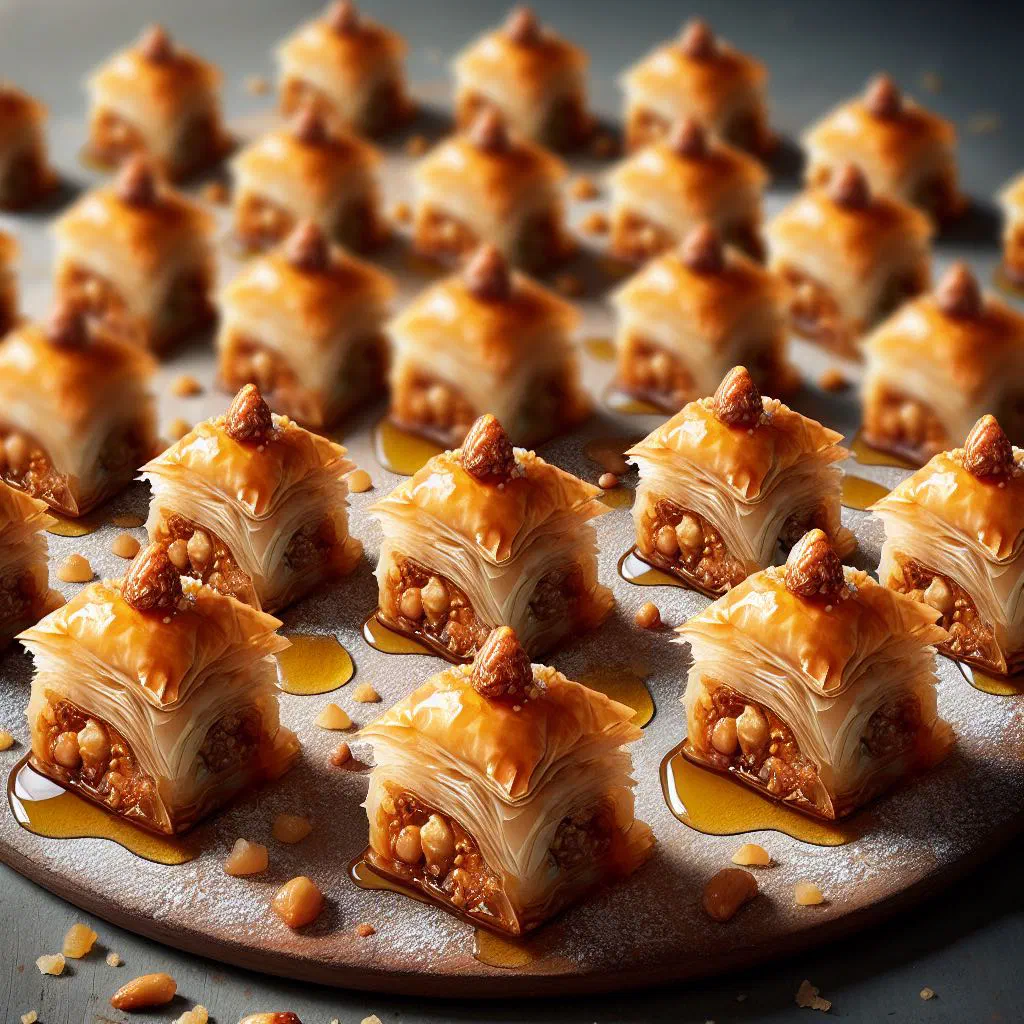
Few sweets say celebration quite like Baklava. Layer upon paper-thin pastry is brushed with butter, packed with fragrant nuts and soaked in warm honey syrup until every bite shatters and melts at once. In Montenegro it appears at weddings, holidays and family gatherings, and it adapts happily to gluten-free, lactose-free and fully plant-based kitchens. Here is everything you need to make it at home, plus a little of the history behind it.
About Baklava
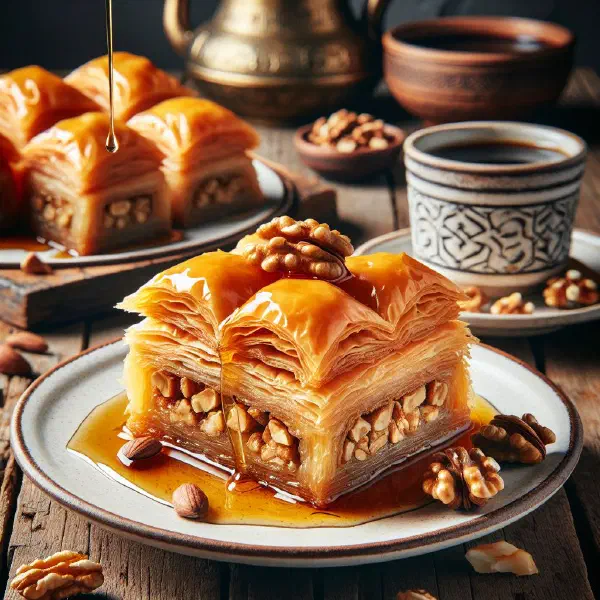
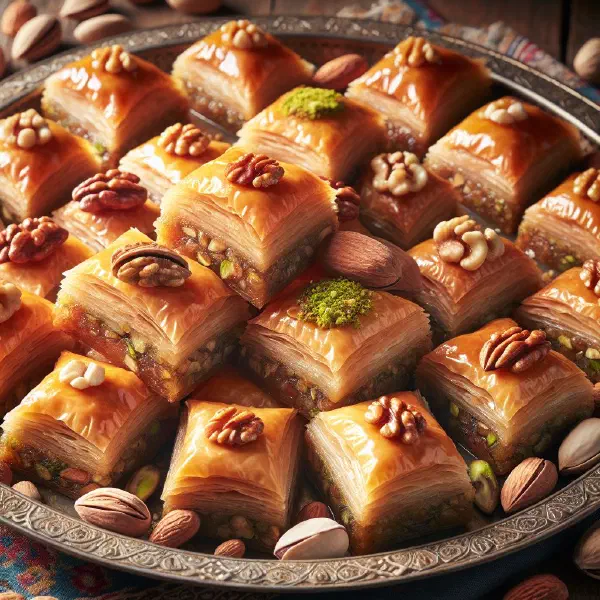
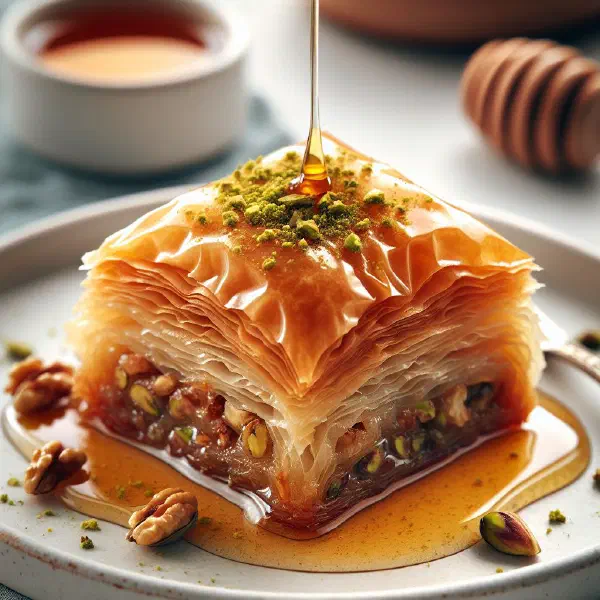
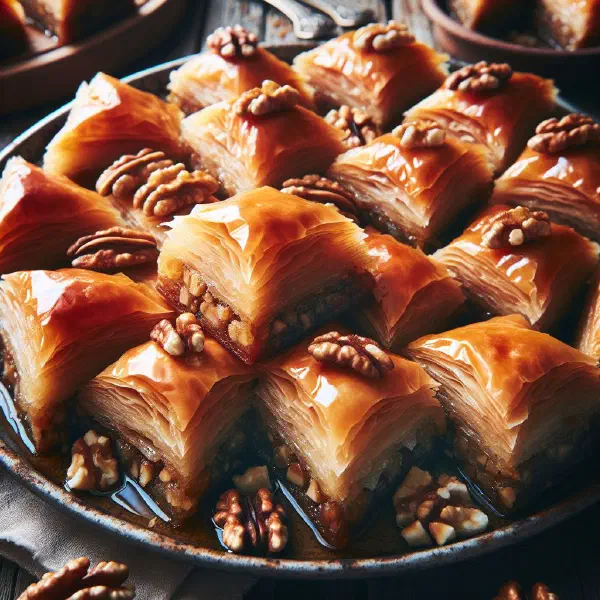
The traditional dessert Baklava is a genuine masterpiece of Montenegro’s sweet kitchen. This delicious pastry is built from delicate layers of pastry filled with a mixture of aromatic nuts, most often walnuts or pistachios. A hint of cinnamon adds a further note of flavour that sits perfectly alongside the sweetness of the honey syrup. Baklava is not only a treat for the palate but a feast for the senses, especially on festive occasions.
Ingredients (serves 1–2)
- 250 g puff or filo pastry
- 150 g ground walnuts or pistachios
- 100 g sugar
- 1 tsp ground cinnamon
- 200 g butter, melted
- 200 ml water
- 150 ml honey
Shopping for the ingredients
If you want to make baklava, choosing good-quality ingredients matters. Pick up fresh pastry from the chilled section or, if you have the time, make your own dough for an even better result. Buy the nuts as fresh as possible, or grind them yourself, to get the fullest flavour. Do not overlook the quality of the honey either, as it has a considerable influence on the sweetness and character of the finished dessert.
Preparing the dish
Preparing baklava takes a few careful steps to make sure the dessert turns out perfectly. First, get the nut mixture ready by combining the ground nuts with the sugar and cinnamon. The pastry needs to be unrolled and layered gently, with each sheet brushed with melted butter to build a crisp texture. Make sure the oven is preheated in good time so the baklava bakes evenly.
Step-by-step instructions
- Preheat the oven to 180 degrees Celsius.
- Prepare a baking tin by brushing it with a little melted butter.
- Make the nut mixture by combining the walnuts, sugar and cinnamon in a bowl.
- Begin layering the pastry sheets into the tin, brushing each one with butter. Use roughly 8–10 layers.
- Spread the nut mixture evenly across the pastry.
- Cover the nuts with further sheets of pastry, again brushing each with butter. Repeat until all the ingredients are used up.
- Cut the baklava into diamonds or squares before it goes into the oven.
- Bake for about 30–40 minutes, until golden brown.
- While the baklava bakes, make the syrup by heating the water and honey together in a pan.
- Once baked, pour the hot syrup evenly over the baklava and let it cool before serving.
Gluten-free / lactose-free version
To make baklava gluten-free, use one of the special gluten-free pastries now stocked by many supermarkets. For a lactose-free version, replace the butter with plant-based alternatives such as coconut fat or margarine. Check that the nuts and sweeteners you buy are also free from milk derivatives. The delicious flavour survives intact, even without the classic ingredients.
Tips for vegans and vegetarians
Vegans can enjoy baklava too, simply by swapping the butter for vegan margarine or coconut oil. The honey can be replaced with maple syrup or agave nectar to keep the dessert entirely plant-based. It is worth checking that the nuts have not been treated with animal products either. With those small changes, baklava remains a sweet temptation suited to everyone.
More tips and tricks
A few simple tips to get the best from your baklava: brush the pastry sheets generously with butter so they do not dry out. Let the finished baklava rest properly after baking so the syrup can soak all the way through. If you like to experiment, try other varieties of nut to create different flavours. Playing with aromatics such as vanilla or cardamom can also produce interesting variations, much as it does in a batch of Fritule.
Adapting the recipe to your taste
Baklava is a versatile dessert that is easy to adjust to different palates. You might vary the nut mixture, for example by using almonds or hazelnuts. You can also dial the sweetness up or down by using more or less honey, depending on your own preference. If you like a fruitier result, dried fruit such as figs or dates can be added for extra depth of flavour.
Ingredient substitutions
Sometimes the ingredients you want are simply not available, and that is where a little creativity comes in. Instead of puff pastry you can use filo pastry, which gives a similar but often crisper texture, the same sheets that go into a Pita Od Bundeve. For the filling, try sesame seeds or sunflower seeds if nuts are unwelcome. The sweeteners are easy to swap as well, so baklava can be made to suit almost any dietary need.
Drink pairing ideas
Baklava lends itself beautifully to a range of drinks. A strong coffee in the Turkish style or a robust tea sits perfectly against the sweetness of the dessert and helps balance the flavours. For something a little different, serve a rose syrup or a herbal tea to create a fresh contrast. A sweet dessert wine also works wonderfully and brings the aromas forward.
Serving and presentation ideas
Presentation plays a decisive role where desserts are concerned. Serve your baklava on an elegant plate, garnished with chopped nuts or a dusting of cinnamon for an appealing look. Fresh herbs such as mint can add a welcome touch of colour and freshness. Surprise your guests by bringing a small jug of honey or syrup to the table so they can sweeten each piece to taste, perhaps alongside a plate of Palacinke.
A bit of history
The roots of baklava run deep through Mediterranean and Middle Eastern history. The pastry is thought to have been popular as far back as Ottoman times, when it was served above all at festive occasions. The layered dough is an inheritance from the older kitchen culture of the Mediterranean, while the nuts and sweeteners are typical of the region. Over the centuries baklava has developed in many different countries, and in Montenegro it remains an important part of Montenegrin cuisine and culture.
More recipe ideas
Summary: Baklava
In short, baklava is a glorious dessert that appeals to with its range of flavours and textures. With a straightforward recipe and adaptable ingredients, there is a version to please every palate. Whether for a festive occasion or simply as a sweet snack between meals, baklava is always an excellent choice. Let it inspire you and bring a taste of Montenegro into your own home.