National Dish Myanmar: Lephet Thoke (Recipe)
In this article
Discover Lephet Thoke, the tea leaf salad that Myanmar has made entirely its own. Earthy fermented tea leaves meet crunchy nuts, crisp vegetables and a sharp, zesty dressing in a bowl that manages to be savoury, sour, salty and nutty all at once. It is a genuine explosion of flavour, and one of the very few dishes anywhere in the world in which tea is eaten rather than drunk. Bring a taste of a Burmese tea house straight to your own kitchen.
About Lephet Thoke
Lephet Thoke is a traditional tea leaf salad from Myanmar, built around fermented tea leaves tossed with a whole array of delicious ingredients. It is famed for its singular flavour, deep, tangy and faintly bitter, and for its reputation as a genuinely health-giving dish. The tea leaves are pickled until soft and pungent, then dressed at the table so that every mouthful delivers a different balance of crunch and sourness. No two bowls are ever quite the same, which is exactly the point.
Ingredients (serves 1–2)
- 100g fermented tea leaves
- 50g roasted peanuts
- 50g toasted sesame seeds
- 50g fried garlic chips
- 1 tomato, diced
- 1 green chilli, thinly sliced
- 1 tablespoon fish sauce (optional)
- Juice of 1 lime
- Salt to taste
Shopping for the ingredients
The fermented tea leaves and the other speciality ingredients are best sought out at an Asian supermarket, or ordered online if you have no such shop nearby. Look for fresh, good-quality products, the tea leaves should smell pleasantly sour rather than musty, and the nuts should be crisp rather than soft. Everything else on the list is easy enough to pick up in a regular supermarket.
Preparing the dish
Get everything ready before you start assembling. Drain the tea leaves well, dice the tomatoes and toast the garlic chips until they turn a deep golden brown. Because this is a salad rather than a slow-cooked dish, the whole thing comes together in a matter of minutes, so having each component within easy reach is what keeps the process smooth and unhurried.
Step-by-step instructions
- Tip the fermented tea leaves into a large bowl.
- Add the roasted peanuts, sesame seeds, garlic chips, diced tomato and sliced chilli.
- Pour over the fish sauce and lime juice, then mix everything thoroughly.
- Season with salt and serve immediately, while the nuts are still crunchy.
Gluten-free / lactose-free version
Lephet Thoke is naturally gluten-free and lactose-free. There is no bread, no flour and no dairy anywhere in the recipe. The one thing worth checking is the fish sauce, as a few commercial brands contain wheat-based additives; a certified gluten-free bottle or a tamari in its place solves that instantly. This makes the salad an easy, safe choice for guests with intolerances.
Tips for vegans and vegetarians
The fish sauce is the only animal product here, so swap it for soy sauce or a vegan fish sauce alternative and the dish becomes entirely plant-based without losing its savoury depth. A pinch of seaweed flakes adds back some of that oceanic character if you miss it. Otherwise the salad needs no adjustment at all, the tea leaves and nuts carry the flavour on their own.
More tips and tricks
For extra crunch, throw in some roasted chickpeas or crisp fried beans alongside the peanuts. It is also worth experimenting with different nuts, cashews, in particular, lend a rounder, creamier note. Dress the salad only just before it reaches the table, since the lime juice will soften the fried garlic if it sits for too long.
Adapting the recipe to your taste
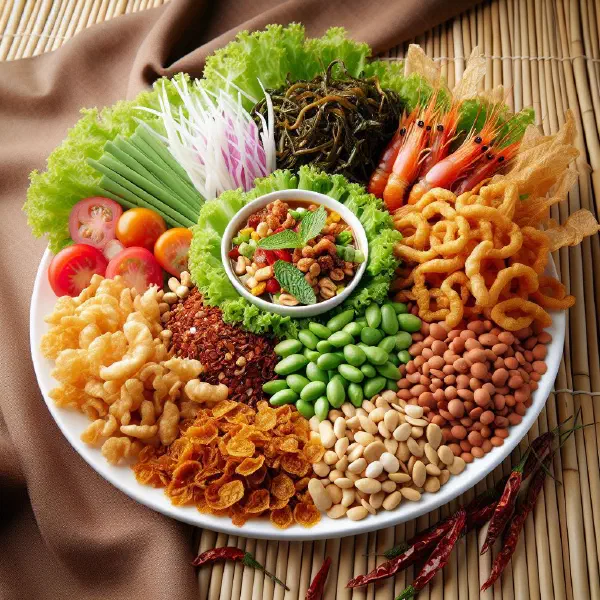
Every quantity in this recipe is a starting point rather than a rule. Increase the chilli if you want real heat, or leave it out and let the sourness of the tea leaves take the lead. More peanuts make the bowl heartier; more tomato makes it fresher. Traditionally the components are served in separate little piles so each person can mix their own to order, much like a Ginger Salad.
Ingredient substitutions
If fermented tea leaves prove impossible to find, fermented spinach makes a surprisingly convincing stand-in, delivering a similar sour, leafy backbone. Sesame seeds can be replaced with chopped almonds, and the fried garlic with shallot crisps. The same nutty, crunchy logic runs through a Lentil Salad or a Chickpea Tofu Salad, both of which take substitutions just as gracefully.
Drink pairing ideas
Tradition says Lephet Thoke should be served with green tea, and the pairing is hard to improve on, the clean, grassy brew resets the palate between mouthfuls. A cold glass of lemonade works nicely too, echoing the lime in the dressing, and a light lager holds its own against the chilli and the fish sauce without steamrolling them.
Serving and presentation ideas
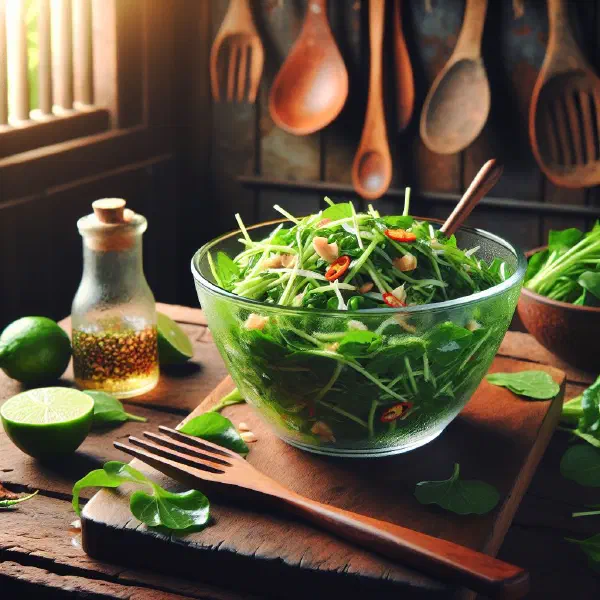
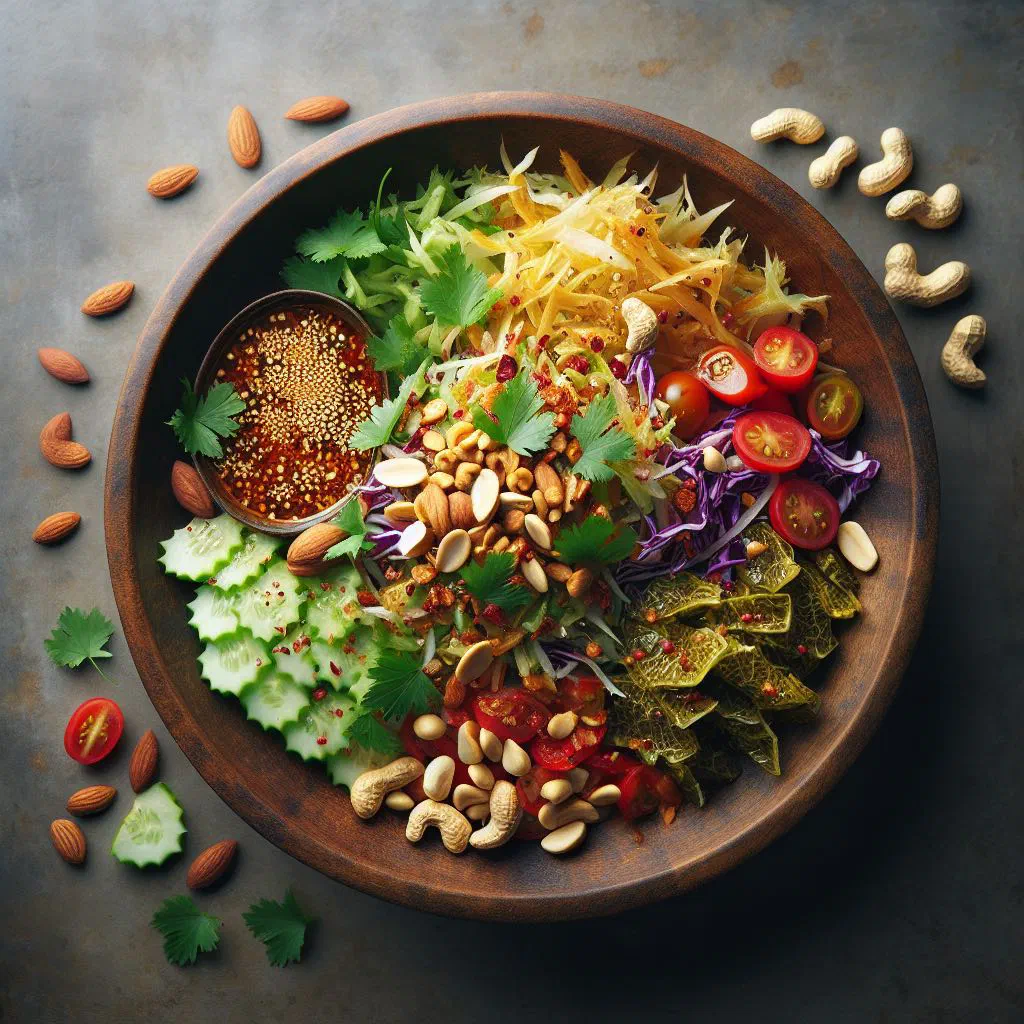
Serve Lephet Thoke on a large platter and garnish it with fresh herbs such as coriander or mint. The colours do most of the work: dark green tea leaves, pale gold garlic, red tomato and the bright flecks of chilli all sitting together. Arranging the ingredients in distinct wedges before tossing them makes for a striking centrepiece, and it lets guests admire the salad before it disappears.
A bit of history
Lephet Thoke has a long history in Myanmar, where it is served at special occasions and offered to guests as a matter of course. It has traditionally symbolised hospitality and togetherness, tea leaves were once exchanged to seal agreements and settle disputes, and it remains a cornerstone of Myanmar cuisine. If you have enjoyed this salad, the country’s noodle and soup traditions are the natural next step.
More recipe ideas
Summary: Lephet Thoke
Lephet Thoke is a unique and thoroughly delicious dish from Myanmar, and one you can put together at home with very little effort. With the tips and adaptations above you can dial the heat, the crunch and the sourness to exactly where you want them. A side or a light meal in its own right, this Burmese classic is worth seeking out the tea leaves for, your taste buds will thank you.