National Dish Myanmar: Mohinga (Recipe)
In this article
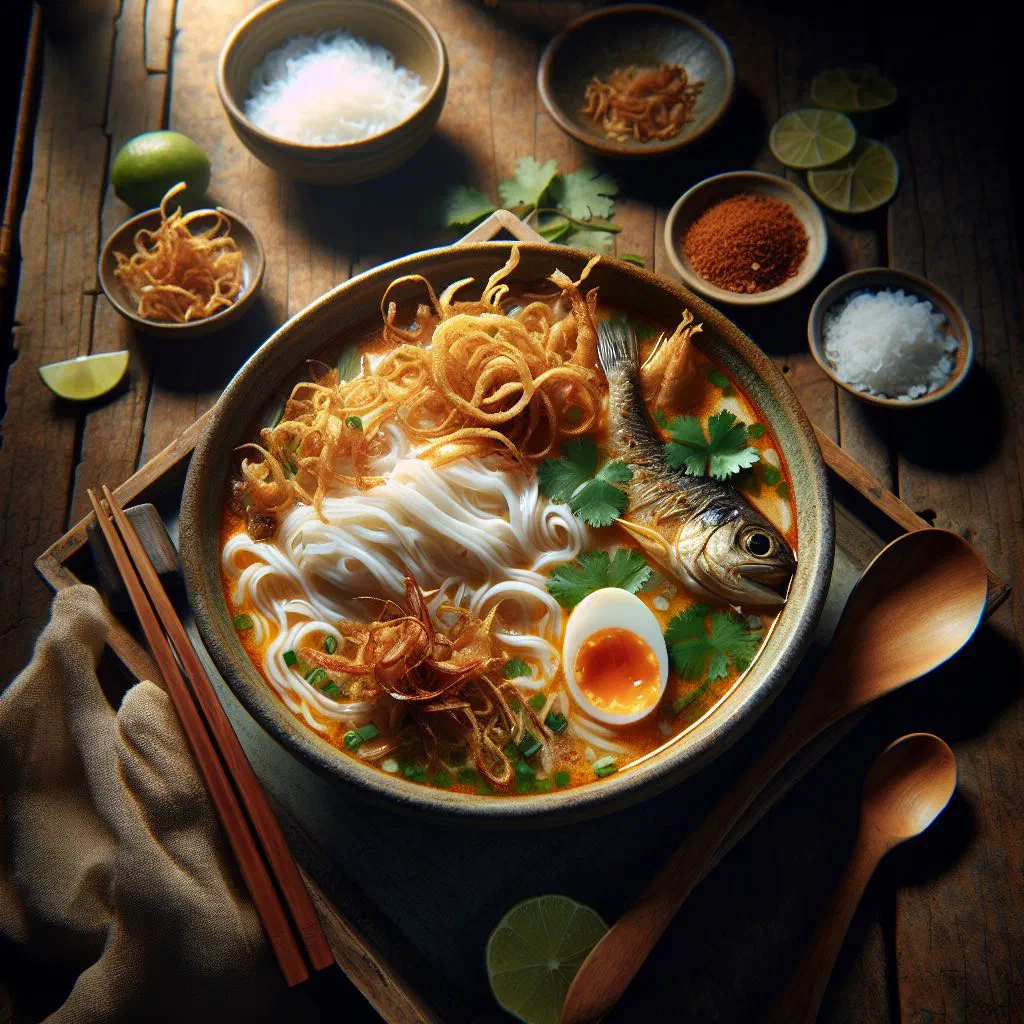
Mohinga is fish noodle soup and it is breakfast. Vendors sell it from the pavement from six in the morning, and the broth is thickened with toasted chickpea flour and, traditionally, the tender core of a banana stem.
About Mohinga
Mohinga is Myanmar’s national dish and the most widely eaten thing in the country. Catfish is simmered until it falls apart into the broth, which is flavoured with lemongrass, ginger, garlic and fish sauce and thickened with chickpea or rice flour.
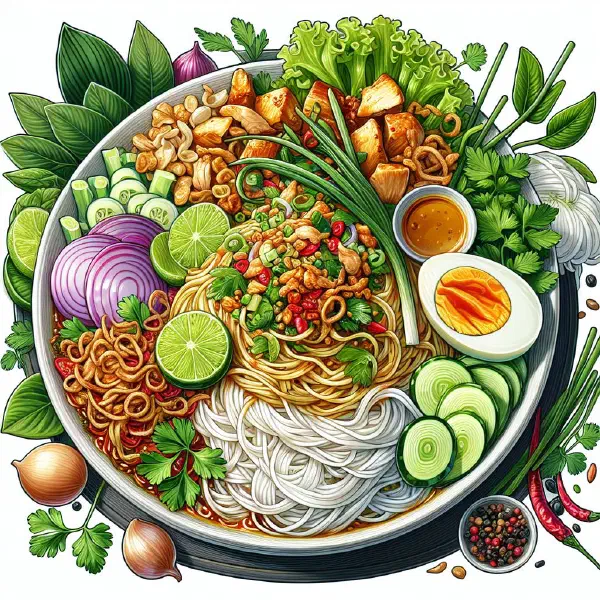
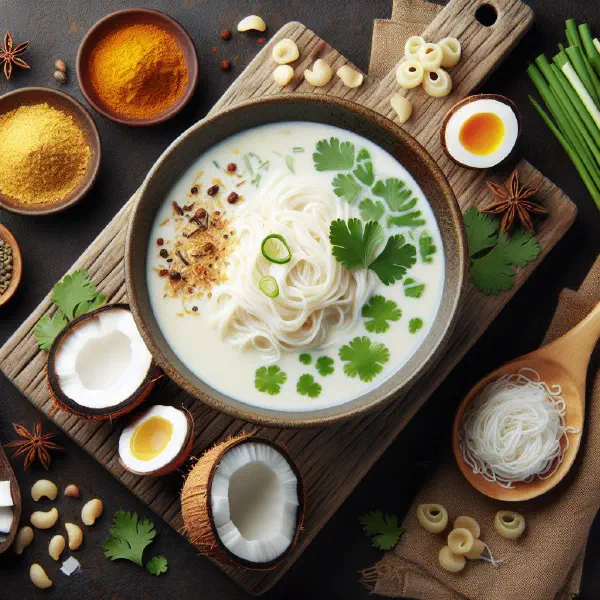
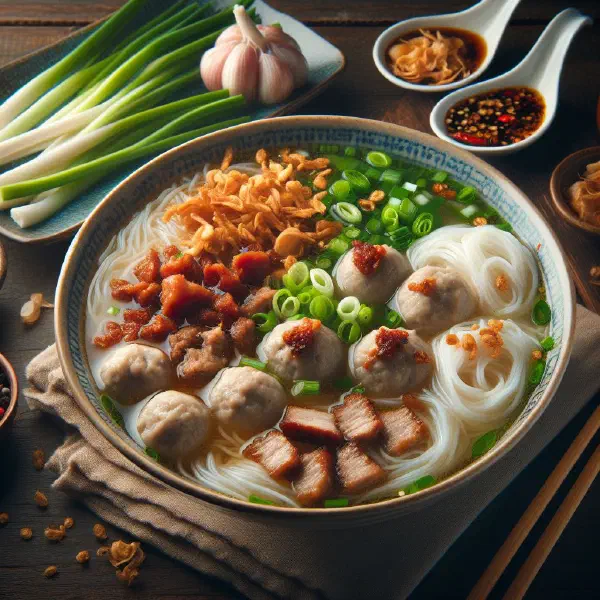
The garnishes are half the dish: crisp fritters, boiled egg, coriander, lime, chilli flakes and fish sauce, all added at the table.
Ingredients (serves 1–2)
- 200 g catfish or another firm white fish fillet
- 1 stalk lemongrass, finely chopped
- 2 cm fresh ginger, grated
- 2 garlic cloves, finely chopped
- 1 small onion, chopped
- 2 tablespoons rice flour or gram flour
- 1 teaspoon turmeric
- 1 teaspoon chilli powder
- 1 litre water
- 100 g rice noodles
- Fresh coriander, chopped
- 2 tablespoons fish sauce
- Optional: boiled eggs, sliced
- Optional: fried chickpea-batter fritters
Shopping for the ingredients
Catfish is traditional; any firm white fish works. Toast the gram flour in a dry pan before using it, which takes two minutes and adds a great deal. Thin round rice noodles are the right shape. Banana stem is sold in some Asian grocers and is worth trying.
Preparing the dish
Poach the fish first and keep the liquid; that is the base of the broth. Flake the fish and return it. Toast the flour separately, then slacken it with cold water before it goes into the pot, or it lumps.
Step-by-step instructions
- Rinse the fish fillet, pat it dry and cut it into cubes.
- Heat a little oil in a pan and fry the onion, garlic, lemongrass and ginger until the onion turns translucent.
- Toast the rice or gram flour in a dry pan until it smells nutty, then slacken it with cold water.
- Add the water, turmeric, chilli powder and fish sauce to the aromatics, then bring to the boil.
- Add the fish cubes and cook over a medium heat until the fish is done and starts to break apart.
- Stir in the slackened flour and simmer until the broth thickens.
- Divide the cooked rice noodles between bowls and ladle the hot soup over them.
- Garnish with fresh coriander, sliced boiled egg, lime and fried chickpea-batter fritters.
Gluten-free / lactose-free version
Rice noodles and gram flour are both naturally gluten-free, and there is no dairy. Check the fish sauce, since a few brands contain wheat.
Tips for vegans and vegetarians
A version with mushrooms and a strong vegetable broth works, using a vegan fish sauce and extra toasted chickpea flour for body. Lahpet thoke, the fermented tea leaf salad, is Myanmar’s great vegetarian dish and worth knowing regardless.
More tips and tricks
Toast the flour. Untoasted flour thickens the broth but adds nothing. Let the fish break apart into the soup rather than keeping it in neat pieces, which is how mohinga should be. And put all the garnishes on the table so people build their own bowl.
Adapting the recipe to your taste
Banana stem, sliced thin, is the traditional thickener alongside the flour. Yellow pea fritters are the classic crisp garnish. More chilli oil at the table.
Ingredient substitutions
Any firm white fish works, and tinned mackerel makes a fast weekday version. Rice flour or gram flour both thicken. Vermicelli replaces the round noodles.
Drink pairing ideas
Burmese green tea, drunk plain and free at every teashop. Sweet milky tea, laphet yay, is the other option. Water alongside.
Serving and presentation ideas
Serve it in deep bowls with the garnishes set out separately: fritters, egg, coriander, lime, chilli and fish sauce. Everyone assembles their own. It is eaten quickly, standing or at a low stool, in the morning.
A bit of history
Mohinga crosses every ethnic and regional line in Myanmar and is eaten everywhere, which is rare in a country with as many distinct peoples as this one. Vendors carry it on shoulder poles and set up wherever there is foot traffic. It anchors Burmese cuisine.
More recipe ideas
Summary: Mohinga
Mohinga is catfish noodle soup thickened with toasted chickpea flour and finished with fritters, egg and lime. Toast the flour, let the fish break apart, and put the garnishes on the table.