National Dish Myanmar: Pickled Tea Leaves with Nuts (Recipe)
In this article
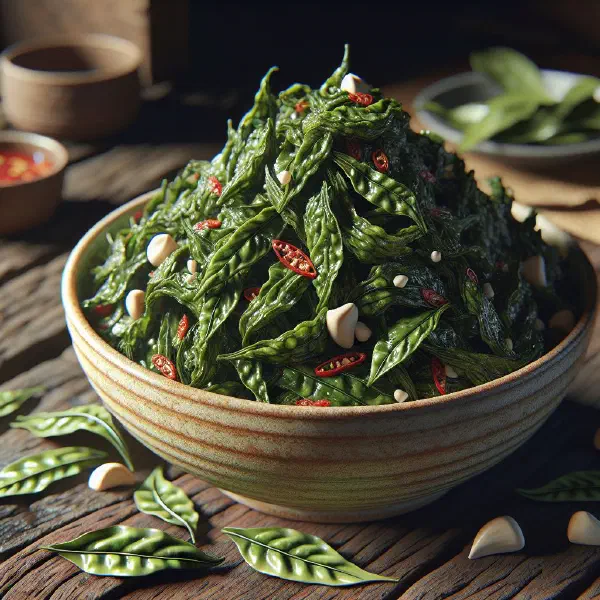
Meet Pickled Tea Leaves with Nuts, the dish Myanmar serves when it wants to say welcome. Known locally as Laphet, it brings together tangy fermented tea leaves, crunchy roasted nuts and a bright hit of lime and chilli in a single bowl. It is savoury, sour, nutty and gently bitter all at once, a snack unlike anything else in Asian cooking. Best of all, it needs no cooking to speak of, just good ingredients and a few minutes of mixing.
About Pickled Tea Leaves with Nuts
The national dish of Myanmar is far more than something to eat; it is a symbol of Burmese culture and tradition. Pickled tea leaves with nuts, known as Laphet, are an indispensable part of Burmese gastronomy. This unusual dish offers a harmonious combination of fermented tea leaves, crunchy nuts and a whole range of aromatic spices. It is often served as a snack or a side dish, and it reflects the warm-hearted hospitality Myanmar is famous for.
Ingredients (serves 1–2)
- 100 g fermented tea leaves
- 50 g peanuts, roasted
- 2 tablespoons sesame seeds, roasted
- 1–2 chillies, finely chopped
- 1–2 tablespoons oil (peanut oil works well)
- 1 teaspoon fish sauce, or soy sauce for a vegan version
- A squeeze of lime juice
Shopping for the ingredients
The ingredients for Laphet are available in most Asian grocery shops or online. Fermented tea leaves are the crucial component and can be found in specialist Asian markets or ordered from online retailers. Roasted peanuts and sesame seeds are everyday items that are easy to track down. It is worth paying attention to quality here, since the ingredients shape the flavour of the finished dish more than anything else, exactly as they do in a classic Tea Leaf Salad.
Preparing the dish
Getting ready for Laphet is straightforward and takes only a few steps. First, rinse the fermented tea leaves thoroughly to wash away any excess salt. Then toast the peanuts and the sesame seeds in a pan over a medium heat until they turn golden brown. Fresh, lively ingredients let the aromas of the dish shine and give it the appealing texture it is prized for.
Step-by-step instructions
- Put the fermented tea leaves in a bowl and rinse them with water.
- Toast the peanuts and sesame seeds in a dry pan, without oil, until golden brown.
- Roughly chop the peanuts and combine them with the sesame seeds, the chillies and the tea leaves.
- Add the oil and the fish sauce or soy sauce and mix everything thoroughly.
- Season with lime juice and arrange to taste before serving.
Gluten-free / lactose-free version
For a gluten-free and lactose-free take on Laphet, simply use a soy sauce labelled gluten-free in place of the fish sauce. Many Asian markets stock gluten-free soy sauce, which suits this recipe perfectly. The dish contains no dairy at all by nature, which makes it ideal for anyone with a lactose intolerance. That way everyone can enjoy the flavours and textures of Laphet.
Tips for vegans and vegetarians
Vegans and vegetarians only need to leave out the fish sauce. A delicious vegan alternative is soy sauce, which still lends the dish a satisfying umami depth. You can also add more vegetables and aromatics to make the bowl more interesting and more nourishing. That turns Laphet into a snack that is genuinely varied, much like a Chickpea Tofu Salad.
More tips and tricks
A few small habits improve Laphet considerably. Take care not to cook or bake the tea leaves for too long, so their delicate aromas survive intact. Experiment with different nuts, cashews or almonds, for instance, to discover new flavours. Adding fresh herbs such as coriander or mint gives the whole bowl a fresh lift.
Adapting the recipe to your taste
Laphet is easy to tune to your own palate. If you like heat, add more chillies or stir in a spoonful of chilli paste for extra punch. Alternatively, bring in a sweeter note with a little honey or agave syrup. The scope for adjustment is wide, and it lets you build the dish exactly the way you want it.
Ingredient substitutions
If you are missing something, there are plenty of alternatives to fall back on. Instead of roasted peanuts, pine nuts or walnuts make an interesting change. If fermented tea leaves prove impossible to find, lightly cooked green tea leaves will stand in. The main thing is to stay curious and keep discovering new flavour combinations.
Drink pairing ideas
Several drinks suit a bowl of Laphet beautifully. Traditionally it comes with green tea or a robust black tea, both of which complement it ideally. For something alcoholic, a pale lager or a full-bodied white wine can hold its own alongside the dish. A light, fruity drink helps to bring out the flavours even further.
Serving and presentation ideas
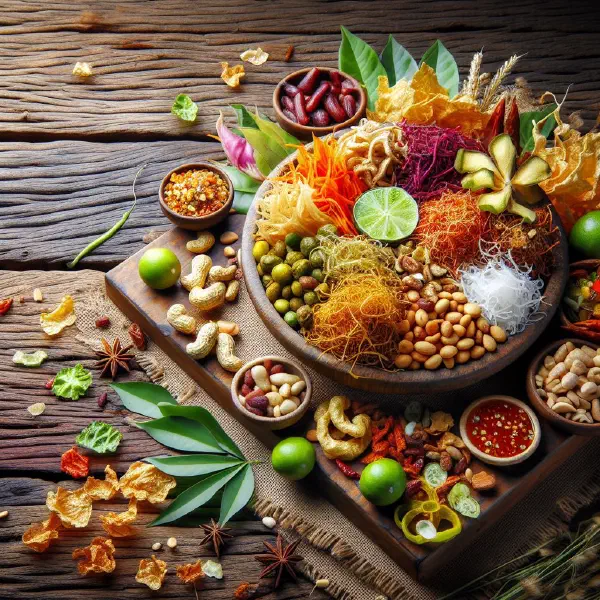
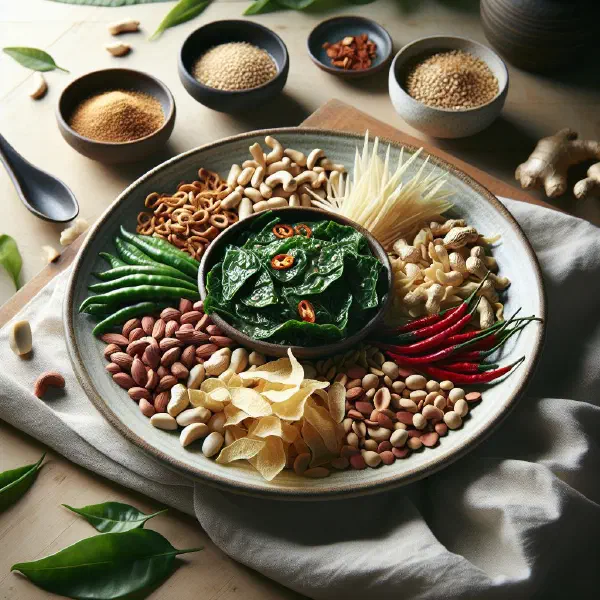
There is room to be creative with the way you present Laphet. Serve it on large platters with fresh herbs and slivers of vegetable for decoration. Small bowls of extra spices or a dipping sauce on the side add to the picture too. Underline the versatility of the dish by offering a few variations in different colours, in the spirit of a shared Ginger Salad spread.
A bit of history
Laphet has a long and meaningful history in Myanmar and counts as part of the Burmese identity rather than merely a recipe. It was traditionally offered to guests as a mark of hospitality. In many parts of the country it belongs to everyday life, and the preparation shifts from region to region. Processing and eating fermented tea leaves is not only a culinary custom but a significant cultural expression within Myanmar cuisine.
More recipe ideas
Summary: Pickled Tea Leaves with Nuts
In short, Laphet is a delicious and culturally rich speciality of Myanmar. The combination of fermented tea leaves, nuts and spices creates a taste experience that works just as well as a snack as it does as a side dish. Preparation is uncomplicated and leaves plenty of room to adapt it to personal preferences and dietary needs. Discover the flavours of Myanmar and let Laphet win you over.