National Dish Namibia: Biltong (Recipe)
In this article
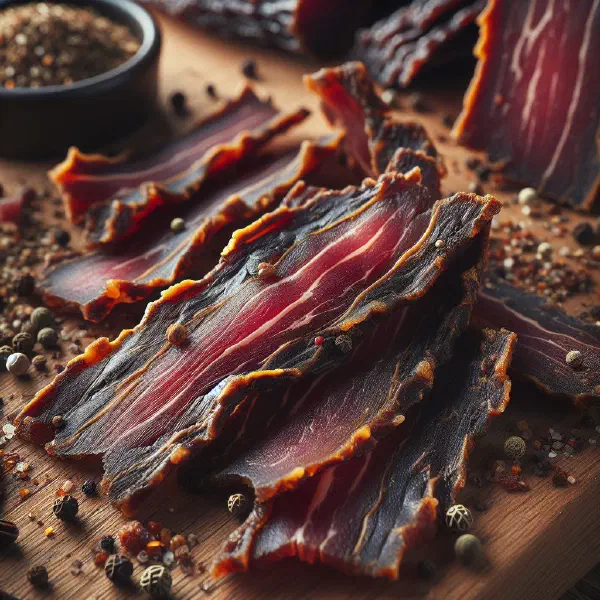
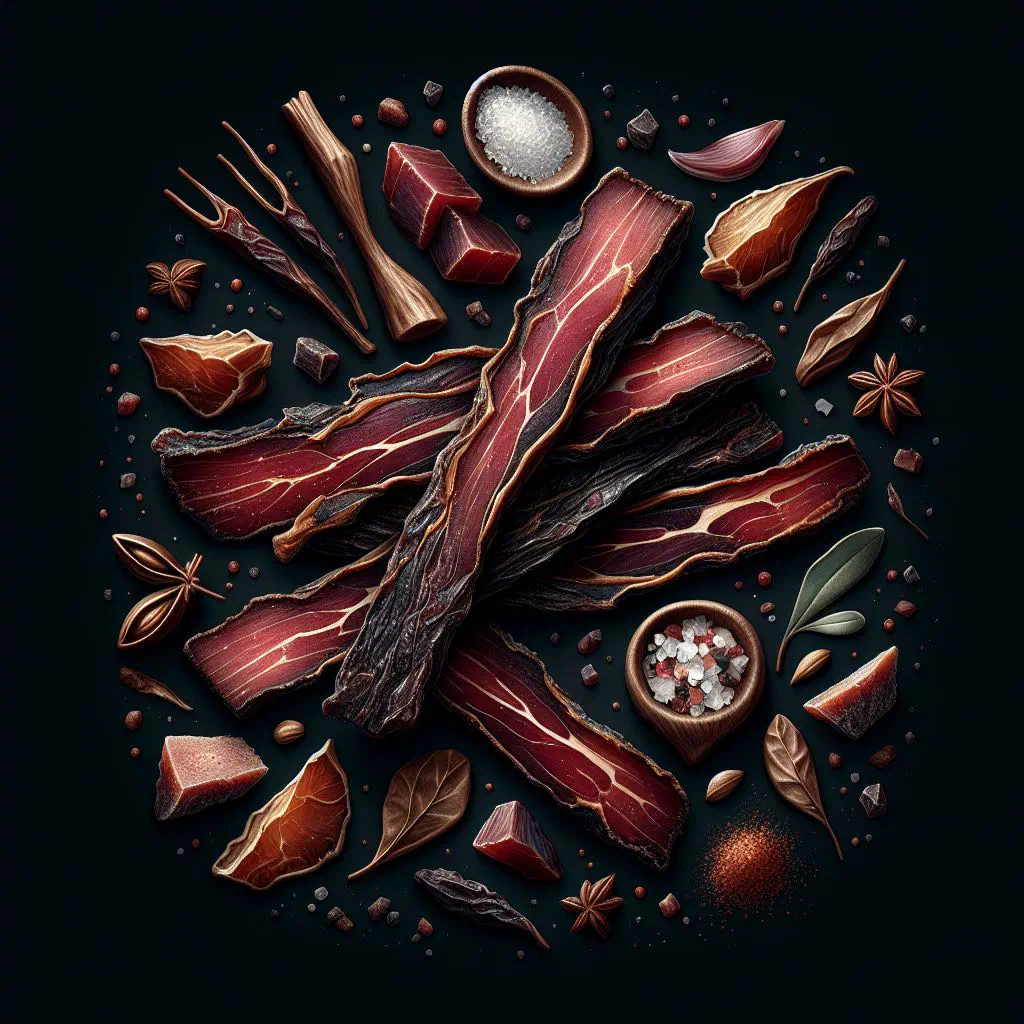
Discover Biltong, Namibia’s most famous snack and a genuine piece of the country’s culinary heritage. Strips of prime beef are rubbed with coriander, pepper and salt, splashed with vinegar and left to dry in the open air until they turn deep, dark and intensely savoury. The result is a chewy, richly aromatic treat that keeps for weeks. No refrigeration required. Making it at home takes little more than good meat, a handful of spices and a bit of patience.
About Biltong
Biltong is far more than plain dried meat; it is a piece of Namibian culture and widely regarded as the country’s national dish. Made from top-quality beef, traditionally seasoned and air-dried, biltong offers an unmistakable flavour and a texture all of its own. The dish reflects both the culinary variety of Namibia and the very practical need of earlier inhabitants to preserve meat without any form of cooling. What makes biltong unique is the particular blend of spices combined with a slow air-drying process that no other preserved meat quite matches.
Ingredients (serves 1–2)
- 500 g beef (rump for preference)
- 20 g coarse salt
- 10 g brown sugar
- 5 g freshly ground black pepper
- 2 g coriander seeds, lightly toasted and ground
- 1 g dried thyme
- 125 ml cider vinegar
Shopping for the ingredients
When buying the meat, look for good quality and genuine freshness. It pays to buy your beef from a butcher you trust and to mention that it is destined for biltong, as they will trim and cut it accordingly. The spices should be as fresh and as high in quality as you can find. Coriander seeds are best bought whole and ground at home just before use, which makes the aroma noticeably more intense than any ready-ground alternative.
Preparing the dish
The meat should first be trimmed of excess fat and cut into strips roughly 1 cm thick. When seasoning, make sure every piece is evenly coated so the finished batch dries to a consistent result rather than a mix of over- and under-seasoned strips. Just as important is allowing the meat enough time on the line: only a long, unhurried dry produces that characteristic biltong texture, firm on the outside and still faintly yielding within.
Step-by-step instructions
- Cut the beef into long strips about 1 cm thick.
- Mix all the dry spices together in a bowl.
- Rub the strips of meat with the spice mixture and the brown sugar.
- Place the meat in a dish and pour the cider vinegar over it.
- Leave the meat to marinate in the fridge for several hours, ideally overnight.
- Lift the strips out of the marinade and wipe off any excess liquid.
- Hang the strips in an airy but shaded spot to dry.
- Leave the meat to dry for 2–5 days, depending on your taste and the climate.
Gluten-free / lactose-free version
Biltong is naturally gluten-free and lactose-free, which makes it an unusually easy snack to serve to guests with dietary restrictions. The only thing worth checking is any shop-bought spice blend, as these occasionally contain wheat-based anti-caking agents or malt. Mixing your own rub from whole spices removes all doubt. Since no butter, milk or flour appears anywhere in the recipe, the finished biltong suits anyone avoiding gluten or dairy without a single change.
Tips for vegans and vegetarians
Biltong is by definition a meat dish, so there is no authentic vegan version. That said, the same spice rub of coriander, pepper and thyme works beautifully on strips of king oyster mushroom or marinated aubergine, dried slowly in a low oven for a savoury, chewy snack with a comparable character. Vegetarian guests at a Namibian table are also well served by dishes such as Chakalaka or a bowl of Mieliepap alongside the meat platter.
More tips and tricks
Make sure the drying space is well ventilated and properly protected from insects, a simple mesh box or a fan-assisted biltong cabinet does the job. Humidity and temperature both play a large part in the quality of the finished product, with cool, dry air giving the best results. If you prefer a shorter drying time, cut the meat thinner; if you like a moist centre, take the strips down a day earlier and store them in a paper bag rather than a sealed container.
Adapting the recipe to your taste
Experiment with different spices and herbs to create a biltong that is entirely your own. Consider adding chilli for a fiery edge, or increasing the sugar for a sweeter, gently caramelised finish. The meat offers plenty of scope for variation too: game and lamb both make excellent alternatives, and cuts of kudu or springbok are traditional in Namibia, the same meats that shine in a Kudu Stew.
Ingredient substitutions
If you have no cider vinegar to hand, red wine vinegar is a perfectly adequate stand-in and brings a slightly deeper note. Honey can replace the brown sugar, though it clings more heavily to the meat and needs a thinner coating. Malt vinegar is the traditional southern African choice if you can find it. Bear in mind that every change to the ingredients will also shift the final flavour, so alter one element at a time.
Drink pairing ideas
A cold Namibian lager or a full-bodied red wine goes splendidly with the robust flavour of biltong, cutting through the salt and standing up to the coriander. Non-alcoholic options work just as well: a herbal tea or a spiced tomato juice both complement the dried meat nicely. For something more local, a chilled Marula Fruit Drink offers a sweet-tart contrast to the savoury strips.
Serving and presentation ideas
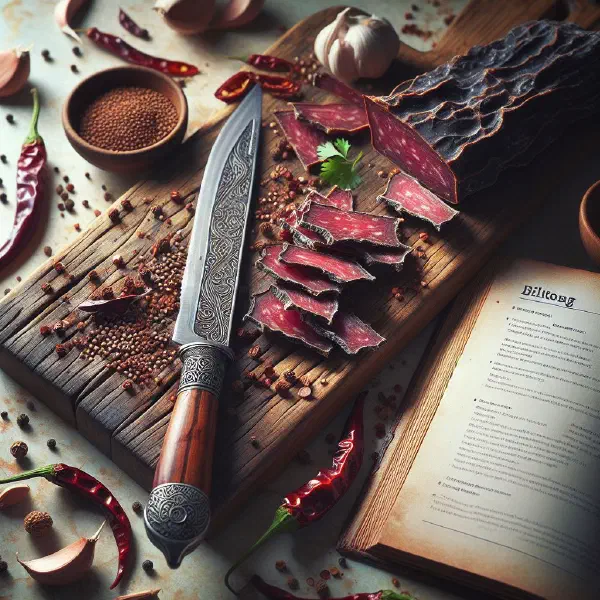
Serve biltong on a rustic wooden board and garnish with fresh herbs for a simple, handsome spread. Small bowls of dips such as mustard or a chilli sauce alongside will bring out the flavour of the dried meat even further. Sliced thinly against the grain it looks far more inviting than in thick chunks, and it earns its place on any Namibian Meat Platter served at a braai.
A bit of history
The tradition of biltong reaches a long way back and began as a means for the first settlers in southern Africa to keep meat edible for months without any cooling. Vinegar, salt and coriander were the tools at hand, and the dry inland air did the rest. Adapted to the particular conditions of Namibia, biltong has established itself as a fixed part of Namibian cuisine and of everyday culture, eaten on road trips, at sporting events and around the fire.
More recipe ideas
Summary: Biltong
Biltong is a flavourful, deeply traditional dried meat from Namibia. Preparing it is straightforward but calls for patience and attention to detail, above all during the drying. The ease with which the recipe can be tailored to personal taste, and the freedom to experiment with different meats and spice blends, make biltong an unusually versatile dish. Give it a go, once you have tasted a batch of your own, the shop-bought version will never quite measure up again.