National Dish Namibia: Chicken Potjie (Recipe)
In this article
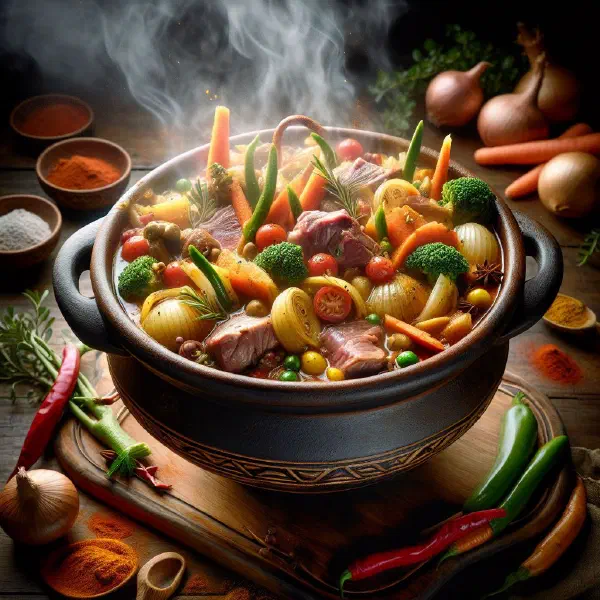
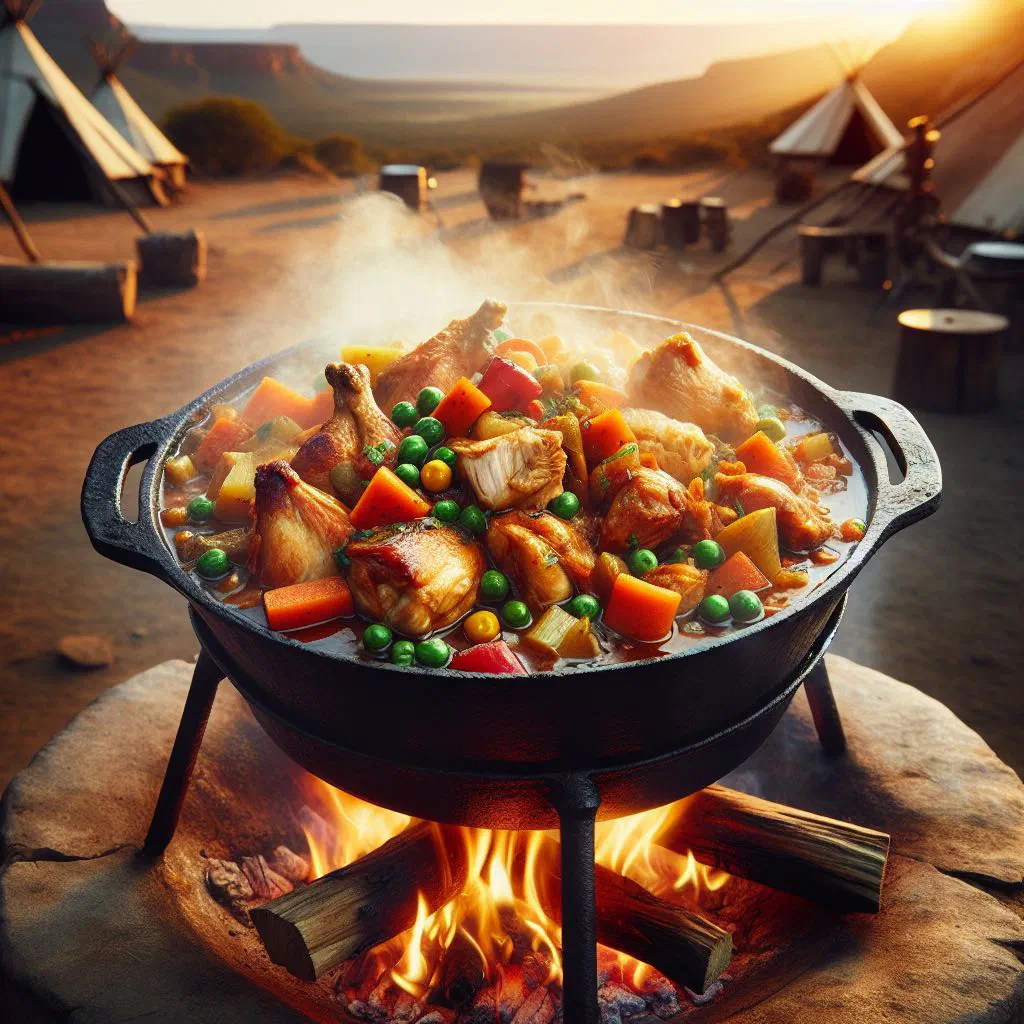
Discover Chicken Potjie, one of Namibia’s most sociable dishes. Tender chicken, colourful vegetables and warm spices simmer slowly together in a heavy cast-iron pot set over an open fire. It is a recipe built as much around company as around cooking, the pot bubbles away while everyone gathers close, and the aromas do the rest. Bring a piece of Namibia’s outdoor cooking tradition to your own fire pit or hob.
About Chicken Potjie
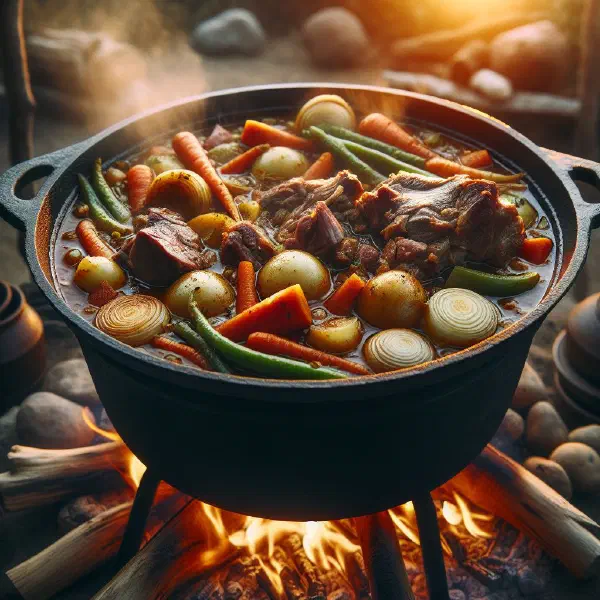
Chicken Potjie is a traditional dish from Namibia with deep roots in African cooking. What sets it apart is the method: everything cooks in a cast-iron pot heated over an open flame, which gives the food a smoky depth you simply cannot get from a kitchen stove. Just as importantly, it creates an occasion. Cooking over the fire with friends and family is an experience in itself, and it reflects the communal traditions that run through Namibian life.
Ingredients (serves 1–2)
- 500g chicken breast, cut into chunks
- 2 medium carrots, sliced
- 1 onion, diced
- 2 cloves of garlic, chopped
- 1 pepper, diced
- 250ml chicken stock
- 2 tablespoons oil
- 1 teaspoon paprika
- Salt and pepper to taste
Shopping for the ingredients
When shopping for chicken potjie, put fresh, good-quality ingredients first. Local markets and supermarkets are both good places to find crisp vegetables and decent meat. Look for free-range chicken where you can. It tastes noticeably better and supports more sustainable farming at the same time. Buy your spices as fresh as possible too, since their aroma fades quickly and they carry much of the dish’s character.
Preparing the dish
Getting ready for chicken potjie is straightforward, but a few basic steps make all the difference. Wash and prepare everything first so the cooking runs smoothly once the fire is going. Cut the vegetables and the chicken into evenly sized pieces so they cook at the same rate. Season the chicken with the spices and let it rest for a few minutes while you build up the fire. That short marinating time deepens the flavour considerably.
Step-by-step instructions
- Heat the oil in the cast-iron pot over an open fire or on the barbecue.
- Add the onions and garlic and fry until translucent.
- Add the chicken and brown it on all sides until golden.
- Stir in the vegetables, the chicken stock and the spices.
- Cover the pot and leave the dish to simmer gently for about 45 minutes.
- Check the pot from time to time and stir so nothing catches on the base.
- Serve the chicken potjie hot with fresh bread or rice.
Gluten-free / lactose-free version
Chicken potjie is naturally gluten-free and lactose-free, since it consists mainly of fresh meat and vegetables. Do check that any stock or spice blends you use are free from gluten and dairy as well, as these are the usual hiding places. Plenty of good alternatives are available if in doubt. Otherwise you can enjoy this dish without a second thought and simply savour the clean flavour of the ingredients themselves.
Tips for vegans and vegetarians
For vegans and vegetarians, chicken potjie adapts easily. Swap the chicken for tofu or seitan, both of which hold their texture nicely through the long simmer. Replace the chicken stock with a good vegetable stock so the flavour stays full-bodied. Adding beans or lentils brings protein and makes the pot more substantial, much like a hearty Namibian Bean Stew.
More tips and tricks
A few extra touches lift chicken potjie further. Use whichever vegetables are in season to keep the flavours fresh and lively. Experiment with different spice blends to create new combinations each time you cook. Above all, keep an eye on the pot and adjust the fire as you go, holding a steady, moderate temperature is the real skill in potjie cooking, and it rewards patience.
Adapting the recipe to your taste
Everyone has their own preferences at the table. Adjust the seasoning to suit you, adding chilli or cayenne pepper if you like more heat. The ratio of meat to vegetables is entirely yours to decide as well. If you fancy something different, fish or seafood can go into the pot instead and take the dish in a fresh direction, as in a lighter Namibian Seafood Platter.
Ingredient substitutions
There are plenty of alternatives for chicken potjie if you want to change things around. Game meat works beautifully in place of chicken, as it does in a rich Kudu Stew, and vegetable stock can stand in for the chicken stock. The vegetables are just as flexible: courgette, aubergine or pumpkin all suit this style of slow cooking. Vary the herbs and spices too and the same pot will taste different every time.
Drink pairing ideas
A hearty chicken potjie goes well with a wide range of drinks. A light, fresh white wine or a cold lager both stand up nicely to the robust flavours from the fire. For alcohol-free options, a sharp home-made lemonade or an iced tea works beautifully. On special occasions a sherry or a fruity cocktail can round the meal off and echo the warm spicing of the dish.
Serving and presentation ideas
Presentation adds a great deal to the chicken potjie experience. Serve straight from the pot and scatter over fresh herbs such as parsley or coriander. Offer side dishes in colourful bowls to brighten the table, fresh bread or a soft Pap are natural companions. Setting everything out on rustic wooden boards keeps the atmosphere authentic and turns the meal into something shared.
A bit of history
The tradition of chicken potjie draws on the many cultures and ethnic groups of Namibia. It is most at home in rural areas, where the community gathers to share food and swap stories around the fire. The cast-iron pot itself, known as the potjie, has become a symbol of sociability and outdoor cooking, closely related to the classic Potjiekos. The dish stands for the variety and depth of Namibian cuisine as a whole.
More recipe ideas
Summary: Chicken Potjie
In short, chicken potjie is far more than a recipe; it is an experience that celebrates community, culture and genuinely good flavour. Fresh ingredients and aromatic spices come together into something that pleases the palate and the senses alike. Cooking it the traditional way in a cast-iron pot improves not only the taste but the time spent with family and friends around the fire. Let the versatility and rich heritage of Namibia inspire you, and give this wonderful dish a try.