National Dish Nepal: Dal Bhat (Recipe)
In this article
Dal Bhat is lentils and rice, and Nepalis eat it twice a day, every day. There is a saying about it: dal bhat power, 24 hour. Trekking guides use it as an argument, and having watched porters carry 40 kilos uphill on it, the argument holds.
About Dal Bhat
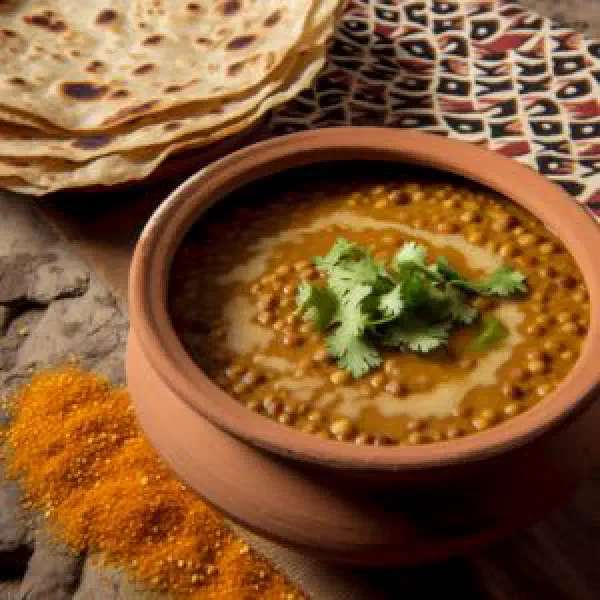
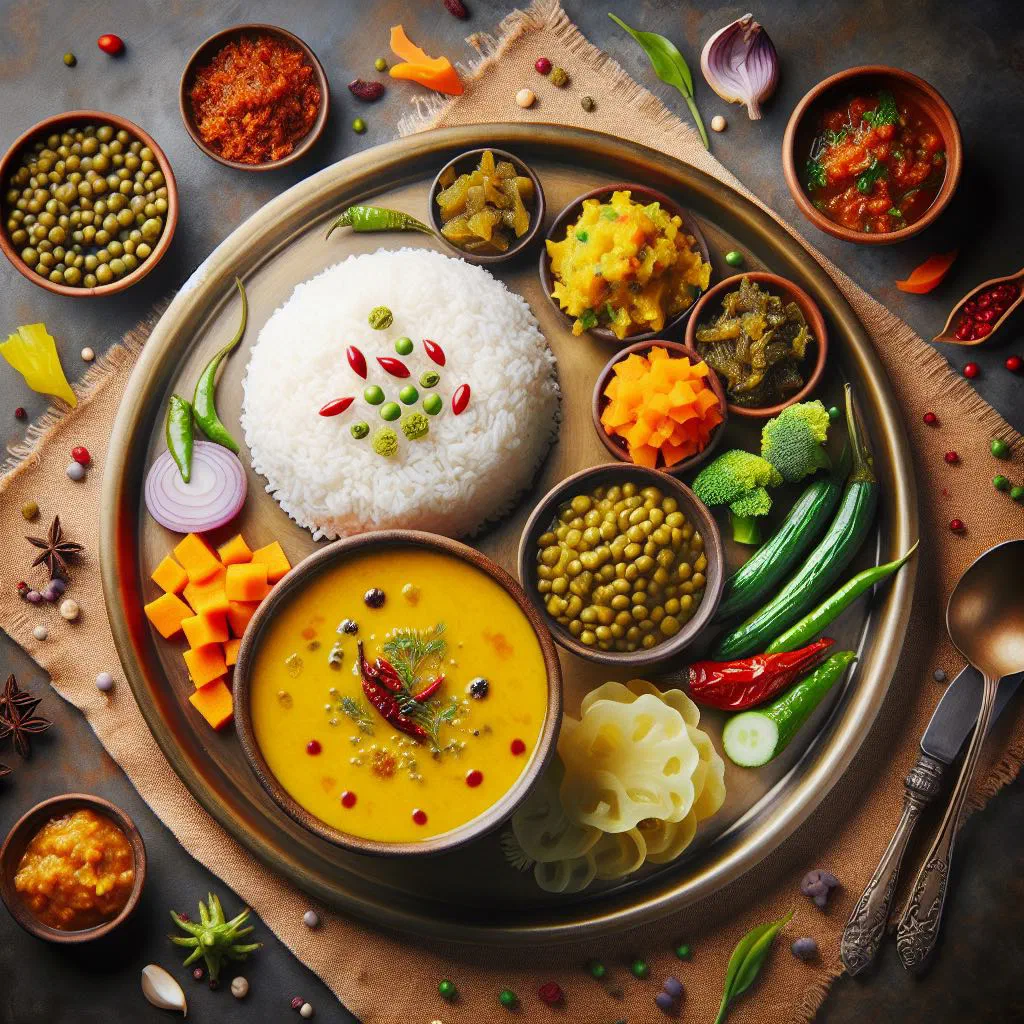
Dal bhat is not one dish but a plate: rice in the middle, a bowl of lentil soup, a vegetable curry, a pickle, and sometimes meat or curd. It is served on a steel thali and refills are usually free.
The dal is thin, closer to a soup than a stew, and it is poured over the rice and mixed by hand.
Ingredients (serves 1–2)
- 1 cup basmati rice
- 1/2 cup lentils (yellow or red preferred)
- 1 medium onion, finely chopped
- 2 cloves garlic, finely chopped
- 1 teaspoon grated ginger
- 2 medium tomatoes, diced
- 1 teaspoon turmeric
- 1/2 teaspoon ground cumin
- 1/2 teaspoon ground coriander
- Salt to taste
- 2 tablespoons vegetable oil
- Fresh coriander, to garnish
- Water as needed
Shopping for the ingredients
Masoor or moong dal cook fastest; kalo dal, black lentils, are the Newari choice. Jimbu, a dried Himalayan herb, is the distinctly Nepali seasoning and is sold in Nepali and Indian shops. Ghee for the tempering if you can.
Preparing the dish
Cook the dal until it collapses completely; it should be pourable. The step that makes it Nepali rather than generic is the jhaneko, a tempering of ghee with cumin seeds, dried chilli and jimbu poured over the finished dal.
Step-by-step instructions
- Bring the rice to the boil in a pan with twice its volume of water, then reduce the heat and simmer until soft.
- Rinse the lentils, cover with water and simmer with the turmeric until they collapse, topping up as needed.
- In a separate pan, heat the oil and sauté the onion, garlic and ginger until golden brown.
- Add the tomatoes and remaining spices, cooking until the tomatoes soften.
- Stir this into the cooked lentils and season with salt.
- For the tempering, heat a little ghee, sizzle cumin seeds and a dried chilli, and pour it over the dal.
- Garnish with chopped coriander.
- Spoon the cooked rice onto a plate and serve the dal alongside it in a bowl.
Gluten-free / lactose-free version
Rice and lentils are naturally gluten-free. Ghee is dairy; use oil for the tempering and the dish is lactose-free too.
Tips for vegans and vegetarians
Dal bhat is vegetarian by default in most of Nepal and vegan when made with oil. Rice and lentils together are a complete protein, which is the reason the plate works as a daily staple.
More tips and tricks
Do the tempering. Pouring hot spiced ghee over the finished dal is not a flourish, it is the step that gives Nepali dal its character, and skipping it leaves a flat soup. Cook the lentils until they lose their shape entirely.
Adapting the recipe to your taste
Jhaneko dal is the tempered version by name. Jimbu is the herb that makes it distinctly Nepali. Add a gundruk pickle, made from fermented greens, for the full plate.
Ingredient substitutions
Any lentil works, and mixtures are common. Dhido, the buckwheat or millet porridge, replaces rice in the hills. Oil replaces ghee.
Drink pairing ideas
Masala tea after the meal. Water with it. Chhaang, the millet beer, in the hills.
Serving and presentation ideas
Serve it on a steel thali: rice in the middle, dal in a bowl, vegetable curry, pickle and curd around it. Mix the dal into the rice with the right hand and eat. Second helpings of everything are expected.
A bit of history
Dal bhat is eaten across Nepal at every altitude and by every community, with the accompaniments changing by region and season. In the high hills where rice will not grow, dhido takes its place. It anchors Nepali cuisine more completely than most national dishes do.
More recipe ideas
Summary: Dal Bhat
Dal bhat is thin lentil soup with rice and a vegetable curry alongside. Cook the lentils until they collapse, finish with a hot ghee tempering, and expect to eat it twice a day.