National Dish New Zealand: Pavlova (Recipe)
In this article
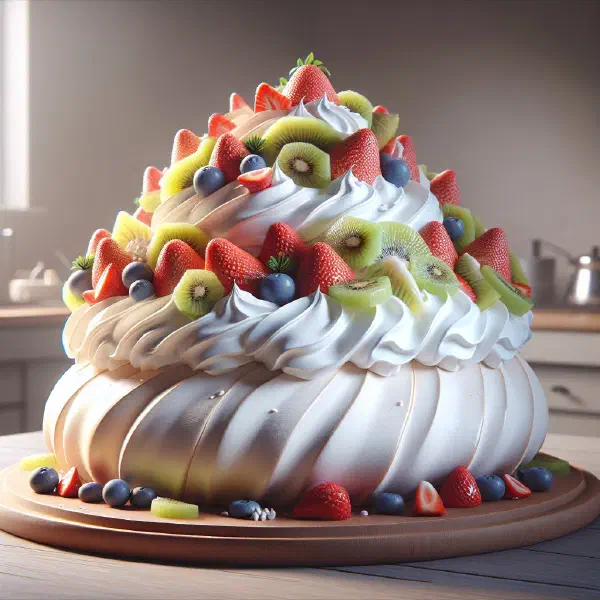
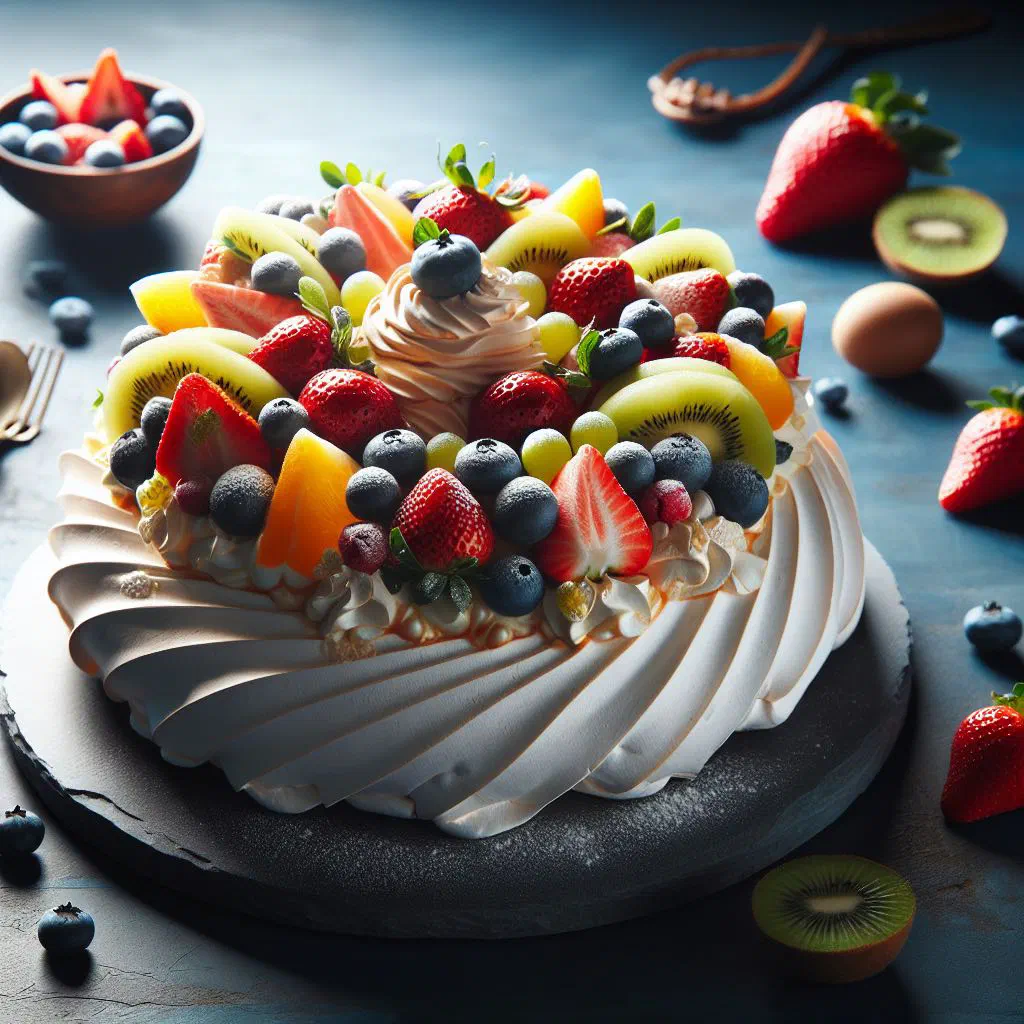
Few desserts capture a New Zealand summer quite like Pavlova. Crisp and snow-white on the outside, soft and marshmallowy within, it is crowned with billowing cream and a tumble of fresh fruit. The balance of sweetness and sharp, juicy fruit makes it the perfect finish to a good meal, and despite its showstopping looks, it asks for little more than egg whites, sugar and a touch of patience.
About Pavlova
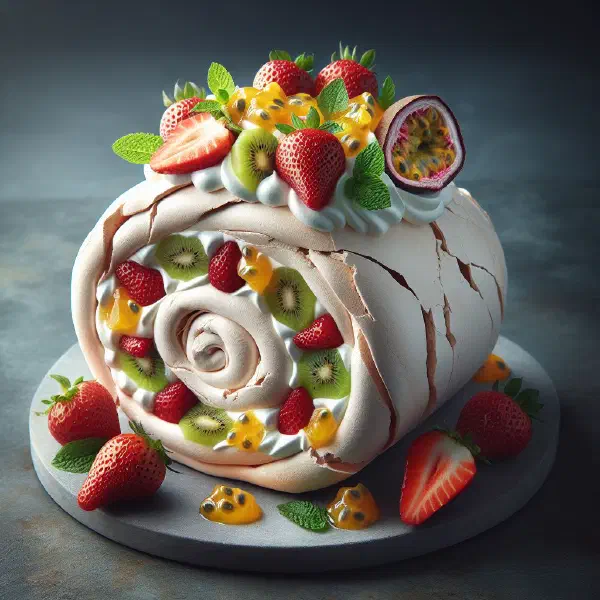
Pavlova is a classic dessert from New Zealand that wins people over with its airy meringue base and generous topping of fresh fruit. It is a perfect meeting of sweet and fresh: the sugary shell shatters under the spoon, giving way to a soft centre, while berries and passion fruit cut cleanly through the richness of the cream. It appears at Christmas tables, summer barbecues and birthdays alike, and rounds off a successful meal beautifully.
Ingredients (serves 1–2)
- 2 egg whites
- 100 g caster sugar
- 1 teaspoon cornflour
- 1 teaspoon white wine vinegar
- 200 ml double cream
- Fresh fruit (berries, kiwi fruit, passion fruit)
Shopping for the ingredients
Pavlova calls for fresh, good-quality ingredients. The eggs should be as fresh as possible, since the whites whip up to a far better volume. Buy your berries and other fruit in season for the best flavour, summer berries, ripe kiwi fruit and wrinkled, fragrant passion fruit are ideal. Cornflour and white wine vinegar are supermarket staples, so the whole shopping list is easy to fill.
Preparing the dish
Start by getting everything ready before you switch the mixer on. Make sure the eggs are at room temperature, as cold whites take longer to reach full volume. Heat the oven to 120 °C and line a baking tray with baking parchment. It also helps to wipe out your mixing bowl thoroughly: even a trace of fat or yolk will stop the whites from stiffening properly.
Step-by-step instructions
- Whisk the egg whites in a clean, grease-free bowl until they hold stiff peaks.
- Add the sugar a spoonful at a time, whisking until the mixture is glossy and firm.
- Gently fold in the cornflour and the vinegar.
- Shape the meringue into a round on the lined baking tray.
- Bake for 60 minutes, then leave it to cool completely in the switched-off oven.
- Whip the cream to soft peaks and spread it over the cooled meringue.
- Top the pavlova with the fruit of your choice and serve.
Gluten-free / lactose-free version
Pavlova is naturally gluten-free, since the meringue relies on egg whites, sugar and cornflour rather than flour, do check that your cornflour is certified gluten-free if you are cooking for someone with coeliac disease. For a lactose-free version, swap the dairy cream for a whippable coconut or oat cream, which brings its own gentle sweetness and works especially well with tropical fruit.
Tips for vegans and vegetarians
A vegan pavlova can be made with aquafaba, the liquid drained from a tin of chickpeas, in place of egg whites. Whisk it to stiff peaks exactly as you would egg whites, allowing a little extra time, then follow the recipe as usual. Finish with a plant-based whipping cream. The dessert is otherwise entirely vegetarian, which makes it an easy choice when you are cooking for a mixed table.
More tips and tricks
Bake the meringue at a low temperature so you get a crisp shell and a soft, chewy middle. Always let it cool fully inside the oven with the door shut, a sudden change in temperature is what causes those deep cracks. Humid days are the enemy of meringue, so bake on a dry one if you can, and assemble the dessert only shortly before serving so the base stays crisp.
Adapting the recipe to your taste
Instead of whipped cream you can use mascarpone or thick Greek yoghurt, which brings a pleasant tang against all that sugar. The fruit is entirely up to you: keep it simple with a single kind of berry, or go tropical with mango, pineapple and passion fruit. A drizzle of fruit purée or a scoop of Hokey Pokey Ice Cream alongside turns it into something even more indulgent.
Ingredient substitutions
If you have no white wine vinegar to hand, cider vinegar does the same job of stabilising the meringue, and a squeeze of lemon juice works too. Cornflour can be replaced with potato starch. Caster sugar gives the smoothest result, but granulated sugar blitzed briefly in a food processor is a fine stand-in.
Drink pairing ideas
A fruity white wine or a glass of prosecco pairs beautifully with pavlova, their acidity balancing the sweetness of the meringue. A late-harvest dessert wine suits it just as well if you prefer something richer. For an alcohol-free option, a freshly pressed fruit juice or a chilled iced tea makes a refreshing partner.
Serving and presentation ideas
Serve the pavlova on a handsome cake stand and garnish it with fresh mint leaves. A light dusting of icing sugar provides the finishing touch. Spoon the fruit on generously so the colours spill over the sides, and bring the whole thing to the table intact, the first crack of the spoon through the shell is half the pleasure. Individual mini pavlovas are a neat alternative for a dinner party.
A bit of history
Pavlova was reputedly created in honour of the Russian ballerina Anna Pavlova, who toured New Zealand in the 1920s; the airy dessert was said to echo her tutu. Australia lays claim to it as well, and the debate has rumbled on cheerfully ever since. Either way, it has become a national classic and one of the best-known plates in New Zealand cuisine, appearing on nearly every Christmas table in the country.
More recipe ideas
Summary: Pavlova
Pavlova is a classic and remarkably versatile dessert that can be presented as simply or as elegantly as the occasion demands. With the right ingredients and a little patience, this New Zealand national dish comes together with very little trouble. Crisp, soft, sweet and sharp all at once, it is a dessert that never fails to draw an appreciative pause at the table. Give it a go and enjoy every spoonful.