National Dish Nicaragua: Gallo Pinto (Recipe)
In this article
Gallo Pinto in Nicaragua uses red beans, and that is the point of difference from the Costa Rican version, which uses black. Both countries claim invention. Nicaraguans point out that theirs came first and that the name is Nicaraguan. Costa Ricans disagree.
About Gallo Pinto
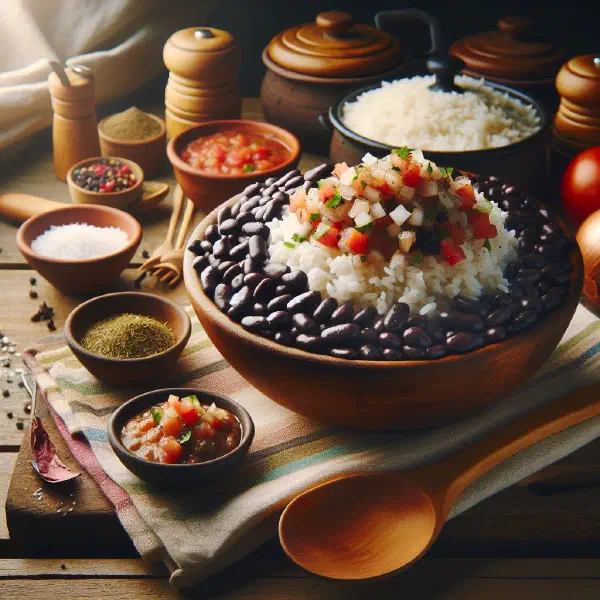
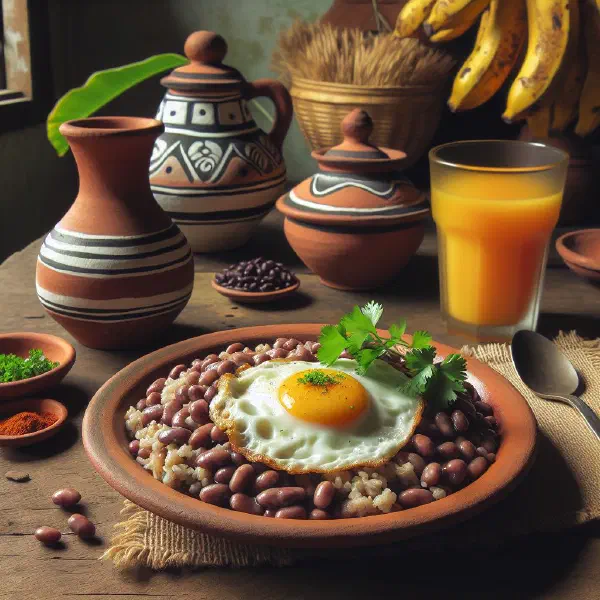
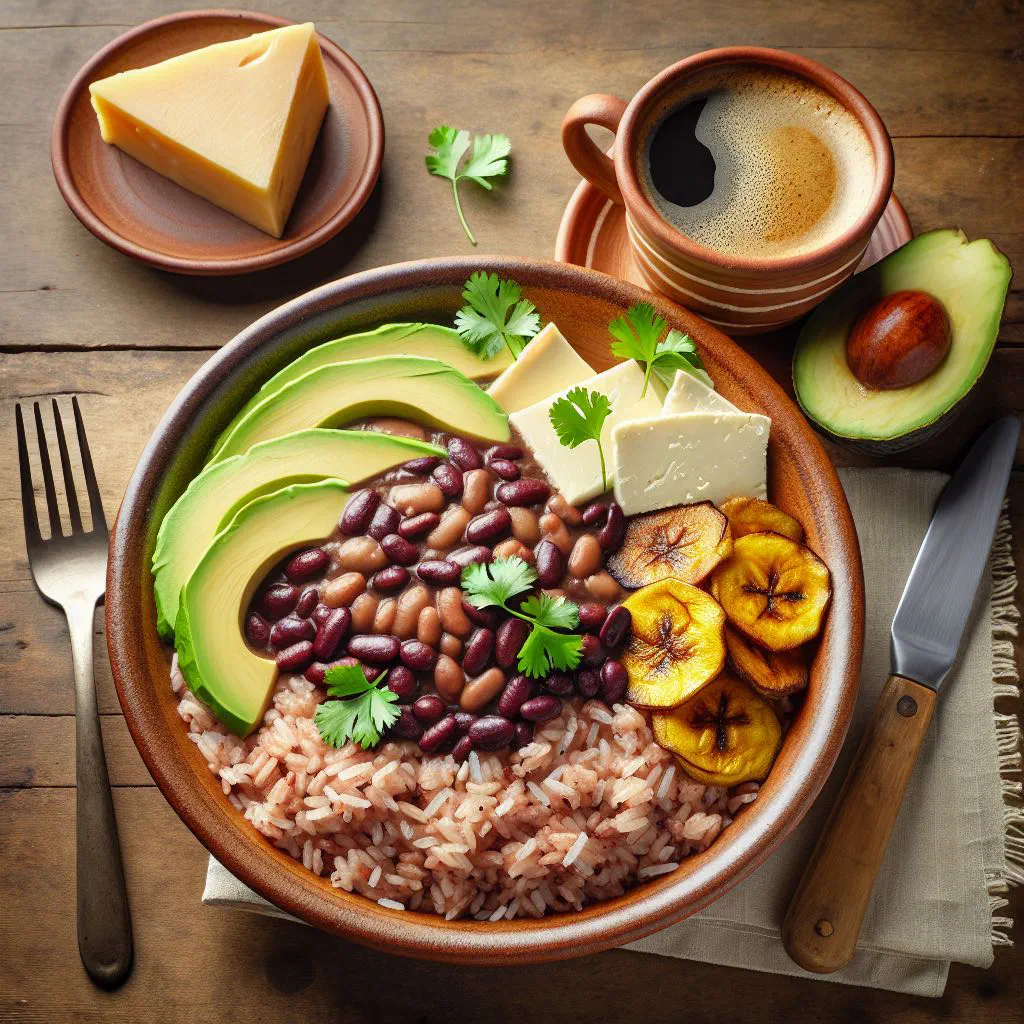
Gallo pinto is rice and beans fried together with onion, pepper and garlic. The bean liquid stains the rice, which gives the dish its name: spotted rooster. It is breakfast, served with eggs, fried plantain, cheese and cuajada.
Day-old rice is required. Fresh rice clumps.
Ingredients (serves 1–2)
- 1 cup cooked black beans, with their cooking liquid
- 2 cups cooked long-grain rice
- 1 medium onion, finely chopped
- 1 small green pepper, finely chopped
- 2 cloves of garlic, finely chopped
- 2 tablespoons vegetable oil
- Freshly chopped coriander, to taste
- Salt and freshly ground black pepper, to taste
- A pinch of ground cumin (optional)
- 1 tablespoon Worcestershire sauce (optional)
Shopping for the ingredients
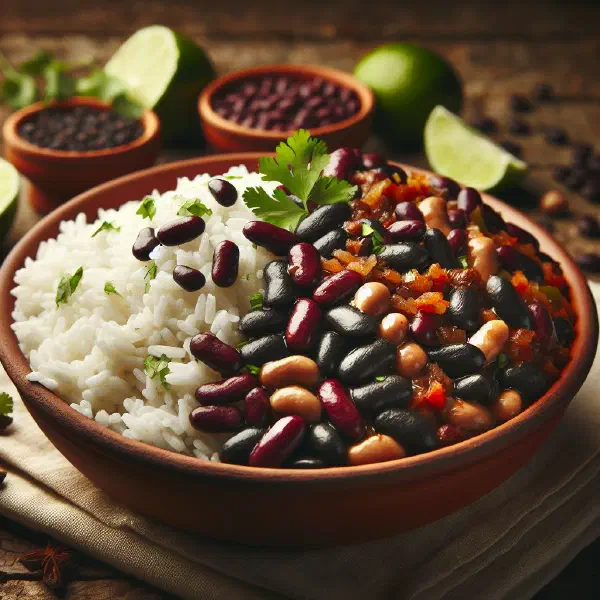
Nicaraguans use small red beans, and the recipe’s black beans give the Costa Rican version. Either works. Keep the bean cooking liquid; that dark liquor is what colours the rice and is the difference between gallo pinto and rice with beans stirred through.
Preparing the dish
Cook the rice the day before and refrigerate it uncovered. Dice the onion and pepper small. Have everything ready, since the dish takes ten minutes.
Step-by-step instructions
- Heat the oil in a large frying pan over medium heat and add the onion, green pepper and garlic. Cook until the vegetables are soft.
- Add the beans with some of their cooking liquid and season with salt and pepper. Stir in the cumin and Worcestershire sauce, if using.
- Let the mixture simmer for a few minutes before adding the cooked rice. Stir gently to make sure the rice is evenly coloured by the bean mixture.
- Cook for a few minutes more until the gallo pinto is piping hot, stirring occasionally and taking care that nothing catches on the base of the pan.
- Scatter with fresh coriander and serve.
Gluten-free / lactose-free version
Rice and beans are naturally gluten-free and dairy-free. Worcestershire sauce contains barley malt vinegar, so leave it out or use a gluten-free version.
Tips for vegans and vegetarians
Gallo pinto is vegan as written, provided the Worcestershire sauce is anchovy-free. Rice and beans together are a complete protein, which is why it works as the base of a diet rather than a side dish.
More tips and tricks
Use cold, day-old rice. Add bean liquid, not just beans. And let the pan sit long enough for the base to catch slightly, which is where the flavour is.
Adapting the recipe to your taste
Red beans make it properly Nicaraguan. With egg is the standard breakfast. With salsa or with cuajada, the fresh cheese, are the other usual forms.
Ingredient substitutions
Black and red beans are interchangeable in practice. Any leftover rice works. Spring onion in place of the white onion.
Drink pairing ideas
Coffee, since Nicaragua grows a great deal of it. Refresco de tamarindo is the local soft drink. Toña or Victoria lager later in the day.
Serving and presentation ideas
Serve it for breakfast with fried eggs, tajadas, soured cream and a wedge of white cheese. Hot sauce on the table. It is eaten early and in quantity.
A bit of history
Rice and beans cooked together came to Central America with African cooks and adapted everywhere. The Nicaragua-Costa Rica dispute over gallo pinto is genuine and has occasionally involved competing world-record attempts at the largest single serving. It anchors Nicaraguan cuisine.
More recipe ideas
Summary: Gallo Pinto
Gallo pinto is day-old rice fried with beans and their liquid, onion, pepper and garlic. Use cold rice, keep the bean liquor, and let it catch slightly in the pan.