National Dish Norway: Smoked Salmon with Scrambled Eggs (Recipe)
In this article
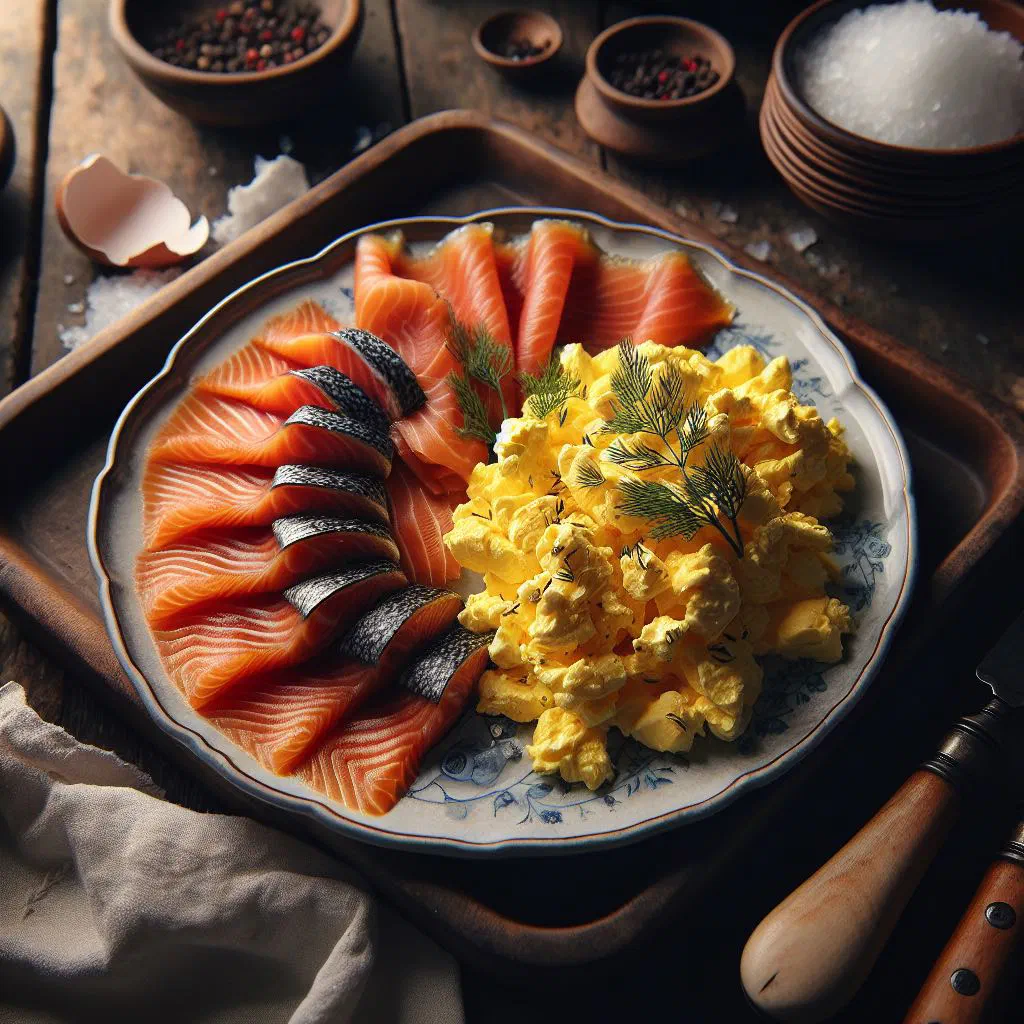
Meet Smoked Salmon with Scrambled Eggs, the Norwegian classic known at home as røkelaks med eggerøre. Silky, cold-smoked fish meets soft, buttery eggs for a plate that feels indulgent yet takes barely ten minutes to put together. It is the sort of thing Norwegians reach for at a leisurely weekend breakfast or a light lunch, and a single forkful carries the clean, briny character of the northern coast straight to your kitchen table.
About Smoked Salmon with Scrambled Eggs
Røkelaks, or smoked salmon, is one of Norway’s most celebrated delicacies. The tender, melting fish is cured and smoked according to age-old craft, lending any dish a bright maritime freshness. Paired with eggerøre, soft, airy scrambled eggs, it makes a beautifully balanced plate that works just as well at breakfast as it does for a light midday meal. This is Scandinavian cooking at its most quietly confident: few ingredients, handled properly.
Ingredients (serves 1–2)
- 200 g røkelaks (cold-smoked salmon)
- 4 eggs
- 2 tablespoons milk or cream
- 1 tablespoon butter
- Fresh dill or chives, to garnish
- Salt and pepper to taste
Shopping for the ingredients
Shopping for this dish is refreshingly simple. Smoked salmon is stocked by most well-supplied supermarkets and by any fishmonger selling fresh regional produce. It pays to pick a good-quality salmon, since the fish carries the whole plate, look for even, glossy slices without dry edges. Eggs, milk and fresh herbs are easy to find anywhere and round out the shopping list perfectly.
Preparing the dish
Preparation is quick and needs almost no equipment. Start by cutting the salmon into thin slices or tearing it into rough pieces, which helps the flavours mingle once it meets the eggs. Whisk the egg base thoroughly with milk or cream to build that particularly creamy texture. Set your fresh herbs aside ready for garnishing, and you can have everything on the table in minutes, much like the neighbouring classic Rokt Laks.
Step-by-step instructions
- Whisk the eggs in a bowl with the milk or cream and season with salt and pepper.
- Melt the butter in a pan over medium heat.
- Pour in the egg mixture and let it set gently, stirring constantly.
- Add the smoked salmon pieces as soon as the eggs begin to thicken.
- Fold everything together until the eggs reach the consistency you like, then divide between plates.
- Garnish with fresh herbs and serve straight away.
Gluten-free / lactose-free version
This dish is already ideally suited to a gluten-free diet, since it contains no gluten-bearing ingredients at all. For a lactose-free version, simply use lactose-free milk or a plant-based alternative such as oat or almond milk. The flavour stays every bit as aromatic and the eggs keep their lovely creaminess. For anyone managing an intolerance, it is a genuinely easy way to enjoy something special without compromise.
Tips for vegans and vegetarians
For vegans, reinventing this plate is an enjoyable challenge. In place of eggs, use tofu or one of the ready-made vegan scrambled-egg mixes now sold in health-food shops. The salmon can be swapped for plant-based alternatives such as marinated carrot ribbons or smoked tofu, both of which mimic that gentle smokiness. The texture differs, of course, but the interplay of flavours remains just as interesting in this fully plant-based take on the Norwegian original.
More tips and tricks
Getting the best from this dish comes down to technique. Stirring the eggs slowly over medium heat stops them setting too quickly and keeps them creamy rather than rubbery. Experiment with different herbs to tune the flavour to your own taste. A squeeze of lemon juice adds freshness and lifts the smokiness of the fish, the same trick that works so well with Gravlaks.
Adapting the recipe to your taste
Røkelaks med eggerøre adapts readily to personal preference. Add diced onion or sweet peppers for extra texture and bite. Depending on the season, vegetables such as spinach or fresh tomatoes make a delicious addition. That is what keeps a simple dish from ever becoming repetitive.
Ingredient substitutions
If you have no fresh eggs to hand, supermarket egg-replacement products are worth a try. Most are plant-based and give surprisingly similar results in a scramble. Ordinary milk can equally be swapped for plant-based alternatives to suit your diet. Combining different kinds of salmon, hot-smoked alongside cold-smoked, for instance, brings extra variety and some genuinely interesting flavour contrasts, in the spirit of Rosti Med Gravlaks.
Drink pairing ideas
A good glass of white wine suits this dish beautifully. A dry, fruity style harmonises with the richness of the salmon and the creaminess of the eggs. A fresh juice, green apple or citrus, makes an excellent alcohol-free option. Soy tea or green tea are similarly refreshing companions for such a light plate and round off the meal nicely.
Serving and presentation ideas
Thoughtful presentation lifts the whole experience. Serve on attractive tableware and garnish each portion with fresh herbs or edible flowers. Using toasted bread as a base for the salmon adds height and visual appeal, a slice of Flatbrod works particularly well here. Arrange everything so the colours and textures show to advantage, and the plate becomes as much a feast for the eyes as for the palate.
A bit of history
Røkelaks has a long tradition in Norway and has been made for centuries. Smoking once served to refine the flavour and to preserve the fish through long northern winters. Smoked salmon is today a fixture of Norwegian cuisine and appears regularly at celebrations and festive gatherings. The dish is not merely a pleasure but a piece of cultural heritage, woven deeply into Nordic identity.
More recipe ideas
Summary: Smoked Salmon with Scrambled Eggs
Røkelaks med eggerøre is a delicious pairing that captures the variety and freshness of the Norwegian kitchen. It is straightforward to prepare and endlessly variable, so it can be shaped to suit almost any preference. With its delicate flavours and pleasing texture it makes an ideal breakfast or a light lunch. Anyone with a fondness for Scandinavian cooking should give this recipe a go and bring a small piece of Norway into their own kitchen.