National Dish Oman: Shuwa (Recipe)
In this article
Shuwa cooks for a full day in a pit in the ground. Marinated meat is wrapped in banana or palm leaves, lowered into a sand oven over embers, sealed, and left for 24 hours or longer. It is made for Eid, and families do it together.
About Shuwa
Shuwa is Oman’s celebration dish and the method is the whole thing. A pit is dug, a fire burns down in it, the wrapped meat goes in, and everything is covered with sand and left. When it comes out the meat is falling apart and heavily perfumed with the spice paste.
The paste varies by family and is a closely held thing. Cumin, coriander, cardamom, chilli, turmeric and dried lime are common.
Ingredients (serves 1–2)
- 1 kg lamb or goat, cut into large pieces
- 2 tablespoons ground cumin
- 2 tablespoons ground coriander
- 1 tablespoon paprika
- 1 teaspoon ground cardamom
- 1 teaspoon ground cinnamon
- 1 teaspoon ground cloves
- 1 teaspoon freshly grated nutmeg
- 6 garlic cloves, crushed
- 2 tablespoons white vinegar
- 4 tablespoons olive oil
- Black pepper and sea salt, to taste
- Banana leaves or aluminium foil, for wrapping
Shopping for the ingredients
Goat on the bone is the traditional meat and gives a better result than lamb. Ask for large pieces, shoulder and leg. Omani bizar, the local spice mix, is what the paste is built on and is sold in Gulf shops.
Preparing the dish
Marinate overnight at minimum, and 24 hours is better. The paste should be thick enough to coat rather than run. Wrap tightly, in several layers, since anything that escapes will be lost to the sand.
Step-by-step instructions
- Combine all the spices, the crushed garlic, the vinegar and the olive oil in a bowl to form a thick spice paste.
- Rub the meat thoroughly all over with the paste, cover it, and leave it to marinate in the fridge overnight (or for at least 12 hours).
- Wrap the marinated meat tightly in banana leaves, or use aluminium foil if needed, sealing it completely.
- If you have a taboon, bury this special oven in the sand and heat it with charcoal.
- Place the wrapped meat inside, cover it over with sand and leave it to cook for around 24 hours.
- For the domestic version, wrap in foil and bake at 120°C for 8 hours, or overnight in a very low oven.
- Once cooked, carefully lift out the meat and open the parcel to reveal the tender, aromatic shuwa.
Gluten-free / lactose-free version
Shuwa is meat and spices and contains no gluten or dairy. Only the rice or bread served with it needs checking.
Tips for vegans and vegetarians
The dish is a whole animal cooked underground and does not translate. Harees, the wheat and meat porridge, has a meat-free version, and Omani vegetable dishes with dried lime and the same spice mix are worth exploring.
More tips and tricks
Wrap it in several layers and seal it completely. Any gap and the meat dries out and takes on sand or ash. Marinate longer than feels necessary. And do not rush the cooking: shuwa is defined by the length of time, and a fast version is a different dish.
Adapting the recipe to your taste
More chilli is common in the interior. Dried lime powder in the paste adds sourness. Camel is used for large gatherings and takes longer still.
Ingredient substitutions
Lamb replaces goat. A very low domestic oven, 110 to 120°C overnight, approximates the pit. Foil replaces banana leaves at some cost to aroma.
Drink pairing ideas
Kahwa, Omani coffee with cardamom, served with dates. Laban alongside the meal. Water, since shuwa is rich.
Serving and presentation ideas
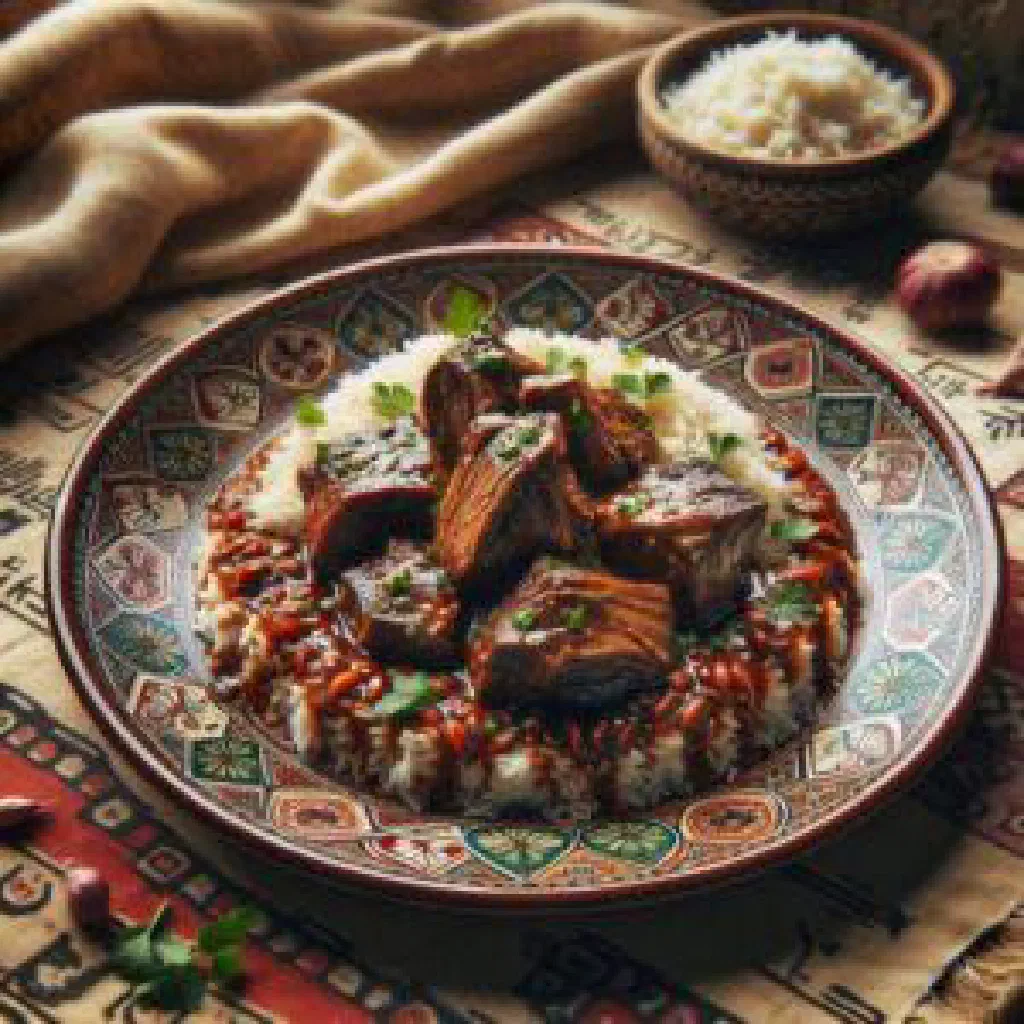
Serve it torn into pieces over a mound of spiced rice on a large platter, with the juices poured over. Everyone eats from the shared dish with the right hand. It is Eid food and the gathering is the point.
A bit of history
Pit cooking is old across Arabia and suits a desert climate: the sand insulates and the fuel is used once. Shuwa is specifically Omani and specifically festive, prepared communally over the days of Eid al-Adha. It anchors Omani cuisine.
More recipe ideas
Summary: Shuwa
Shuwa is spice-marinated goat or lamb wrapped in leaves and cooked in a sand pit for a day. Marinate it overnight, wrap it in several layers, seal it, and give it the full time.