National Dish Pakistan: Nihari (Recipe)
In this article
Nihari cooks overnight. The name comes from the Arabic for morning, and it was breakfast: meat put on the fire after evening prayers and eaten at dawn. Old Delhi and Lahore both claim it, and the shops that sell it still open at six.
About Nihari
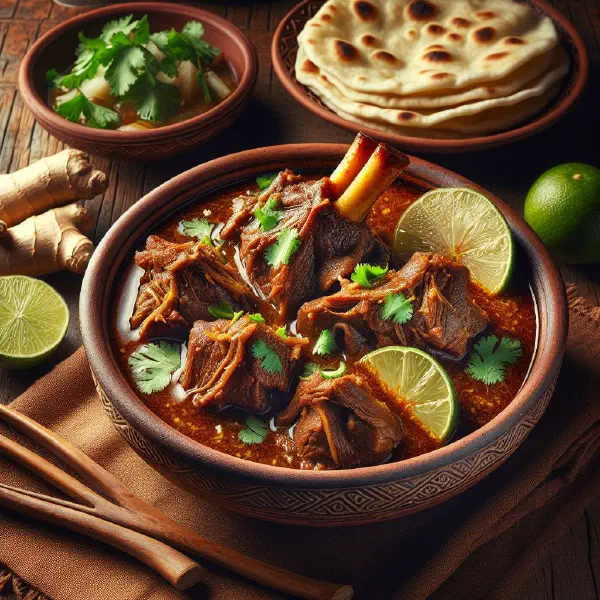
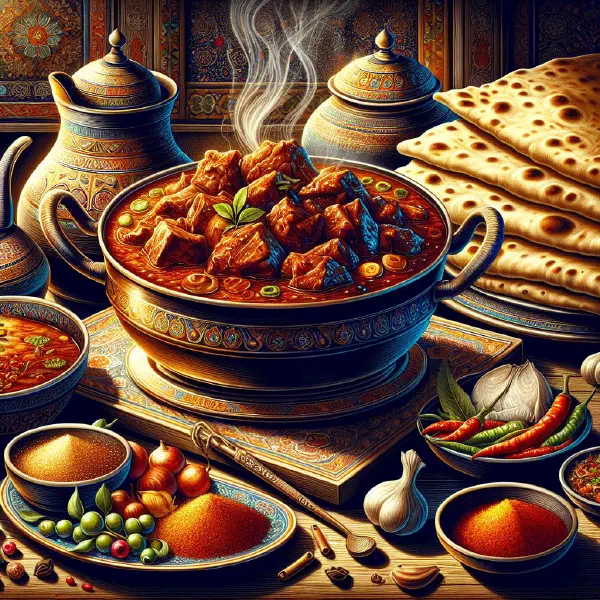
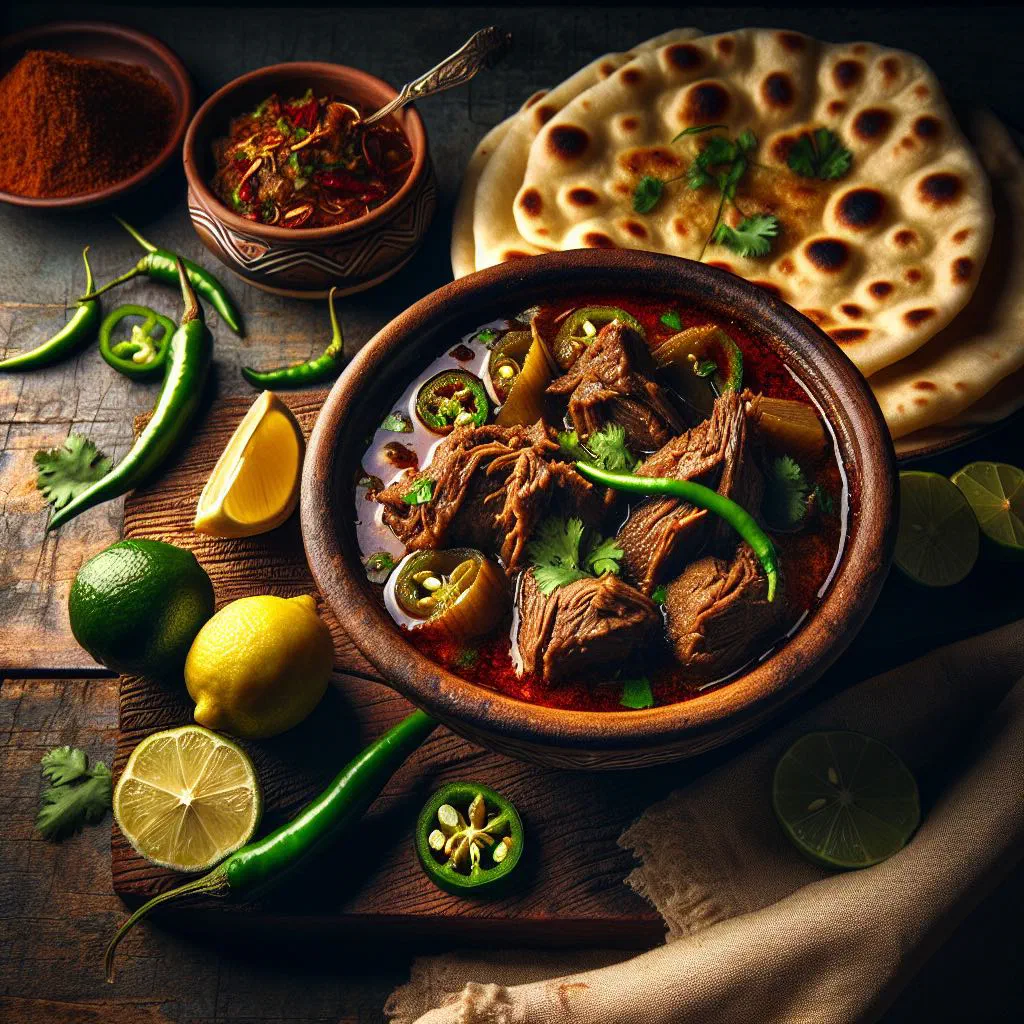
Nihari is slow-cooked beef or mutton shank in a thick, dark, heavily spiced gravy, thickened with wheat flour and finished with a tarka of ghee. Bone marrow is part of it: the shank bones go in and the marrow is scooped out at the table.
Some Lahore shops keep a portion of yesterday’s nihari, the taar, and add it to today’s pot. Certain establishments claim an unbroken chain going back decades.
Ingredients (serves 1–2)
- 500 g beef, cut into large pieces
- 3 tablespoons ghee or vegetable oil
- 1 large onion, sliced
- 2 teaspoons garlic paste
- 2 teaspoons ginger paste
- 1 teaspoon turmeric powder
- 2 teaspoons ground coriander
- 1 teaspoon red chilli powder
- ½ teaspoon freshly ground black pepper
- 4 cups beef stock
- Salt to taste
- Fresh coriander and ginger strips, to garnish
- Naan bread or rice, to serve
Shopping for the ingredients
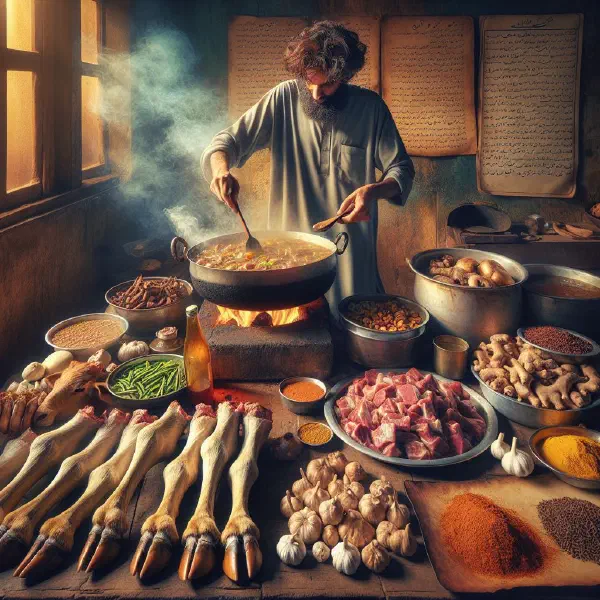
Beef or mutton shank, on the bone, with marrow. That is not negotiable if you want real nihari. Nihari masala, the specific blend with fennel, long pepper and nutmeg, is sold ready-made in Pakistani shops and is worth buying.
Preparing the dish
This needs six to eight hours at a bare simmer. A pressure cooker does it in ninety minutes with a slightly different texture. Fry the onions first and set them aside; they go on top at the end.
Step-by-step instructions
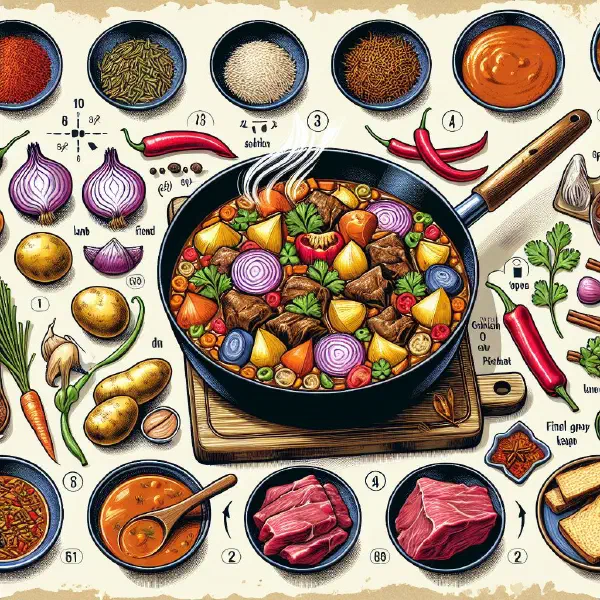
- Heat the ghee or oil in a large pot and fry the sliced onions until golden brown. Remove them and set aside on kitchen paper.
- Add the beef to the same pot and sear it over a high flame on all sides.
- Stir in the garlic and ginger paste and fry briefly.
- Add the dry spices and cook until they become fragrant.
- Deglaze with the beef stock and bring to the boil.
- Cover the pot and let the Nihari simmer over low heat for 6–8 hours, until the meat is meltingly tender.
- Slacken 2 tablespoons of wheat flour in cold water and stir it in to thicken the gravy, simmering 15 minutes more.
- Skim off any excess fat, adjust the seasoning, and serve with the caramelised onions, fresh coriander, ginger strips and naan.
Gluten-free / lactose-free version
The gravy is traditionally thickened with wheat flour; cornflour works instead. Ghee contains trace lactose, though most people who avoid dairy tolerate it. Serve with rice rather than naan.
Tips for vegans and vegetarians
Nihari is bone-in meat cooked for eight hours and does not translate. Haleem has a vegetarian version made with lentils and wheat, and it uses much the same spicing.
More tips and tricks
Use shank on the bone with the marrow. Cook it long and low, and never at a boil. Thicken with flour slaked in cold water, added slowly. And do not skip the garnishes: ginger julienne, green chilli, coriander and lemon are what lift a very rich dish.
Adapting the recipe to your taste
Mutton nihari is the older version and stronger. A tarka of hot ghee with chilli poured over at the end is standard. Brain or maghaz is added in some shops.
Ingredient substitutions
Lamb or mutton shank replace beef. A pressure cooker cuts the time substantially. Cornflour replaces wheat flour for thickening.
Drink pairing ideas
Strong sweet chai afterwards. Lassi, salted rather than sweet, alongside. Water, since nihari is very rich.
Serving and presentation ideas
Serve it in a deep bowl with the fat visible on the surface, which is correct rather than a fault, with naan to tear and dip. Ginger, chilli, coriander and lemon go on the table. Scoop the marrow out of the bones.
A bit of history
Nihari is said to have been developed in the Mughal court kitchens of Delhi and eaten after the dawn prayer by labourers who needed something substantial. It moved to Karachi and Lahore with Partition in 1947, where it became Pakistan’s national dish. It anchors Pakistani cuisine.
More recipe ideas
Summary: Nihari
Nihari is beef shank simmered six to eight hours in a dark spiced gravy thickened with flour. Use bone-in shank with marrow, cook it low and long, and load the garnishes.