National Dish Papua New Guinea: Green Banana Stew (Recipe)
In this article
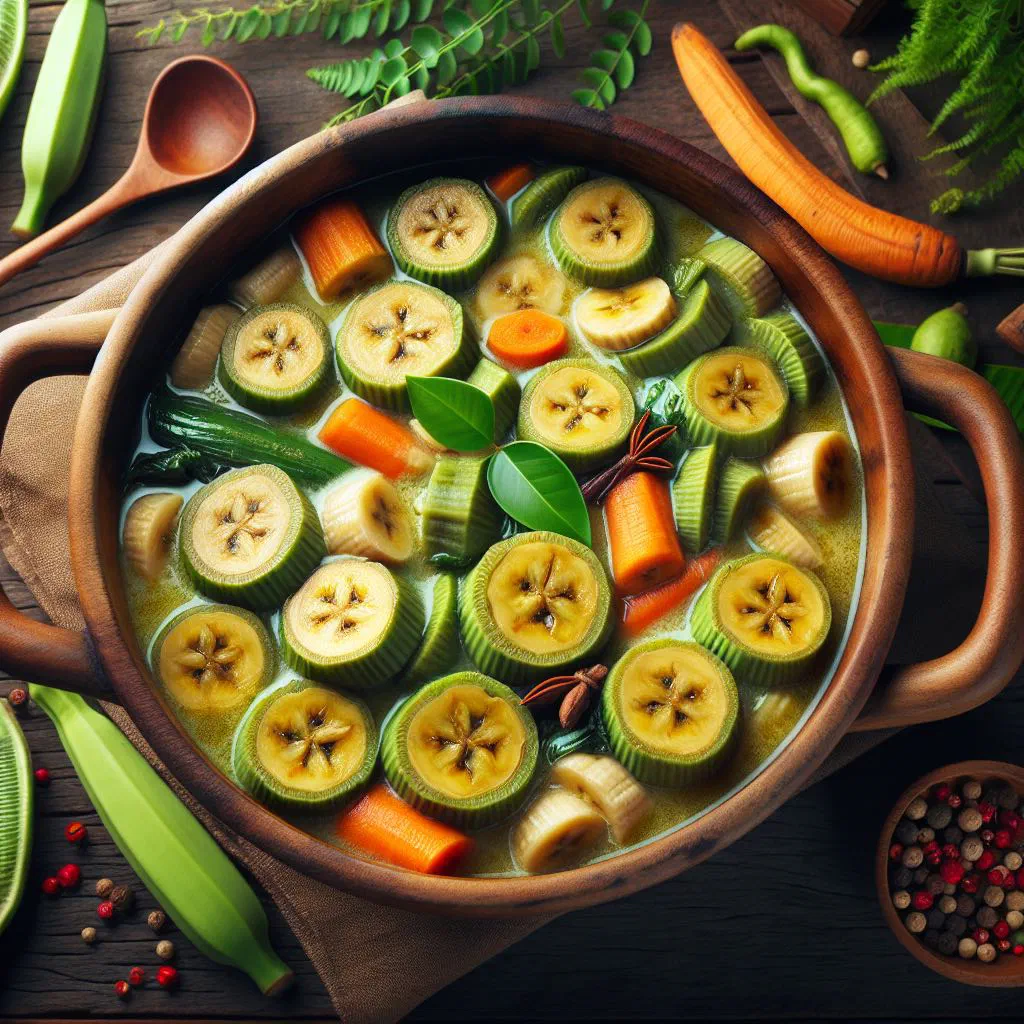
Meet Green Banana Stew, a warming one-pot dish that carries the unmistakable flavour of the South Pacific. Firm, unripe bananas simmer alongside crisp vegetables and gently warming spices until they turn tender and comforting. It is nourishing, naturally plant-based and simple enough for a busy weeknight, yet generous enough to set in the middle of the table when friends come round. A single pot is all it takes to bring a taste of Papua New Guinea into your kitchen.
About Green Banana Stew
Green Banana Stew is a traditional dish from Papua New Guinea that offers an authentic taste of the South Pacific. It combines the mild, starchy character of green bananas with an abundance of fresh vegetables and aromatic spices. The result is hearty without being heavy, which makes it a fine choice for anyone who wants to eat healthily and flavourfully at the same time. Preparation is straightforward, so the stew suits ordinary weekdays just as well as special occasions.
Ingredients (serves 1–2)
- 4–5 green bananas
- 1 onion
- 2 garlic cloves
- 1 pepper
- 1 carrot
- 1 small courgette
- 1 teaspoon ginger, freshly grated
- 1 teaspoon turmeric
- 1–2 cups vegetable stock
- Salt and pepper to taste
- Fresh herbs (such as coriander or parsley), to garnish
Shopping for the ingredients
To make a really good green banana stew, the right ingredients matter. Green bananas are stocked by most well-supplied supermarkets and by Asian grocers. Look for fruit that is firm and clearly unripe, as this gives the best flavour and texture in the pot. Fresh vegetables are worth buying at a local market or an organic shop, where quality tends to be higher and the aromas noticeably better.
Preparing the dish
Before you start cooking, get all the ingredients properly prepared. Begin by peeling the green bananas and cutting them into evenly sized pieces so they cook at the same rate. Wash, peel and dice the vegetables. These small steps are what guarantee an even cooking time and an attractive finished dish, much as careful prep does in a Yam Stew.
Step-by-step instructions
- Heat a little oil in a large pan and add the onion and garlic. Fry until golden brown.
- Add the ginger, turmeric and the chopped vegetables, and sauté for a few minutes.
- Tip the banana pieces into the pan and mix them thoroughly with the vegetables.
- Pour in the vegetable stock and bring everything to the boil.
- Reduce the heat and let the stew simmer for around 20–25 minutes, until the bananas are soft and the vegetables are cooked through.
- Season the stew with salt and pepper and garnish with fresh herbs.
Gluten-free / lactose-free version
Green banana stew is naturally gluten-free and lactose-free as long as you use ordinary oil rather than butter. Do check that the stock and spice blends you reach for contain no hidden gluten. That makes the dish an excellent option for anyone living with food intolerances, who can enjoy it in full without a second thought.
Tips for vegans and vegetarians
For vegans and vegetarians the stew is an outstanding choice. Alongside the fresh vegetables you can stir in plant-based protein such as chickpeas or lentils to make the dish more substantial. Use a vegetable stock to keep it fully vegan. With a few creative variations you can shape the recipe around your own diet without giving up any flavour or texture.
More tips and tricks
To deepen the flavour, play with additional spices and herbs. Add chillies for heat, or throw in extra vegetables such as spinach or sweet potato. A squeeze of lemon juice or a splash of coconut milk brings welcome richness and depth, the same trick that lifts a Pumpkin and Coconut Soup. The key is to stay curious in the kitchen and cook to your own palate.
Adapting the recipe to your taste
Green banana stew is a very forgiving dish and easy to bend to personal preference. If there is a vegetable you dislike, simply swap it for one you enjoy more. The quantity of spice can be dialled up or down as you please. Stay open to a little experimentation and you will soon arrive at your own version of this traditional dish.
Ingredient substitutions
There is plenty of room for alternative ingredients, whether to raise the nutritional value or to bring in new flavours. Instead of vegetable stock you might use coconut water, or chicken stock if the dish does not need to stay vegan. The choice of fresh vegetables is equally wide, so you can vary things by season or availability. A few more unusual vegetables will give the stew a character all of its own.
Drink pairing ideas
A hearty green banana stew is best matched with light, refreshing drinks. A home-made iced tea or a freshly pressed lemonade complements the flavours beautifully, and a Lime Cordial does the job just as neatly. If you prefer something alcoholic, a light white wine or a tropical cocktail will heighten that holiday feeling. Try a few combinations and see which one you like best.
Serving and presentation ideas
Presentation shapes the whole eating experience. Serve the stew in rustic bowls to create a warm, inviting look. Garnished with fresh herbs and paired with rice or a crisp salad on the side, it becomes as pleasing to the eye as it is to the palate. A couple of spoonfuls of coconut cream on top add a final tropical flourish.
A bit of history
Green banana stew is not only a pleasure to eat but a piece of Papua New Guinea’s cultural history. The use of unripe bananas reflects how skilfully local communities have made the most of what grows around them, folding the fruit into their cooking for centuries. Pairing simply prepared ingredients in one pot has a long tradition across the wider region, and the dish mirrors the everyday rhythms and food culture of the islands. Cooking it is a small way of taking part in that heritage, much like preparing a classic Mumu or exploring Papua New Guinean cuisine more broadly.
More recipe ideas
Summary: Green Banana Stew
In short, green banana stew is a hearty, nutritious dish that suits beginners and seasoned cooks alike. It invites you to play with different flavours and to adjust everything until it matches your own taste. Preparation is uncomplicated and calls for very few specialist ingredients, which makes it a practical choice in almost any kitchen. Let it inspire you and bring a little of the South Pacific to your table.