National Dish Qatar: Knafeh (Recipe)
In this article
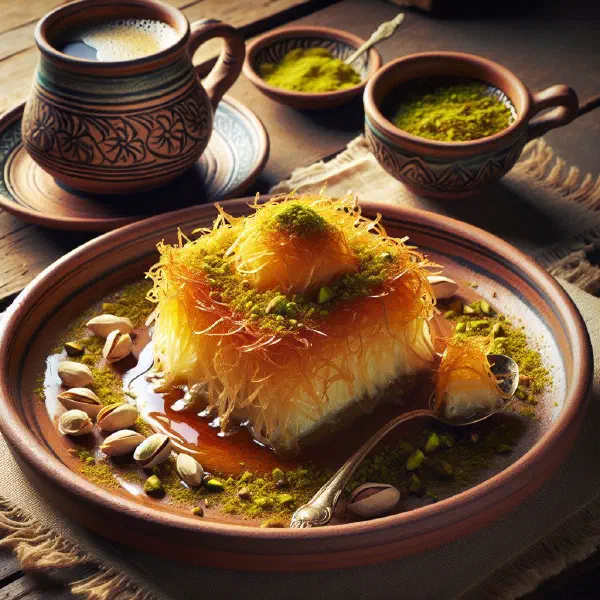
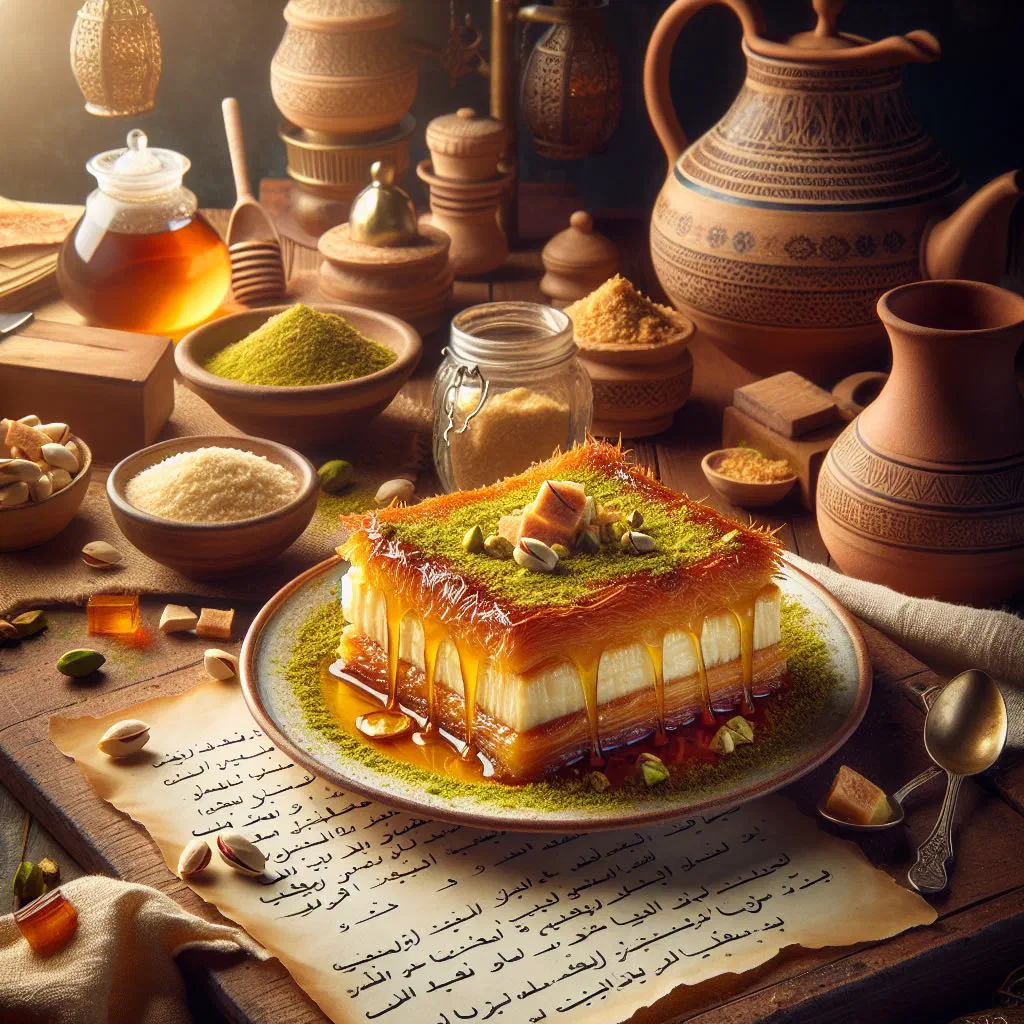
Say hello to Knafeh, the very sweet showstopper of Qatari kitchens. This beloved Middle Eastern treat layers wispy strands of pastry over molten cheese, all soaked in a fragrant sugar syrup and finished with a shower of crushed pistachios. Its warm, gooey, golden charm is impossible to resist. Bring a taste of the Arabian Gulf straight to your own table.
About Knafeh
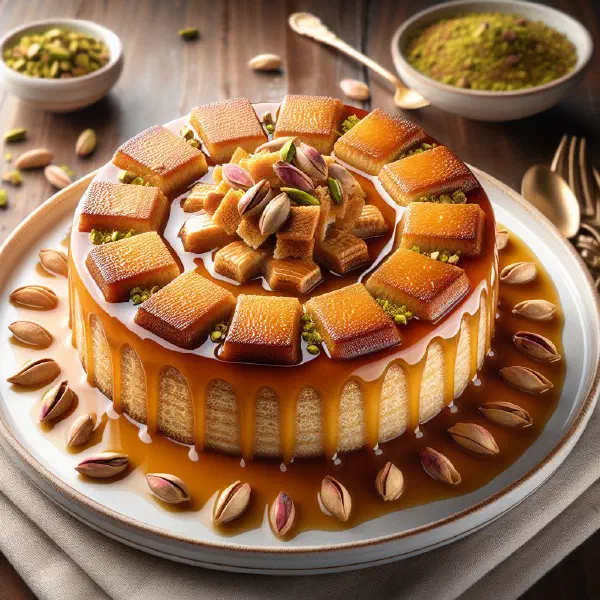
Knafeh is not only a much-loved dessert across the Middle East, it is also the national dish of Qatar. This wonderful sweet is traditionally made from thin layers of pastry, its defining ingredient, combined with melted cheese. Enriched with a sweet sugar-syrup glaze and garnished with crunchy pistachios, knafeh offers a unique experience for all the senses. Whether at festive celebrations or as a sweet snack between meals, it has earned a treasured place in the hearts of dessert lovers.
Ingredients (serves 1–2)
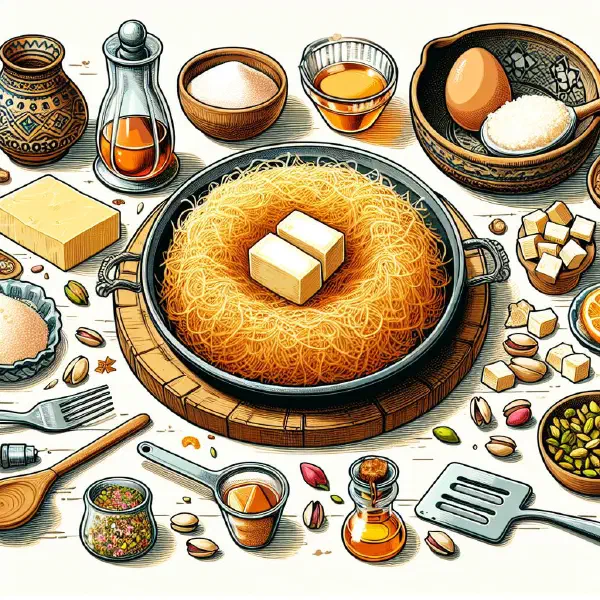
- 200 g knafeh pastry or fine shredded filo sheets
- 150 g melted mozzarella or another mild cheese
- 100 g sugar
- 60 ml water
- 2 tablespoons rose water (optional)
- 50 g crushed pistachios
- Butter or ghee, for greasing
Shopping for the ingredients
The ingredients for knafeh are easy to find in Asian or Arabic grocery shops. The knafeh pastry is often sold in the freezer section, while cheese such as mozzarella is available in any ordinary supermarket. Sugar and water are basic staples that should already be in every kitchen. If you would like to use rose water, look for a dedicated bottle in the international aisle or at a health-food shop.
Preparing the dish
Preparing knafeh takes a few basic steps before the actual cooking begins. First, loosen the knafeh pastry and tear it into small pieces so that it bakes to an even consistency. Meanwhile, gently heat the water and sugar in a small pan to make the sugar syrup. Remember to add the rose water, which gives the dessert its special note.
Step-by-step instructions
- Preheat the oven to 180°C.
- Grease a baking dish with butter or ghee.
- Spread the loosened knafeh pastry evenly across the dish and press down lightly.
- Distribute the melted cheese evenly over the pastry.
- Scatter the remaining pastry on top and press down again.
- Bake the knafeh in the preheated oven for about 30–40 minutes until golden brown.
- Once baked, pour the sugar syrup evenly over the warm knafeh.
- Garnish with crushed pistachios and serve warm.
Gluten-free / lactose-free version
For a gluten-free version of knafeh, you can use special gluten-free pastry or simply replace the knafeh layers with ground nuts. To make the dish lactose-free, choose plant-based cheese alternatives or use lactose-free mozzarella. These adjustments mean that people with intolerances can also enjoy this delicious dessert.
Tips for vegans and vegetarians
For vegan versions of knafeh, use plant-based butter or margarine and swap the cheese for a vegan cheese alternative. Instead of traditional sugar syrup, you can use agave syrup or another vegan sweetener. Vegans can also leave out the rose water option if they prefer. This makes the dessert accessible not only to vegans but to anyone who wants to avoid animal products.
More tips and tricks
Do not forget to grease the baking dish generously with butter or ghee to stop the knafeh from sticking. Another handy tip is to make the sugar syrup in advance so it is at the right temperature when you serve. That way the dessert gets its perfect sweet finish. It is also best to serve knafeh fresh to keep that lovely crisp-and-creamy contrast.
Adapting the recipe to your taste
The knafeh recipe is easy to adapt to personal preference. Some people add nuts or raisins to the cheese for extra texture and flavour. You can also experiment with spices, stirring in cinnamon or cardamom to give the dessert a special note, much like the warm spicing found in Aish Saraya. Small tweaks like these can noticeably improve the overall taste and tailor the dish to your own liking.
Ingredient substitutions
If you cannot find knafeh pastry, you can use fig leaves or fine pasta to achieve a similar structure. Honey can also stand in for sugar syrup, for a different kind of sweetness, as in the classic Luqaimat dumplings. And if pistachios are unavailable, almonds or other nuts make a fine replacement. Such alternatives mean you can make the recipe with ingredients you already have in your kitchen.
Drink pairing ideas
Knafeh is often served with a range of drinks. A traditional Arabic Coffee or a glass of mint tea complements the sweetness of the dessert perfectly while adding a refreshing contrast. Alternatively, you could offer yoghurt drinks or orange juice to round off the meal. A spiced Karak Tea also harmonises beautifully with the flavours of knafeh for a well-rounded tasting experience.
Serving and presentation ideas
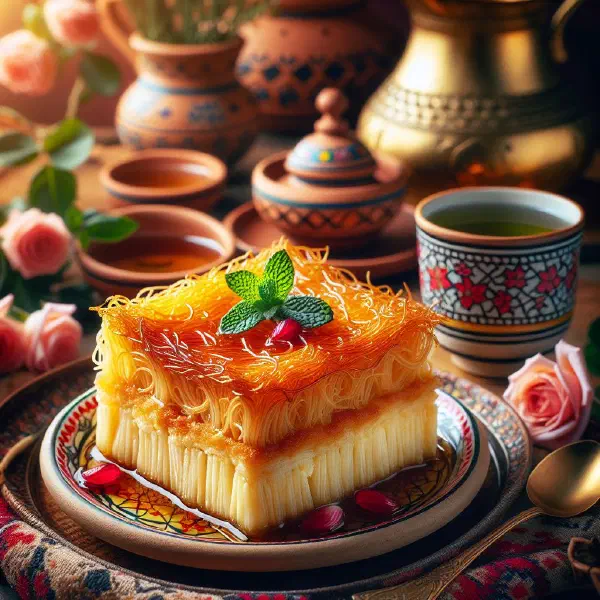
The presentation of knafeh is just as important as its taste. Serve it on a beautiful plate and garnish with an extra portion of crushed pistachios and a hint of rose water. Use fresh mint leaves as decoration to add an appealing splash of colour. A striking presentation lifts the whole eating experience and is ideal for special occasions or festivities.
A bit of history
Knafeh has a long and fascinating history that reaches back to antiquity. The dessert originally comes from the eastern Mediterranean and has spread over the years in many variations. In Qatar, knafeh is often served during festive occasions and is a symbol of hospitality. The different methods of preparation reflect the cultural diversity of the region, which is exactly what has made knafeh an integral part of Middle Eastern Qatari cuisine.
More recipe ideas
Summary: Knafeh
Knafeh is a traditional dessert that appeals to with its unique flavours and textures. The combination of crisp pastry, melted cheese and sweet sugar syrup makes it a memorable treat. Thanks to its many possible adaptations, both vegans and people with intolerances can enjoy a version of this delicious dessert. Give it a try and bring a piece of Middle Eastern cuisine into your own kitchen.