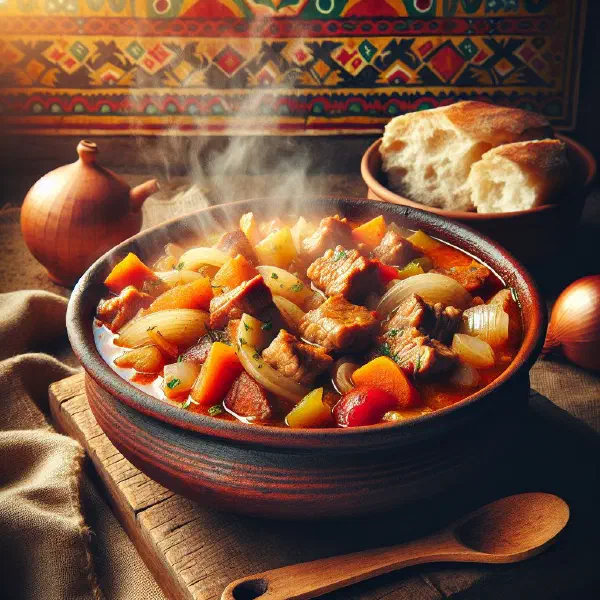
National Dish Romania: Pork Ostropel (Recipe)
In this article
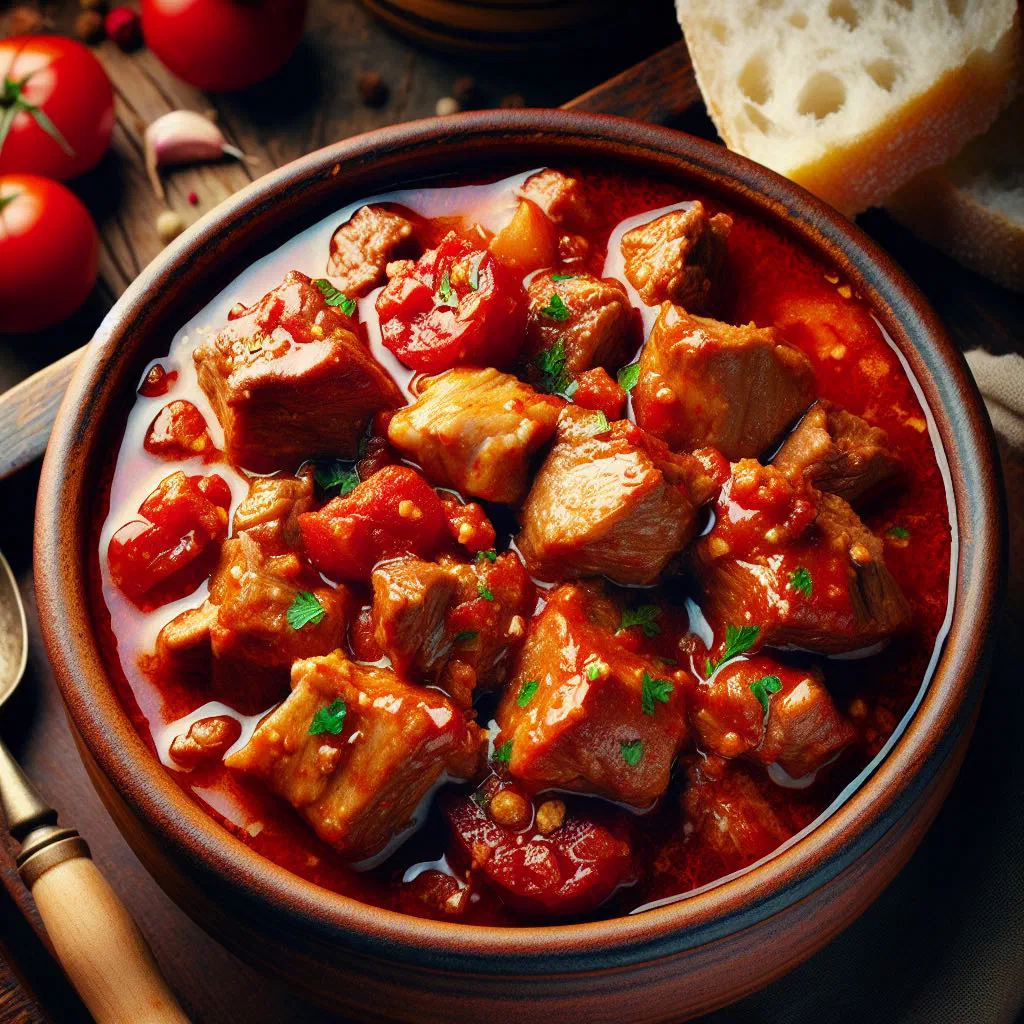
Meet Pork Ostropel (Ostropel de porc), a hearty Romanian classic that turns simple ingredients into a genuine feast. Tender chunks of pork are slow-simmered in an aromatic tomato sauce laced with garlic, paprika and thyme until the meat is meltingly soft. It is honest, rustic comfort food, most often served with creamy polenta or a slice of fresh bread to soak up every drop of the sauce. Bring the warmth of a Romanian country kitchen straight to your own table.
About Pork Ostropel
Pork Ostropel is a traditional Romanian dish that captures the country’s rich culinary heritage in a single pot. At its heart are tender, juicy pork pieces braised down in a fragrant tomato sauce. The combination of savoury spices and fresh ingredients makes this a truly satisfying dish, deeply flavoured yet wonderfully unfussy. It is typically served with polenta or fresh bread, which rounds off the experience perfectly and makes it a firm favourite at family gatherings.
Ingredients (serves 1–2)
- 500 g pork (such as neck or shoulder)
- 2 onions
- 3–4 cloves of garlic
- 400 g tomatoes (fresh or tinned)
- 2–3 tablespoons vegetable oil
- 1 teaspoon paprika
- 1 teaspoon thyme
- Salt and pepper, to taste
- Water or stock
Shopping for the ingredients
When shopping for the ingredients for pork ostropel, it is worth paying attention to the quality of the pork. Fresh, well-marbled meat gives the best flavour and a tender texture. Choose onions and garlic that are firm and free of soft spots. If you are using fresh tomatoes, pick ripe, juicy varieties to get the most out of the tomato sauce. Most of these ingredients are easy to find at any local market or supermarket.
Preparing the dish
Preparing pork ostropel starts with a little groundwork so that everything comes together smoothly. First, cut the meat into bite-sized pieces and finely chop the onions and garlic. If you are using fresh tomatoes, it helps to peel them first. Getting all your ingredients ready in advance means you can work more efficiently once the cooking begins and keep the process relaxed and steady.
Step-by-step instructions
- Heat the oil in a pan and sauté the onions until translucent.
- Add the garlic and fry briefly to release its aroma.
- Add the pork and brown it on all sides until nicely coloured.
- Stir in the chopped tomatoes along with the spices and mix well.
- Deglaze with water or stock and leave to simmer gently over low heat.
- After about 40–50 minutes the meat should be tender and the sauce well combined.
Gluten-free / lactose-free version
Pork ostropel is naturally gluten-free and lactose-free, as it consists mainly of meat, vegetables and spices. Do take care, however, that no gluten-containing ingredients, such as certain stocks or sauces, sneak in. For added peace of mind you can reach for specially labelled gluten-free products. This makes the dish an excellent choice for anyone with a gluten intolerance or lactose sensitivity, and it pairs beautifully with a bowl of Mamaliga.
Tips for vegans and vegetarians
For vegans and vegetarians, there are plenty of ways to enjoy the flavours of pork ostropel without any meat. Instead of pork you can use tofu or seitan to achieve a similar texture. A medley of vegetables, aubergine, courgette and peppers, for instance, also makes a wonderful meat substitute. This keeps the essence of the dish intact while putting a plant-based approach front and centre.
More tips and tricks
To make pork ostropel a truly memorable meal, it is a good idea to prepare it at least an hour in advance so the flavours have time to develop. The dish often tastes even better after resting overnight in the fridge, which makes it a great option when you are entertaining guests and want to lighten the workload on the day. A gentle slow simmer is the key to tender meat and a well-married sauce.
Adapting the recipe to your taste
Pork ostropel is easy to tailor to individual preferences. Those who prefer seafood could try a version with tuna or other fish, while anyone who likes a bit of heat can add chilli or hot paprika to give the dish more punch. This flexibility is one of the recipe’s great strengths and leaves plenty of room to get creative in the kitchen.
Ingredient substitutions
If some of the listed ingredients are not to hand, there are alternatives, though it is wise to keep the essential flavours intact. Instead of fresh tomatoes, for example, you can use passata or tinned tomatoes. When it comes to the onions, red or yellow varieties both work well and let you vary the flavour. Substitutions like these should still stay within the spirit of the traditional preparation to preserve that authentic taste, much as they would in a rich Pork Goulash.
Drink pairing ideas
A range of drinks pairs nicely with pork ostropel to enhance the meal. A light, fruity white wine such as a Sauvignon Blanc harmonises beautifully with the flavours of the dish. Alternatively, a homemade lemonade or a refreshing sparkling water with a slice of lemon makes a lovely accompaniment.
Serving and presentation ideas
An attractive presentation can noticeably lift the entire pork ostropel experience. Serve the dish in a deep, handsome bowl and garnish it with fresh herbs such as parsley or thyme. A side of polenta or freshly baked bread should be arranged to look as good as it tastes. Pay attention to the colours and the layout to keep the plate looking bright and inviting.
A bit of history
The roots of pork ostropel reach deep into Romanian cuisine and are shaped strongly by regional ingredients and culinary traditions. The dish is thought to have originated as a simple country meal, cooked in rural households from whatever was on hand. Today, however, pork ostropel is enjoyed right across Romania and has become a firmly established part of the nation’s gastronomy. Preparations vary from region to region, giving the dish a distinctive character wherever it is made. It sits proudly alongside other icons of Romanian cuisine such as Sarmale.
More recipe ideas
Summary: Pork Ostropel
Pork ostropel is an outstanding example of Romanian cuisine, winning people over with its savoury aromas and the pairing of tender pork with fresh ingredients. It makes a superb main course and adapts readily to different tastes and dietary needs. The preparation may involve a few steps, but the effort is well worth it to experience the authentic flavours of Romania. Give pork ostropel a try in your own kitchen and immerse yourself in the culinary traditions of a fascinating country.