National Dish Russia: Dressed Herring (Recipe)
In this article
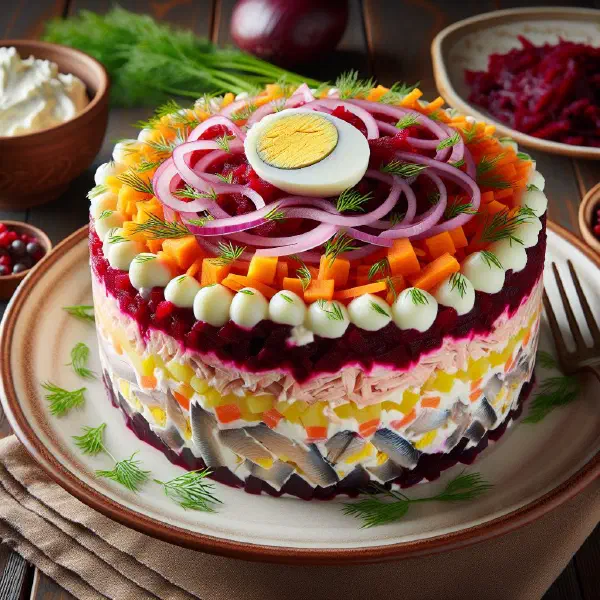
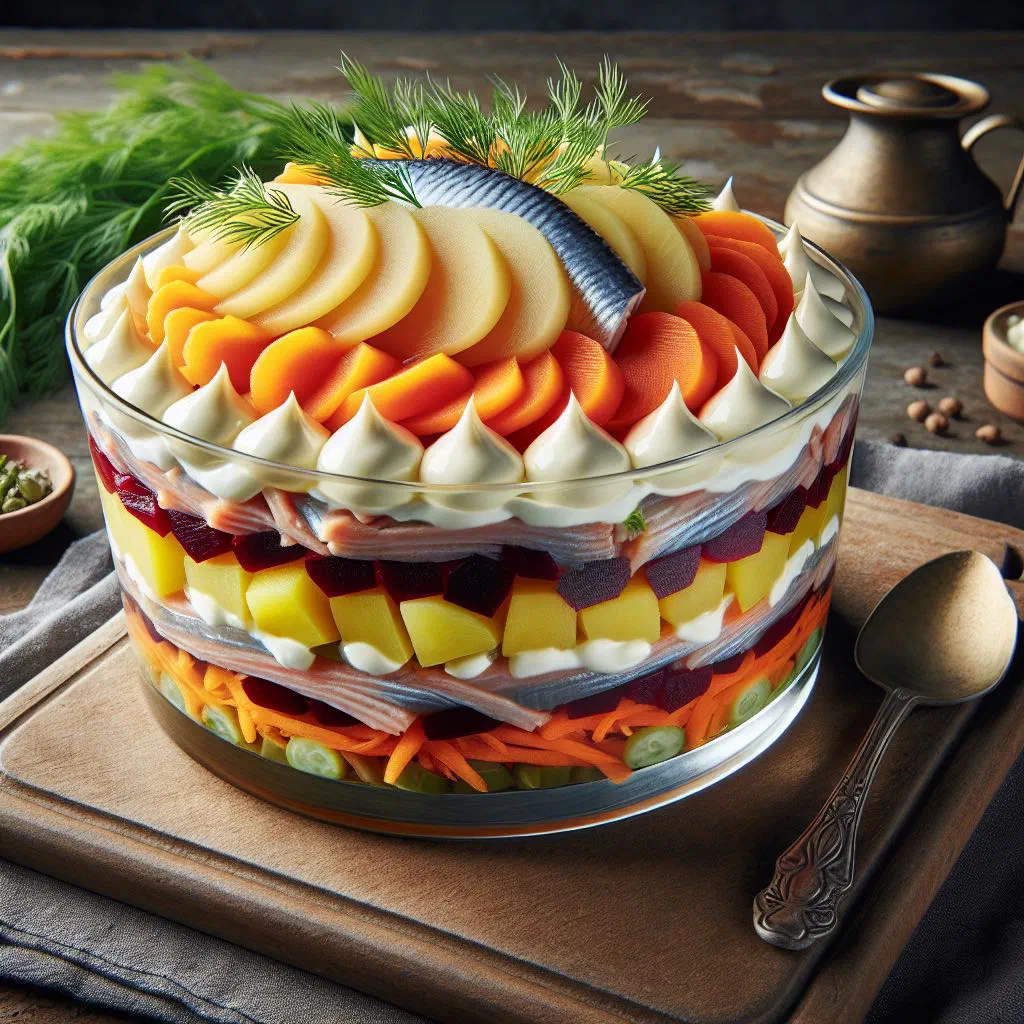
Meet Dressed Herring, one of the most striking centrepieces of the Russian festive table. Brightly coloured layers of marinated herring, soft vegetables and a creamy mayonnaise dressing come together in a salad that is as much a feast for the eyes as it is for the palate. Crowned with a vivid layer of beetroot, it looks like an edible work of art, and it has been gracing celebrations across Russia for generations. Bring a little of that holiday spirit to your own kitchen.
About Dressed Herring
The much-loved Russian dish Dressed Herring is a true celebration spread, often served at festivities and grand family meals. It brings together the flavour of freshly marinated herring with a colourful selection of vegetables and a creamy mayonnaise dressing. This layered preparation is a highlight in taste and as a showpiece on any table. The bright colours of the ingredients turn the dish into a genuine work of art that draws guests in at first glance, a beautiful introduction to the heartier side of Russian cuisine.
Ingredients (serves 1–2)
- 200 g herring (ideally pickled)
- 2 medium potatoes
- 1 carrot
- 1 beetroot
- 1 small onion
- 200 g mayonnaise
- Salt and pepper, to taste
Shopping for the ingredients
When shopping for Dressed Herring, take care to choose good-quality produce. The herring in particular should be fresh and of fine quality to guarantee the best flavour. Vegetables such as potatoes and carrots should feel firm and free of bruising, a reliable sign of freshness. The mayonnaise can either be made at home or chosen from the supermarket in whatever quality you prefer.
Preparing the dish
Before assembling the Dressed Herring, it is important to get all the ingredients ready. Start by boiling the potatoes, carrots and beetroot until tender. Let the vegetables cool before peeling them and cutting them into small cubes. The herring can be cut into small pieces so that it folds neatly into the layers.
Step-by-step instructions
- Cut the boiled potatoes, carrots and beetroot into small cubes.
- In a suitable dish, begin with a layer of potatoes. Spread it out evenly and press down gently.
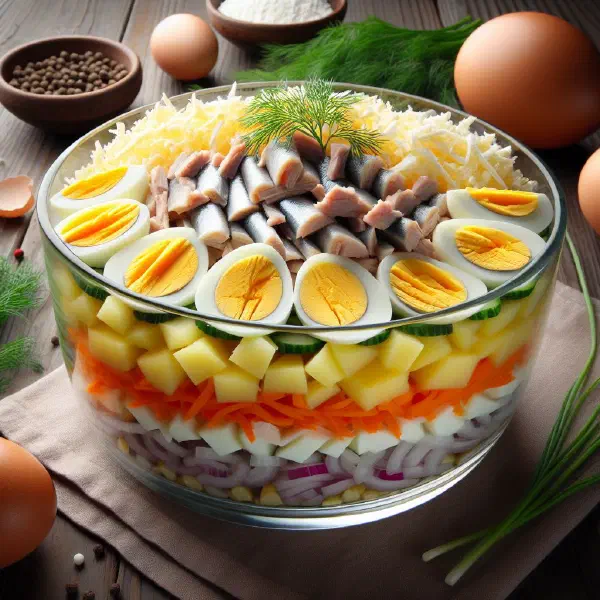
- Add a layer of herring, followed by a layer of onion and then a layer of carrot.
- Spread a thin layer of mayonnaise over each layer of vegetables.
- Repeat the process until the ingredients are used up, finishing with beetroot as the top layer.
- Cover the dish and let it rest in the fridge for at least two hours to allow the flavours to mingle.
- Before serving, garnish with fresh dill or parsley.
Gluten-free / lactose-free version
Dressed Herring is easy to adapt for special dietary needs. To make the dish gluten-free, use a gluten-free mayonnaise and check the herring and other components for any hidden sources of gluten. For a lactose-free version, a plant-based mayonnaise or another lactose-free option works perfectly.
Tips for vegans and vegetarians
Vegans and vegetarians need not miss out on Dressed Herring. In place of herring you can use smoked tofu or a seaweed-based marinade to capture a similar savoury, briny note. The vegetables stay exactly the same, and there are plenty of plant-based mayonnaise alternatives on the shelves. These variations are delicious and a lovely way to celebrate the versatility of plant-based ingredients.
More tips and tricks
To get the most from your Dressed Herring, try out different combinations of vegetables. Adding peas or peppers, for example, brings extra colour and flavour. A squeeze of lemon juice over the vegetables can help intensify the aromas. On top of that, careful layering ensures every portion looks its best and the flavours sit in perfect harmony, much as they do in a classic Vinegret.
Adapting the recipe to your taste
The recipe for Dressed Herring is easy to tailor to personal preference. Experiment with different types of fish, or even other proteins such as chicken. The vegetables, too, can be varied to suit the season and your own taste. The result is a slightly different but equally delicious dish every time, made exactly to your liking.
Ingredient substitutions
If certain ingredients for Dressed Herring are not to hand, there are plenty of alternatives. Sweet potatoes can stand in for beetroot, for instance, lending a different, sweeter note. A little mustard stirred into the mayonnaise adds a pleasant, piquant kick.
Drink pairing ideas
A festive dish like Dressed Herring pairs beautifully with a range of drinks. A well-chilled white wine, such as a Riesling or Sauvignon Blanc, complements the flavours wonderfully. A homemade, fruity spritz or a light cocktail is another good choice. For non-drinkers, lively fruit juices or sparkling water with a slice of lemon underline the freshness of the dish.
Serving and presentation ideas
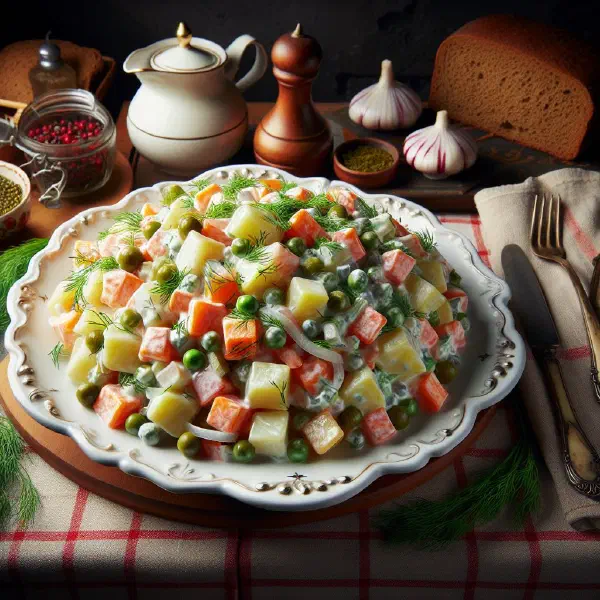
Presentation can make all the difference with Dressed Herring. Serve it in an elegant glass dish so the colourful layers are clearly on show. Decorate the top with fresh herbs such as dill or parsley for extra colour. Edible flowers can be added too, making the dish even more inviting and adding a fresh accent. It sits proudly alongside other festive favourites like Olivier Salad.
A bit of history
Dressed Herring has its roots in Russian cooking and has been a popular dish since the 19th century. Originally served as a simple snack for the working class, it gradually evolved into a festive speciality. It often symbolises togetherness and hospitality in Russian culture. Traditionally served on holidays and special occasions, it holds a meaningful place in social life, much like the brined-fish spread Forshmak.
More recipe ideas
Summary: Dressed Herring
Dressed Herring is a classic of Russian cuisine and an appealing blend of taste and aesthetics. With its layered components and fresh aromas, it is ideal for festive occasions. It is guaranteed to be a hit with your guests. Let it inspire you, and discover the variety and richness of Russian gastronomy through this delicious recipe.