National Dish Samoa: Palusami (Recipe)
In this article
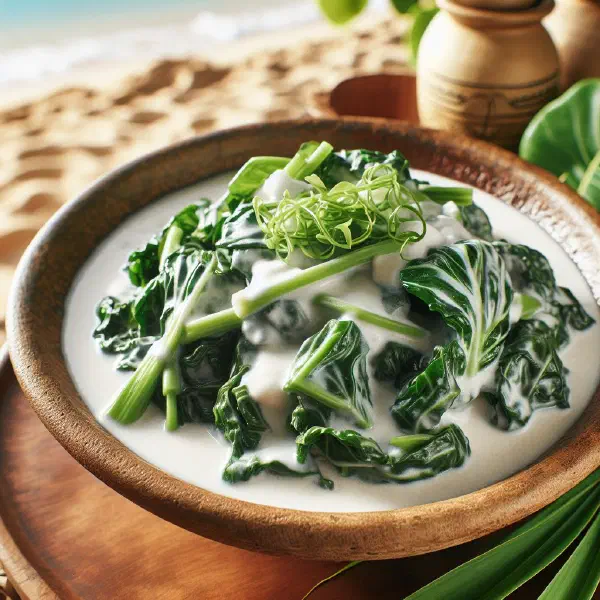
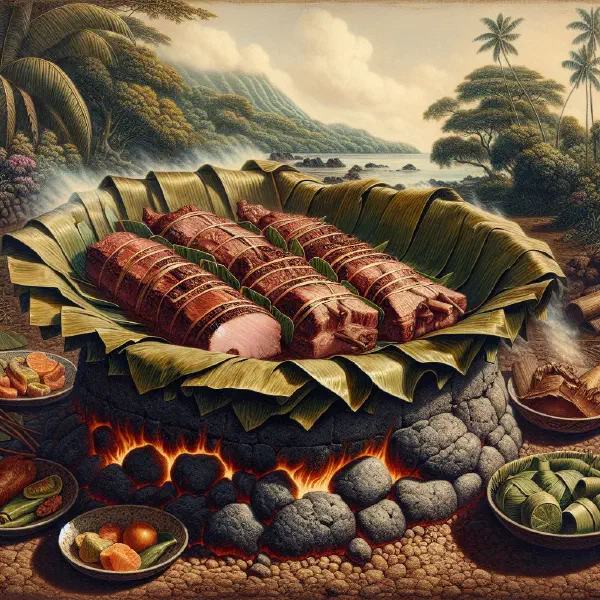
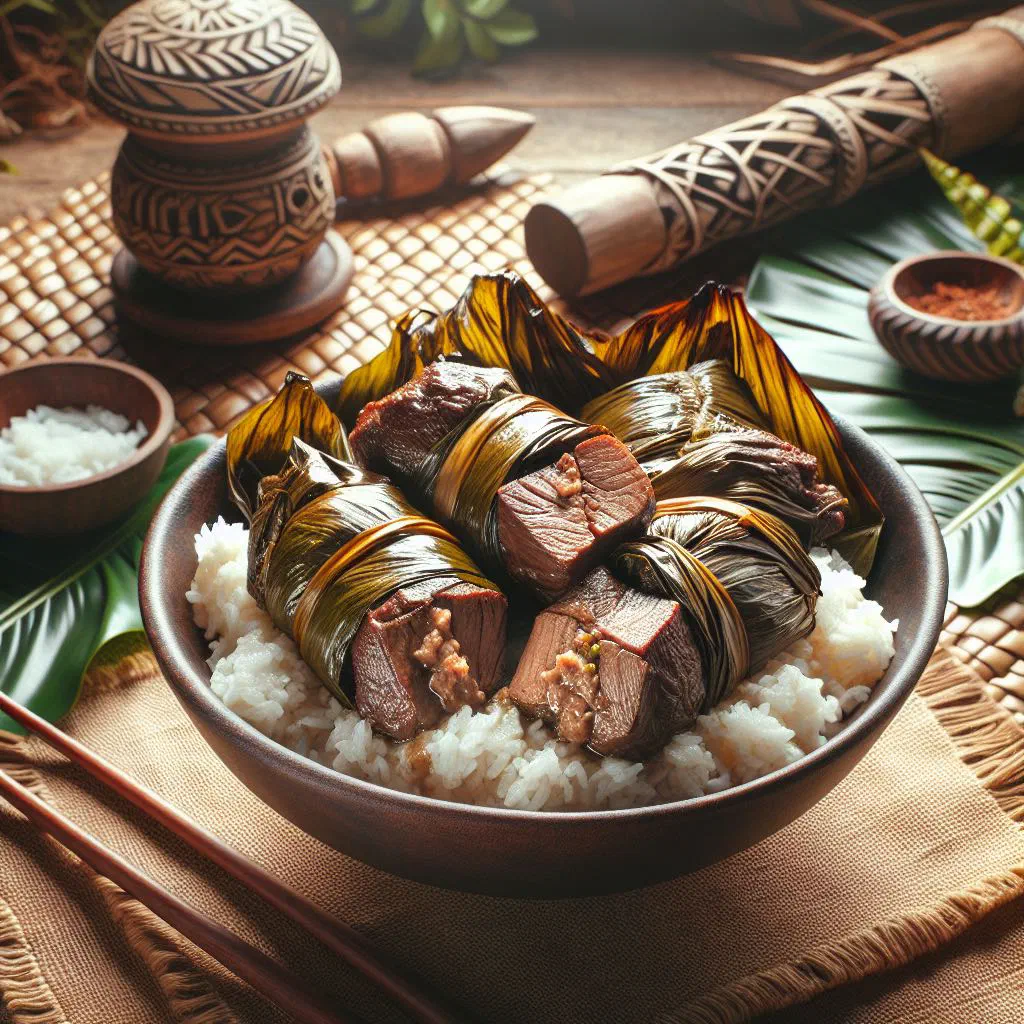
Palusami is taro leaves wrapped around coconut cream and baked until the leaves collapse and the cream thickens. In Samoa it goes into the umu, the above-ground stone oven, and the parcels are wrapped in breadfruit leaves and foil.
About Palusami
The essential version is nothing but taro leaves and coconut cream, with onion and salt. Meat is an addition rather than the basis. The leaves must be cooked thoroughly, because raw taro leaf contains calcium oxalate and stings the throat.
Samoan Sunday lunch, the to’ona’i, is cooked in the umu after church, and palusami is part of it.
Ingredients (serves 1–2)
- 200 g fresh or frozen taro leaves
- 200 ml coconut milk
- 100 g minced meat (beef or lamb)
- 1 onion, finely chopped
- 1 clove of garlic, crushed
- Salt and pepper, to taste
- 2 tablespoons lemon juice
Shopping for the ingredients
Frozen taro leaves are sold in Pacific and Asian shops and are already blanched. Fresh coconut cream, pressed from grated flesh, is far better than tinned and is what Samoans use. Spinach is the substitute if taro leaves are unavailable.
Preparing the dish
Strip the leaves from the thick stems. Stack several leaves to form a cup, pour the coconut cream into the middle, and fold the leaves over to enclose it. Wrap in foil so nothing escapes.
Step-by-step instructions
- Preheat the oven to 180 °C.
- Fry the onion and garlic in a pan until translucent.
- Add the minced meat and cook until it is browned through.
- In a bowl, mix the coconut milk with salt, pepper and lemon juice.
- Stack the taro leaves to form cups and spoon the meat mixture into them.
- Pour the coconut milk into each cup and fold the leaves over to enclose.
- Wrap each parcel in foil and bake for about 45 minutes to an hour.
- Serve the palusami hot in its parcel.
Gluten-free / lactose-free version
Taro leaves and coconut cream contain no gluten and no dairy. Palusami is naturally suitable for both restrictions.
Tips for vegans and vegetarians
The original palusami is taro leaves and coconut cream alone, with no meat, and it is vegan. That is the traditional form; the meat version came later. Coconut cream taro is the related dish.
More tips and tricks
Cook the leaves thoroughly, at least 45 minutes, which is a safety point as well as a texture one. Enclose the parcels completely so the cream does not run out. And use real coconut cream if you possibly can; the difference is substantial.
Adapting the recipe to your taste
Corned beef, pisupo, is the common Samoan addition and is genuinely traditional despite being tinned. Onion is standard. A squeeze of lemon at the end lifts it.
Ingredient substitutions
Spinach or chard replace taro leaves, with a much shorter cooking time and no safety concern. Coconut milk for cream, at some cost. Foil replaces breadfruit leaves.
Drink pairing ideas
Fresh coconut water, niu. Koko Samoa, the local cocoa drink, is what accompanies Sunday lunch. Vailima lager otherwise.
Serving and presentation ideas
Serve the parcels unopened on the plate and let people open their own, which is how the aroma works. Taro, breadfruit or rice alongside. It is Sunday food and it is served in quantity.
A bit of history
Palusami is Polynesian and versions exist across Samoa, Fiji, Tonga and the Cook Islands. The umu is above ground in Samoa rather than a buried pit, which distinguishes it from the New Zealand hāngī. It anchors Samoan cuisine.
More recipe ideas
- Coconut Cream Taro
- Grilled Taro with Coconut Sauce
- Luau
- Oka Ika
- Samoan Chicken Curry
- Steamed Fish in Banana Leaves
Summary: Palusami
Palusami is taro leaves folded around coconut cream and baked until soft. Cook them at least 45 minutes, enclose the parcels completely, and use real coconut cream.