National Dish Saudi Arabia: Kabsa (Recipe)
In this article
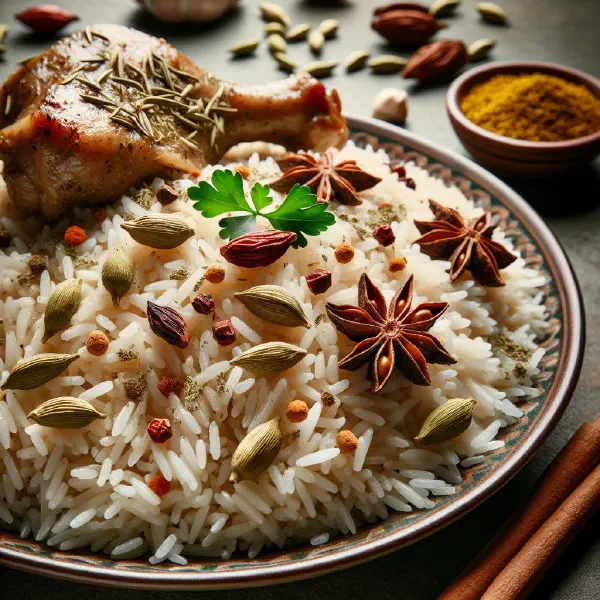
Kabsa is spiced rice with meat, and it is what appears on the communal platter at almost every Saudi meal. The spice mix, also called kabsa, runs on black lime, cardamom, cinnamon and clove, and the rice cooks in the meat broth.
About Kabsa
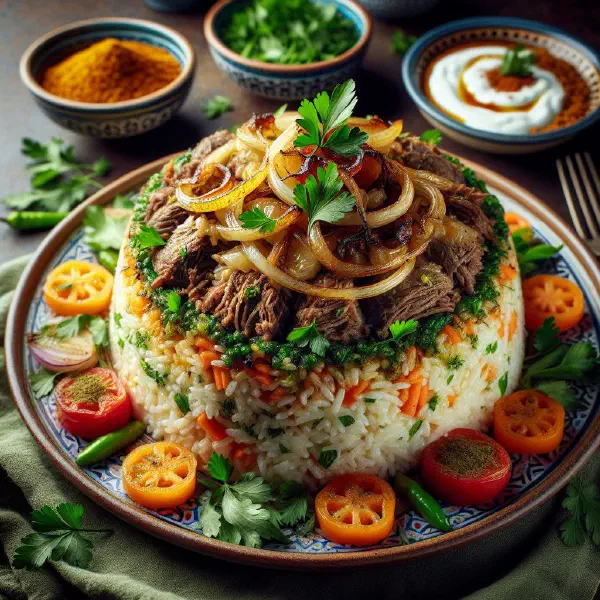
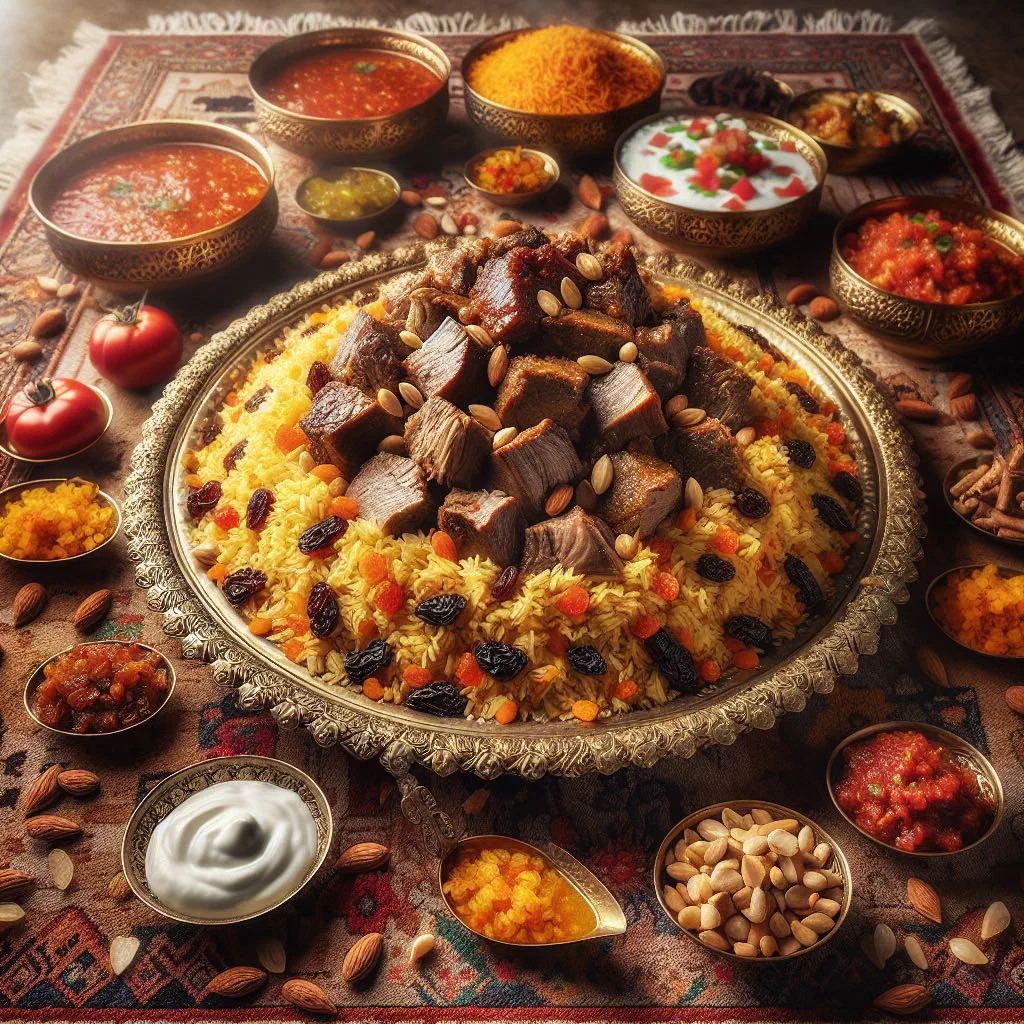
Kabsa is the national dish of Saudi Arabia and is served on a large round tray with the meat piled on top of the rice, everyone seated around it eating with the right hand.
Regional versions differ. Mandi cooks the meat in a pit oven so the smoke flavours it, madfun buries it, mathloutha combines three. Kabsa is the base form.
Ingredients (serves 1–2)
- 300 g basmati rice
- 500 g chicken breast or lamb
- 2 tablespoons vegetable oil
- 1 large onion, diced
- 2 cloves garlic, finely chopped
- 1 fresh tomato, diced
- 1 tablespoon tomato purée
- 1 teaspoon ground cardamom
- 1 teaspoon ground cumin
- 1 teaspoon ground coriander
- ½ teaspoon ground cinnamon
- 1 pinch saffron threads
- 750 ml chicken stock
- Salt and pepper, to taste
- Chopped nuts and raisins, to garnish
Shopping for the ingredients
Dried black limes, loomi, pierced and dropped in, are what make it taste Saudi rather than generic. Basmati, soaked thirty minutes. Bone-in chicken or lamb shoulder gives a much better broth than boneless breast.
Preparing the dish
Soak and drain the rice. Steep the saffron in a little warm water. Brown the onion well past golden, since that colour is the base of everything.
Step-by-step instructions
- Rinse the rice under running water until the water runs clear, then soak 30 minutes and drain.
- Heat the oil in a large pan over medium heat, add the onion and garlic, and sauté until deep golden.
- Add the meat and brown it on all sides until evenly coloured.
- Stir in the diced tomato, tomato purée, two pierced dried limes and all the spices, and cook for 2–3 minutes.
- Pour in the stock, bring to the boil and simmer until the meat is tender, about 30 minutes for chicken.
- Lift the meat out and keep it warm.
- Add the drained rice to the broth, cover and cook over low heat for about 20 minutes without stirring.
- Rest 10 minutes, then serve the rice topped with the meat, nuts and raisins.
Gluten-free / lactose-free version
Kabsa is naturally gluten-free and dairy-free. Check any commercial spice blend, some of which contain wheat as a bulking agent.
Tips for vegans and vegetarians
Chickpeas, carrot and pumpkin in the spiced rice make a real Gulf dish. Vegetable stock, and keep the dried limes, which do most of the aromatic work. Hummus and tabbouleh fill out a meat-free table.
More tips and tricks
Pierce the dried limes or they float uselessly. Cook the rice in the meat broth, not fresh water. Do not stir it. And finish the meat under a hot grill for a few minutes for colour, which is what restaurants do.
Adapting the recipe to your taste
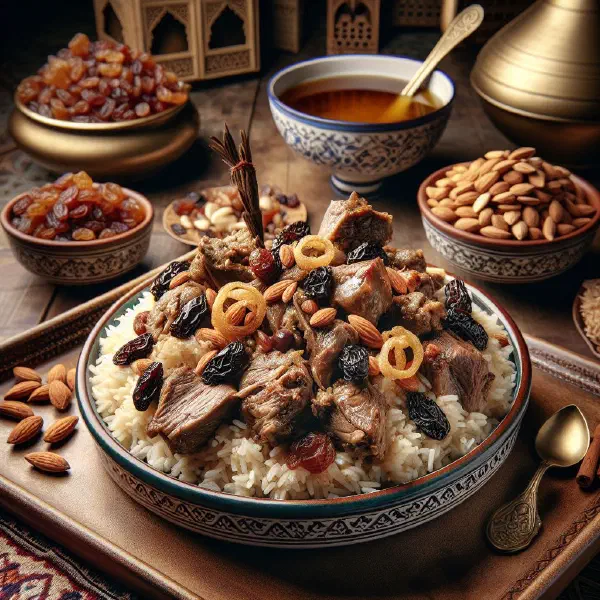
Daqoos, the tomato and chilli sauce, is served alongside and is not optional in most households. Mandi is the smoked pit-oven version. Fried onions, raisins and toasted almonds on top for guests.
Ingredient substitutions
Lamb, chicken, camel or fish all work. Turmeric gives colour if saffron is out of reach. Ghee in place of oil is richer.
Drink pairing ideas
Arabic coffee with cardamom, served with dates, before and after. Laban alongside. Saudi Arabia is dry, so alcohol does not arise.
Serving and presentation ideas
One large round platter, rice underneath, meat on top, nuts and raisins scattered, daqoos in a bowl. Everyone sits around it and eats from the section in front of them with the right hand. It is not portioned out.
A bit of history
Rice is not native to Arabia and arrived through Indian Ocean trade, along with the cardamom, cinnamon and cloves that season it. Kabsa in its modern form is relatively recent, but the format, one dish, one platter, everyone around it, is old Bedouin hospitality. It anchors Saudi cuisine.
More recipe ideas
Summary: Kabsa
Kabsa is meat browned with spice and dried lime, with rice cooked in the resulting broth. Pierce the limes, cook the rice in the broth, and serve it on one shared platter.