National Dish Senegal: Thieboudienne (Recipe)
In this article
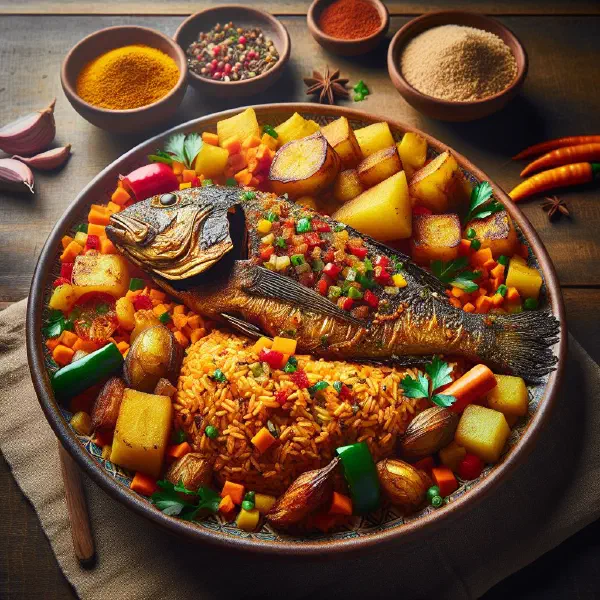
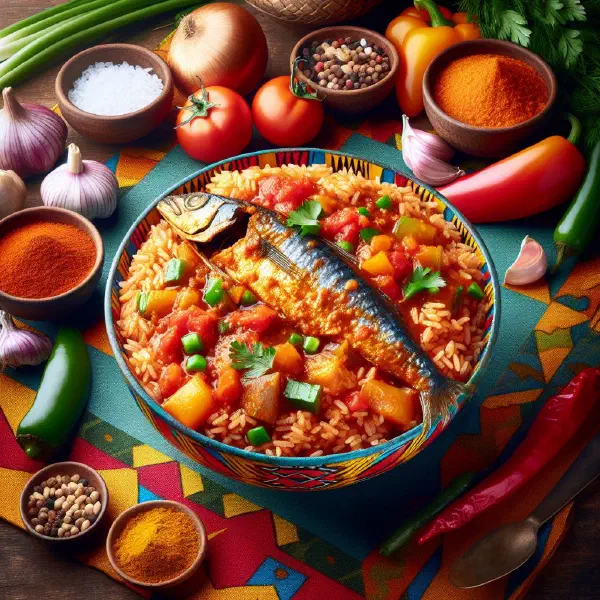
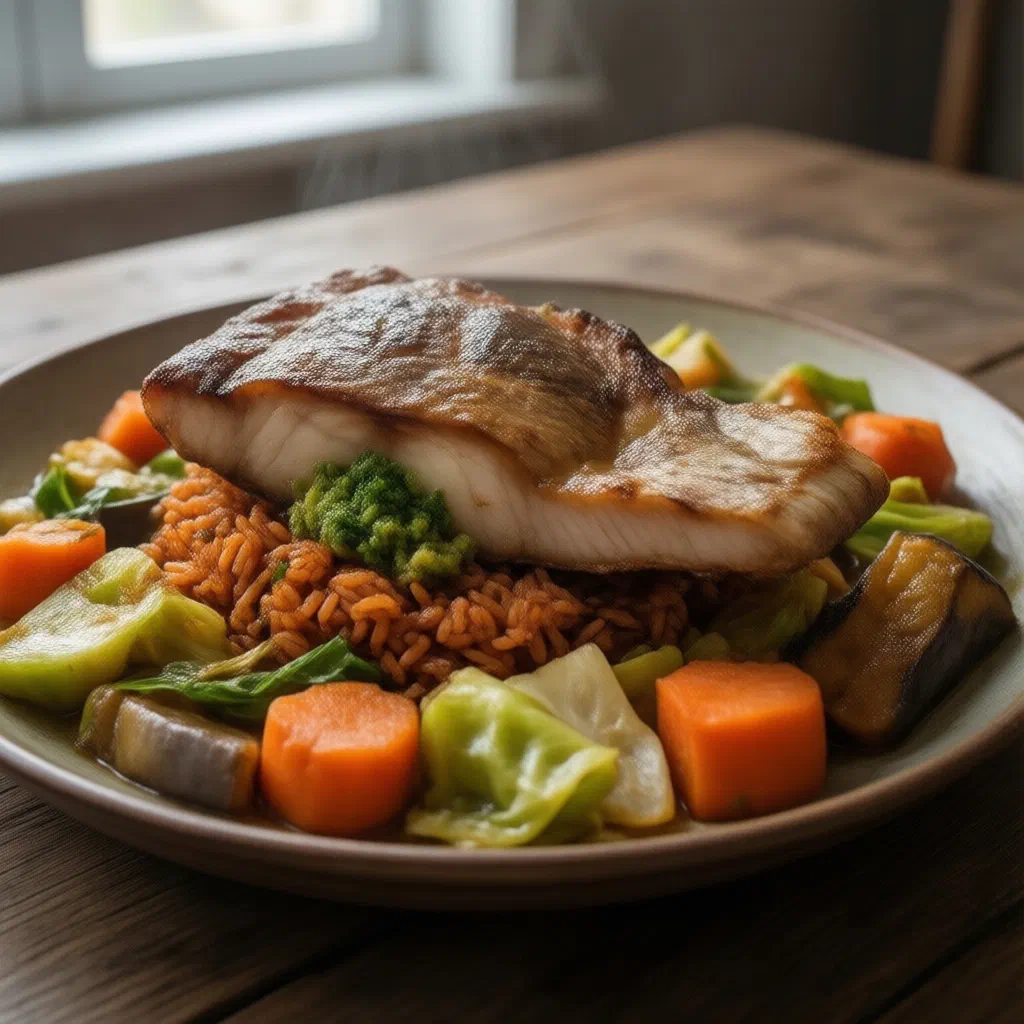
Thieboudienne is Senegal’s national dish and the ancestor of every one-pot rice dish in West Africa. Fish stuffed with a herb paste, vegetables, tomato and broken rice cooked in the resulting broth. UNESCO listed it in 2021.
About Thieboudienne
The name is Wolof for fish and rice. Everything cooks in sequence in one pot: the fish and vegetables first, then the rice in the broth they made. The vegetables come out and go back on the platter at the end.
Rof, a paste of parsley, garlic and chilli, is pushed into slashes in the fish. That is the step people skip and it is the one that matters.
Ingredients (serves 1–2)
- 300g white fish fillet (red snapper, for example)
- 1 cup uncooked long-grain rice
- 2 tomatoes, puréed
- 1 tablespoon tomato paste
- 1 onion, chopped
- 2 cloves garlic, finely chopped
- 1 carrot, sliced
- 1 small sweet potato, diced
- 1/2 aubergine, diced
- 1/2 white cabbage, cut into strips
- 1 bay leaf
- 1 teaspoon Jollof spice blend or Thieb spice blend
- Salt and pepper to taste
- Chilli powder to taste (optional)
- Oil for frying
- Water
Shopping for the ingredients
Broken rice, riz brisé, is the correct grain and absorbs the broth better than whole. Whole fish rather than fillets: the head and bones make the stock. Cassava, okra and diakhatou, the bitter African aubergine, are the traditional vegetables.
Preparing the dish
Make the rof: parsley, garlic, chilli and a stock cube pounded to a paste, pushed into slashes cut in the fish. Cook the tomato base until the oil separates. Everything else is sequencing.
Step-by-step instructions
- Make a paste of parsley, garlic and chilli and push it into slashes cut in the fish.
- Heat the oil in a large pot and fry the onions with the garlic until translucent.
- Add the puréed tomato and the tomato paste and cook until the oil separates, about 10 minutes.
- Add water, the bay leaf and spices and bring to a simmer.
- Add the vegetables and cook until nearly tender, then lift them out and keep warm.
- Lower the fish into the broth and poach until just done, then remove and keep warm.
- Add the washed rice to the broth and cook, covered, until tender and the liquid absorbed.
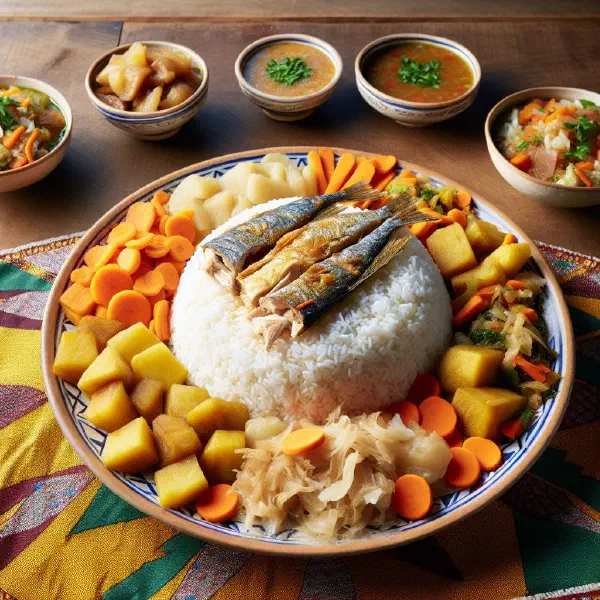
- Serve the rice on a platter with the fish and vegetables arranged over it.
Gluten-free / lactose-free version
The dish contains no gluten and no dairy. Check the stock cube and any spice blend, both of which frequently contain wheat in West African brands.
Tips for vegans and vegetarians
The tomato and vegetable base carries a version without fish: cassava, sweet potato, cabbage, aubergine and okra cooked in it with the rice absorbing the broth. Mafé is the other Senegalese dish that works well meat-free.
More tips and tricks
Make the rof and use it. Cook the tomato base until the oil rises. Take the vegetables and fish out before the rice goes in so nothing overcooks. And aim for xoon, the scorched layer at the bottom of the pot, which is the prize.
Adapting the recipe to your taste
Thiebou yapp uses lamb instead of fish. Tamarind or dried fish add sourness and depth. The red version uses tomato; there is a white version, thiebou jën blanc, without it.
Ingredient substitutions
Any firm white fish. Broken rice is worth seeking out; long-grain works otherwise. Riz au poisson is the same dish under its French name.
Drink pairing ideas
Bissap, the hibiscus drink, or bouye, made from baobab fruit. Attaya, the three-round green tea, follows the meal over an hour or more.
Serving and presentation ideas
One large communal platter, rice underneath, fish and vegetables arranged over it. Everyone eats from the section in front of them with the right hand. Lime and chilli on the side.
A bit of history
The dish is credited to Penda Mbaye, a nineteenth-century cook in Saint-Louis, who substituted rice for barley when barley was short. It spread across West Africa and became jollof, riz gras and a dozen other things. UNESCO listed it as intangible cultural heritage in 2021. It anchors Senegalese cuisine.
More recipe ideas
Summary: Thieboudienne
Thieboudienne is fish and vegetables poached in a tomato broth, with rice cooked in that broth afterwards. Make the rof, cook the base until the oil rises, and aim for the scorched layer.