National Dish South Korea: Tteokbokki (Recipe)
In this article
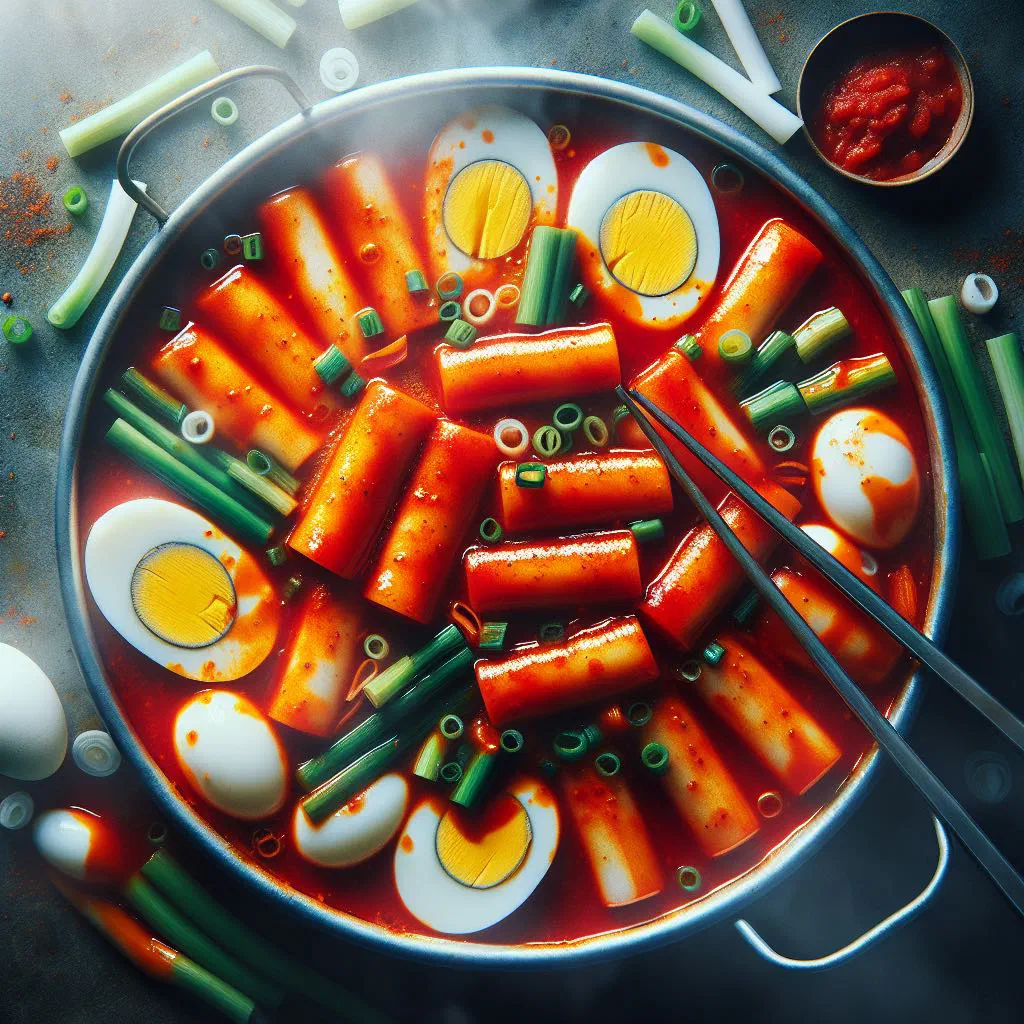
Discover Tteokbokki, one of South Korea’s most-loved street foods. Chewy rice cakes are simmered in a glossy, fiery-sweet sauce until they soak up every drop of flavour. Equal parts spicy and moreish, it is the kind of dish you find bubbling away at market stalls across Seoul, yet it comes together easily at home. Bring the warmth and buzz of a Korean street corner straight to your own kitchen.
About Tteokbokki
Tteokbokki is a traditional Korean dish celebrated for its unmistakable flavour and its wonderfully adaptable ingredients. At its heart are rice cakes (tteok), simmered in a rich, spicy sauce until they turn tender and glossy. The dish traces its roots back to the Joseon dynasty and, over the centuries, evolved into a much-loved street-food speciality. Today Tteokbokki is enjoyed not only across Korea but around the world, prized as a hearty and satisfying comfort food.
Ingredients (serves 1–2)
- 250 g rice cakes (tteok)
- 2 cups water
- 2 tablespoons gochujang (Korean chilli paste)
- 1 tablespoon gochugaru (Korean chilli flakes)
- 1 tablespoon sugar
- 1 teaspoon soy sauce
- 200 g fish cake (or tofu for vegetarians)
- 2 spring onions, sliced into rings
- 1 hard-boiled egg (optional)
Shopping for the ingredients
The right ingredients make all the difference when cooking Tteokbokki. Many of the items you need are readily available at an Asian grocery. If you do not have one nearby, staples such as gochujang and gochugaru can easily be ordered online. Look for fresh rice cakes wherever possible, as they offer the best flavour and that signature chewy texture.
Preparing the dish
Before you start cooking Tteokbokki, it pays to prepare all your ingredients well. Slice the fish cake into small pieces and get the spring onions ready. If the rice cakes are firm, soak them in water first to soften them up. A little groundwork keeps the cooking process smooth and enjoyable, and helps everything come together quickly.
Step-by-step instructions
- Bring the water to the boil in a pan and add the rice cakes. Let them cook for about 5–7 minutes.
- While the rice cakes cook, stir together the gochujang, gochugaru, sugar and soy sauce in a bowl to make a smooth paste.
- Once the rice cakes are soft, add the sauce and the fish cake. Stir well so the rice cakes are evenly coated.
- Cook over medium heat for a further 5–10 minutes, until the sauce has thickened and the ingredients are well combined.
- Serve the Tteokbokki hot, garnished with the hard-boiled egg and spring onions.
Gluten-free / lactose-free version
To make Tteokbokki gluten-free, make sure the rice cakes and chilli paste you use are made from gluten-free ingredients. Many rice cakes are naturally gluten-free, but it is always worth checking the packaging to be sure. For a lactose-free version there is little to change. Simply leave out the hard-boiled egg or swap it for a plant-based alternative. That way everyone can enjoy this delicious dish, whatever their dietary needs.
Tips for vegans and vegetarians
For a vegan version of Tteokbokki, replace the fish cake with tofu or seitan to achieve a similar texture. Take care to check the chilli paste and other ingredients for any hidden animal products. These days there are plenty of plant-based alternatives that deliver the same flavour and consistency as the traditional ingredients. Experiment with different vegetables to adapt and enrich the dish to your liking.
More tips and tricks
To take the flavour of your Tteokbokki even further, try adding extra ingredients such as kimchi or a handful of stir-fried vegetables. Playing with different textures makes the dish all the more exciting. Adjust the sauce to your own taste, more heat or more sweetness, it is entirely up to you. Any leftovers reheat easily and can even be worked into another meal. For a fun twist, try skewering the rice cakes and grilling them like Tteok Kkochi.
Adapting the recipe to your taste
Tteokbokki is an incredibly versatile dish that is easy to tailor to personal preference. Add more vegetables such as carrots or courgette, for example, to make it a little healthier. You can also dial the heat up or down simply by adjusting the amount of gochujang. Try different kinds of rice cake, too, to discover new flavours and textures. Every variation has its own charm, much like the endless takes on Kimchi.
Ingredient substitutions
If you cannot find rice cakes, try glass noodles or even pasta as a creative alternative. For the sauce, you can use other chilli pastes, although the flavour will not be quite the same. In place of regular onions, red onions can add a sweeter note. For a heartier meal, some cooks even stir in instant noodles the way they do in Budae Jjigae. Playing with different ingredients can lead to surprisingly delicious results.
Drink pairing ideas
Tteokbokki goes especially well with Korean drinks such as Makgeolli, a milky rice wine, or soju, a popular Korean spirit. If you would rather stay alcohol-free, green tea or fruit juices with citrus notes help to balance the heat of the dish. You may be surprised at how well the flavours harmonise.
Serving and presentation ideas
An attractive presentation can lift the whole eating experience. Serve Tteokbokki in a handsome bowl and garnish it with fresh spring onions and sesame seeds. A slice of nori can add extra flavour and a lovely splash of colour. Remember to serve the dish hot, when the aromas are at their freshest and most intense, making it all the more appealing. It sits beautifully as part of a spread alongside a plate of Gimbap.
A bit of history
Tteokbokki has a fascinating history that stretches back to the 16th century. Originally it was served as a mild, soy-based dish, and it was only in the 20th century that it became the beloved, fiery street food we know today. The blend of ingredients and the many variations of the dish reflect the culinary creativity of Korean cuisine. Over the years, Tteokbokki has taken hold not only in the streets of Seoul but in kitchens and restaurants worldwide.
More recipe ideas
Summary: Tteokbokki
Tteokbokki is very good of Korean cuisine, winning fans as both a street-food snack and a home-cooked favourite. The spicy, subtly sweet sauce pairs perfectly with the chewy rice cakes and the other ingredients. With a little creativity and the right store-cupboard staples, this dish is easy to adapt to your own taste. Tteokbokki brings the flavours of Korea straight to your table.