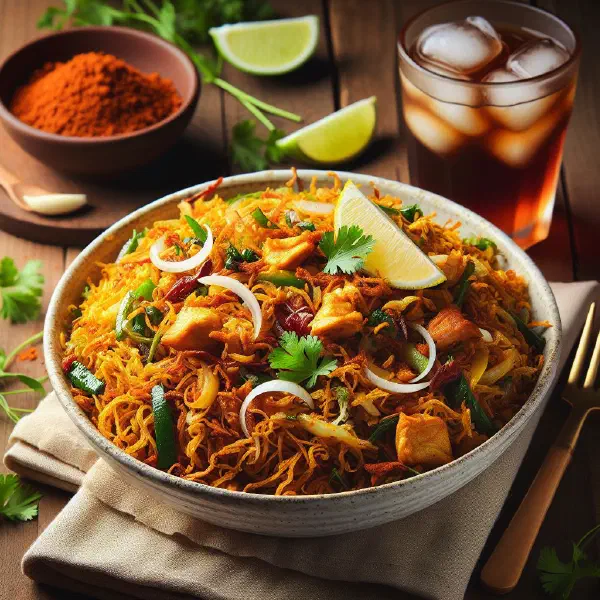
National Dish Sri Lanka: Kottu Roti (Recipe)
In this article
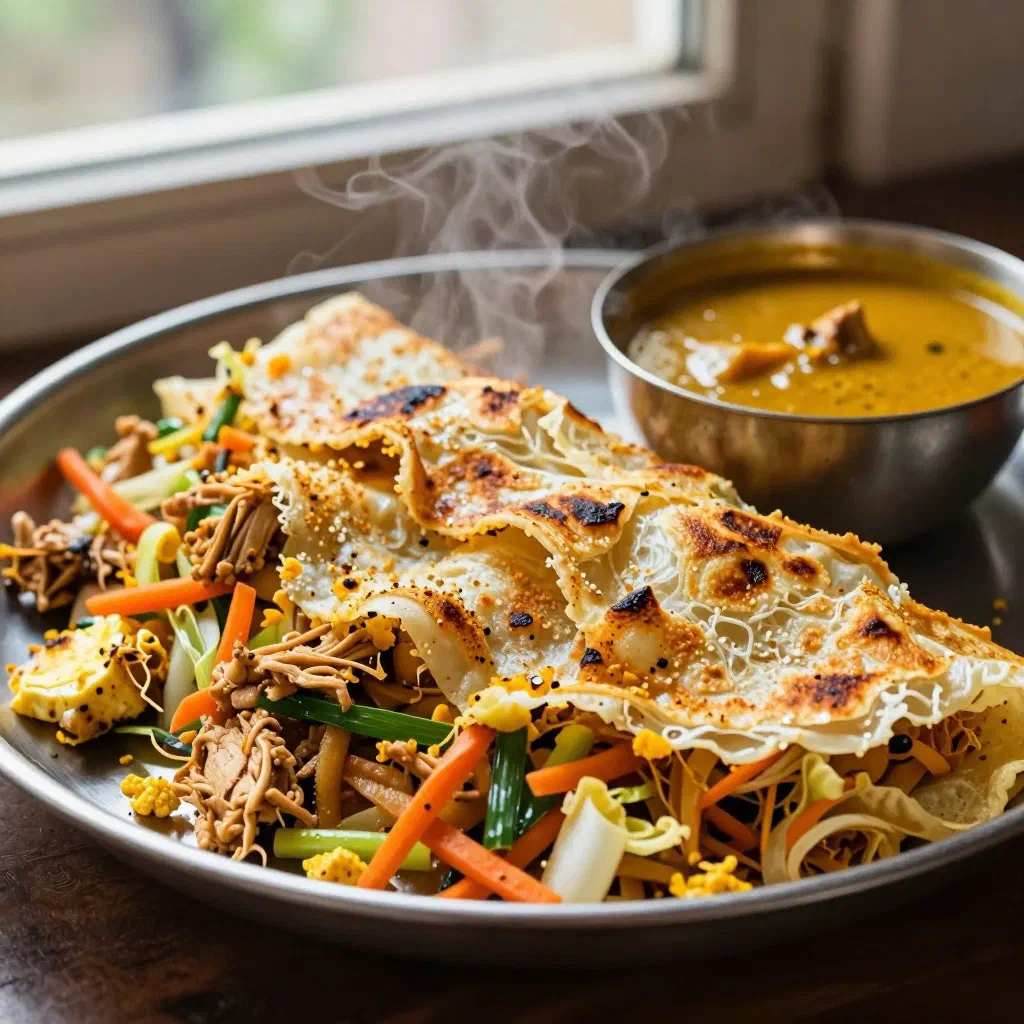
Discover Kottu Roti, the pride of Sri Lanka’s street food scene. This lively dish tosses shredded flatbread together with spicy curry, crisp vegetables, egg and, if you like, a little meat, all cooked on a searing hot griddle. What makes it memorable is the rhythmic clatter of metal blades chopping against the plate, a sound that draws hungry crowds to street stalls across the island. Bring that buzzing, communal energy straight into your own kitchen.
About Kottu Roti
Kottu Roti is Sri Lanka’s culinary pride, a flavour explosion quite unlike any other dish. It brings together finely chopped roti (flatbread) with fragrant curries, fresh vegetables, eggs and sometimes meat, everything cooked before your eyes on a scorching griddle. Its magic lies in both its versatility and the distinctive clatter of the blades striking the hot plate as the cook works the ingredients together. It is a dish that celebrates community and the warmth of Sri Lankan cuisine, enjoyed at any hour of the day.
Ingredients (serves 1–2)
- 2 cups chopped flatbread (godamba roti)
- 1 cup vegetables of your choice (carrots, leeks, cabbage)
- 1 onion, finely sliced
- 2 cloves garlic, chopped
- 2 green chillies, finely sliced
- 2 eggs
- 150 g chicken breast, finely sliced
- 2 tablespoons soy sauce
- 2 tablespoons vegetable oil
- Salt to taste
- Spices: curry powder, black pepper
Shopping for the ingredients
Look for fresh roti at Asian grocery shops, or make it yourself at home. The freshness of the vegetables is crucial to the final flavour, so choose seasonal varieties wherever you can. For a more authentic taste, seek out Ceylon curry powder from a Sri Lankan or South Asian shop, its warm, roasted aroma makes all the difference and echoes the blend used in a Ceylon Curry Powder Blend.
Preparing the dish
Get everything ready before you start cooking, as kottu roti comes together very quickly. The vegetables can be chopped in advance and kept in the fridge until needed. The flatbread should be torn or cut into small pieces so it mixes easily with the other ingredients. A tidy, well-organised worktop lets you keep pace once the griddle is hot.
Step-by-step instructions
- Heat the oil in a large pan or on a flat griddle.
- Fry the onions, garlic and chillies until soft and fragrant.
- Add the chicken and cook it through.
- Crack the eggs into the middle of the mixture, let them set a little, then stir everything together.
- Now add the vegetables and the spices.
- Add the chopped roti and stir-fry continuously until hot and well combined.
- Season with soy sauce and adjust to taste.
- Serve immediately, while it is still piping hot.
Gluten-free / lactose-free version
Kottu roti adapts well to a gluten-free diet. Simply swap the wheat-based flatbread for a gluten-free alternative so anyone with a gluten intolerance can enjoy the dish. It is naturally low in dairy, and as long as you check that your curry powder and soy sauce are free from hidden milk products, it stays comfortably lactose-free.
Tips for vegans and vegetarians
Vegetarians can leave out the chicken and add extra vegetables or tofu in its place, and the dish loses none of its character. To make it fully vegan, skip the egg too and lean on a colourful medley of carrots, leeks and cabbage for texture and bite. Fresh vegetables and herbs are the key to an authentic flavour, so reach for seasonal produce and a good, plant-based soy sauce.
More tips and tricks
For an extra layer of flavour, stir in a little coconut milk, but take care not to let the dish become too wet, or you will lose the signature dry, tossed texture. If you like your food fiery, experiment with different chilli sauces or a scattering of fresh chillies. The beauty of kottu roti is that you can keep tasting and adjusting as you go.
Adapting the recipe to your taste
Kottu roti is wonderfully flexible and easy to make your own. Vegetarians can replace the chicken with more vegetables or tofu, while spice lovers can pile on extra green chillies. If you prefer a milder plate, hold back on the chilli and let the curry powder do the talking. This is a dish that rewards a little improvisation.
Ingredient substitutions
If you do not have godamba roti to hand, pita or another style of flatbread makes a fine stand-in. The chicken swaps easily for other proteins such as beef, lamb or even seafood, much as you might vary the meat in a Beef Curry or a hearty Mutton Curry. Substitutions like these let you adapt the recipe to what is in season or simply to your own cravings.
Drink pairing ideas
A cooling lassi or a spiced chai tea sits beautifully alongside kottu roti and rounds out its bold, savoury notes. A refreshing Mango Lassi is especially good at taming the heat of the chillies, while a chilled fruit drink such as a Thambili Sherbet makes a lighter, thirst-quenching match.
Serving and presentation ideas
For an authentic touch, serve kottu roti in the traditional way on a banana leaf, which intensifies the aroma and gives the meal a genuine island feel. A scattering of fresh coriander and a small bowl of sambol on the side add both colour and an extra kick. Piled high and served straight from the griddle, it looks every bit as inviting as it tastes.
A bit of history
Kottu roti originated in Sri Lanka as a simple, filling meal for workers, a clever way to use up leftover roti and curry. Over time it grew far beyond its humble beginnings and is now loved right across the country, enjoyed at all sorts of occasions and at any time of day. The rhythmic chopping of the cooks has become part of the island’s soundtrack, and the dish is a proud example of Sri Lankan cuisine.
More recipe ideas
Summary: Kottu Roti
Kottu roti is a versatile and deeply flavourful dish that lends itself wonderfully to personalisation. With fresh ingredients and a little practice, it will quickly become a firm favourite in your cooking repertoire. Load it with chicken or turn up the chilli, this Sri Lankan street food classic brings noise, colour and comfort to the table. Give it a go, your taste buds will thank you.