National Dish Suriname: Kousenband Salade (Recipe)
In this article
Welcome to the bright kitchens of Suriname. Kousenband Salade is a bright, crisp salad built around tender yardlong beans, sharp onion rings and juicy tomatoes, all brought together by a simple mustard vinaigrette. It is light enough to serve alongside a rich stew, yet substantial enough to stand on its own as a summery lunch. Every forkful carries the fresh, lively flavours of this small South American nation.
About Kousenband Salade
Kousenband Salade is a perfect example of the honest, colourful cooking of Suriname. At its heart are kousenband beans, the long, slender yardlong beans that grow in abundance across the country, blanched just enough to keep their bite. They are tossed with finely sliced onions and ripe tomatoes, then dressed in a tangy mixture of vinegar, oil and mustard. The result is a refreshing salad that is quick to prepare, naturally light, and endlessly welcome on a warm day.
Ingredients (serves 1–2)
- 200 g green beans (kousenband / yardlong beans)
- 1 small onion
- 1–2 tomatoes
- 1–2 tablespoons vinegar
- 2 tablespoons vegetable oil
- 1 teaspoon mustard
- Salt and pepper to taste
- Fresh herbs (parsley or coriander)
Shopping for the ingredients
When shopping for kousenband salade, freshness is everything, especially where the beans and the tomatoes are concerned. Buy seasonal and local produce wherever you can, as this makes a noticeable difference to the flavour. Most of what you need is available in a well-stocked supermarket, though a local market or an Asian or Caribbean grocer is your best bet for genuine yardlong beans. Look for pods that are firm, deep green and snap cleanly rather than bending limply.
Preparing the dish
Getting ready for kousenband salade is refreshingly straightforward. Start by washing the beans thoroughly and trimming away the ends, then cut them into bite-sized lengths. Slice the onion into fine rings and dice the tomatoes evenly so the pieces sit comfortably on a fork. These small preparations help the flavours distribute evenly and make assembling the salad a matter of minutes.
Step-by-step instructions
- Blanch the beans in a pan of boiling water for about 5–7 minutes, until tender but still crisp.
- Drain the beans and plunge them straight into cold water to stop the cooking.
- In a large bowl, combine the blanched beans, onion rings and diced tomatoes.
- In a separate small bowl, whisk together the vinegar, oil, mustard, salt and pepper.
- Pour the dressing over the salad and toss well so the flavours can develop.
- Scatter over the freshly chopped herbs and serve.
Gluten-free / lactose-free version
Kousenband salade is naturally gluten-free and lactose-free, which makes it an easy choice for almost any table. Do check that your oil, vinegar and mustard carry no hidden additives, as some prepared mustards and dressings include unexpected ingredients. Reading labels carefully is the only precaution you need. Beyond that, you can serve this salad with complete confidence to guests with intolerances, without compromising on flavour in the slightest.
Tips for vegans and vegetarians
Kousenband salade is entirely vegan as it stands, since every component is plant-based. If you would like to make it more substantial, add creamy avocado or a handful of toasted nuts for extra texture and richness. Folding in whatever seasonal vegetables you have to hand also lifts the nutritional value considerably. It is a creative, forgiving dish that adapts to your taste while staying wholesome, much like the vegetable-led Jackfruit Salade.
More tips and tricks
To deepen the flavour of kousenband salade, let it rest in the fridge for half an hour after dressing so the vinaigrette can work its way through the beans. A squeeze of lemon or lime just before serving adds a bright, fresh lift. Do prepare the salad on the day you plan to eat it, though, left too long, the beans lose their snap and the texture suffers. Season a little more generously than feels right at first, as chilling dulls the seasoning.
Adapting the recipe to your taste
One of the best things about kousenband salade is how readily it bends to personal preference. Add chilli or crushed garlic for warmth and depth, or keep it gentle if you prefer something milder. Peppers, radishes or cucumber all slot in happily alongside the beans, adding colour and crunch. Small changes like these mean you can rediscover the dish again and again without ever repeating yourself.
Ingredient substitutions
If certain ingredients are hard to find, kousenband salade offers plenty of room for improvisation. Sugar snap peas or ordinary green beans work perfectly well in place of true kousenband, and other cooked beans can bulk the salad out nicely, the same principle that underpins Bruine Bonen Met Rijst. Lemon juice makes a fresher-tasting alternative to vinegar in the dressing.
Drink pairing ideas
A refreshing drink suits kousenband salade beautifully. A fruity mojito or a light spritz picks up the sharpness of the dressing without overwhelming the vegetables. For something alcohol-free, a chilled hibiscus tea is an excellent match, as is a glass of homemade Gemberbier with its warm ginger bite. Experiment a little to find the combination that best suits your own style of entertaining.
Serving and presentation ideas
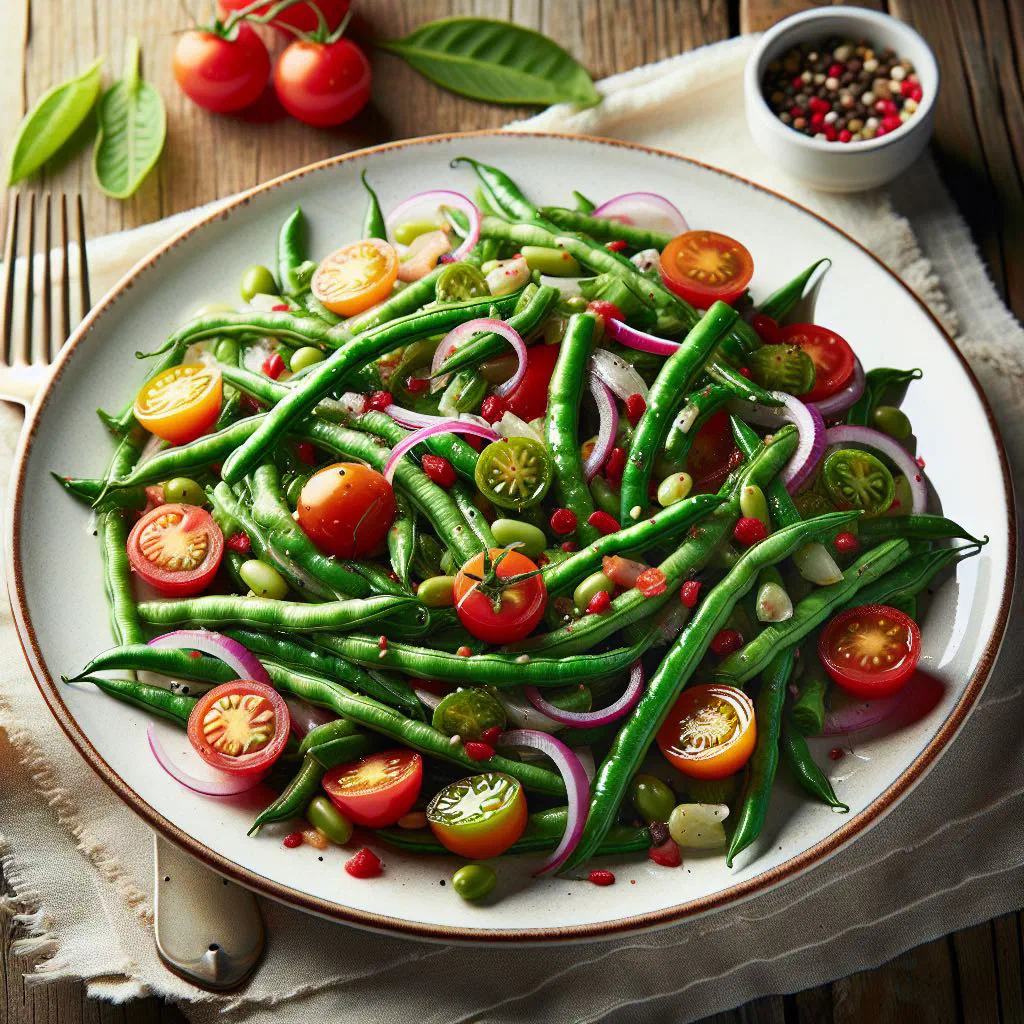
Presentation matters with a salad this colourful, so let the green, red and white of the ingredients speak for themselves. Serve it in a wide, shallow bowl that shows off the layers, and garnish generously with fresh herbs. Small decorative touches such as edible flowers or a few citrus segments lend a professional finish. A handsome presentation not only makes the food more appetising but adds to the pleasure of eating together.
A bit of history
Kousenband salade has its roots in Suriname’s remarkably multicultural society, where Indian, Javanese, Chinese, Creole and European traditions have mingled for generations. That blending is visible across Surinamese cuisine, from spiced curries to slow-cooked stews, and this salad carries the same open-minded spirit. It appears both as an everyday side dish and at celebrations and family gatherings, often next to hearty classics such as Moksi Alesi. Making it is a lovely way to get acquainted with the country’s culinary traditions.
More recipe ideas
Summary: Kousenband Salade
Kousenband salade is a light and refreshing salad that works equally well as a side dish or as a meal in its own right. The combination of tender beans, freshly cut vegetables and a sharp, mustardy dressing captures the bright flavours of Suriname in a single bowl. Enjoy the cooking and the flavours of this exceptional culinary tradition.