National Dish Switzerland: Einsiedler Schafböck (Recipe)
In this article
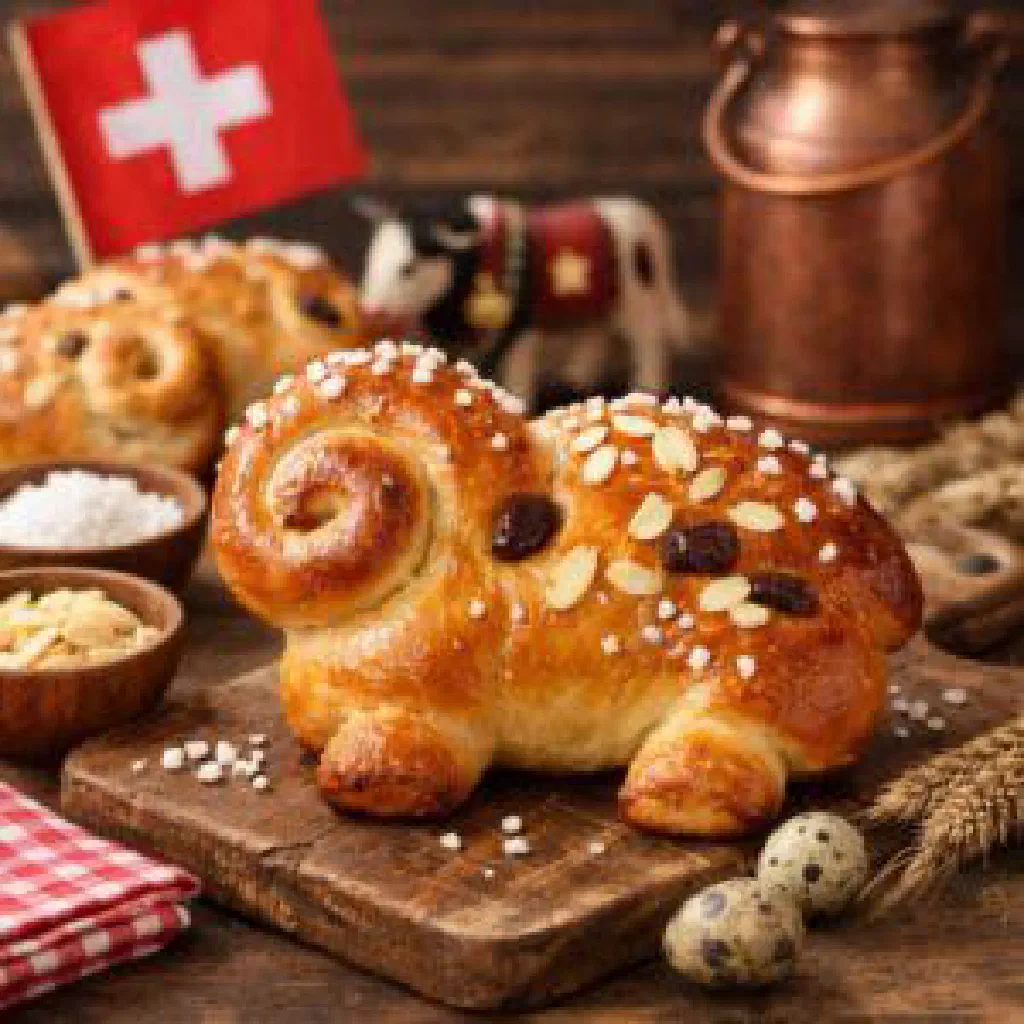
Meet the Einsiedler Schafböck, a gently sweet honey pastry that has been a treasured keepsake from the Swiss town of Einsiedeln for generations. Round, flat and traditionally pressed in a carved wooden mould, often with a little lamb motif, it lets the fragrant taste of honey take centre stage, with the spices kept deliberately in the background. Soft on the inside and golden on top, it is the perfect companion to a leisurely cup of coffee and a lovely edible souvenir to bring home.
About Einsiedler Schafböck
The Einsiedler Schafböck is not a savoury dish but a well-known Swiss pilgrim pastry from Einsiedeln. It is a disc-shaped, round honey cake, traditionally stamped in a decorative mould, frequently bearing a lamb design. In terms of flavour the honey clearly leads, while the spices are used sparingly. It is precisely this mild, delicately sweet character that makes the Schafböck such a popular gift and a classic bake for cosy coffee gatherings. Like the honey-rich Biberli, it belongs to a proud tradition of Swiss festive baking.
Ingredients (serves 1–2)
- 200 g flour (ideally Ruchmehl, or plain wheat flour type 1050)
- 80 g honey
- 60 g sugar
- 60 ml water
- 1 tsp bicarbonate of soda, or 1/2 tsp baker’s ammonia (hartshorn)
- 1 pinch of salt
- 1/2 tsp cinnamon (optional, use sparingly)
- 1 knifepoint of ground cloves (optional)
Shopping for the ingredients
For a successful Einsiedler Schafböck it pays to choose good-quality basics: an aromatic honey shapes the flavour more than anything else. For the flour, the Swiss often reach for Ruchmehl, though wheat flour type 1050 works very well as an alternative. Baker’s ammonia (hartshorn) is the traditional raising agent, as it gives the pastry its characteristic texture, but bicarbonate of soda is a practical stand-in if you cannot find it. Keep the spices restrained so the honey character stays firmly in the foreground.
Preparing the dish
To give the Schafböck its typical consistency, a little careful preparation goes a long way. Measure out all the ingredients and set them within reach. Warm the honey, sugar and water briefly until everything combines smoothly, then let the mixture cool a touch. Lightly flour your wooden mould (if you have one) so the dough releases cleanly later. If you are working without a mould, line a baking tray with parchment and simply shape the dough into small discs when the time comes.
Step-by-step instructions
- Gently warm the honey, sugar and water in a small pan until the sugar has dissolved, then let it cool to lukewarm.
- Mix the flour, salt and (optionally) cinnamon and ground cloves together in a bowl.
- Stir the bicarbonate of soda or baker’s ammonia through the flour.
- Add the lukewarm honey-sugar mixture to the flour and knead everything into a smooth, mouldable dough.
- Cover the dough and let it rest for at least 30 minutes (better still, 2–12 hours) so it becomes easier to work.
- Portion the dough, press it into a floured mould and ease it out carefully (or shape flat discs and place them on the tray).
- Bake in a preheated oven at 170–180 °C for about 10–14 minutes, until the surface is golden brown (do not over-bake, so the inside stays soft).
- Cool on a wire rack. If you like, brush the surface thinly with a little honey water for a glossy finish.
Gluten-free / lactose-free version
A lactose-free version is effortless, since the recipe contains no dairy at all. For a gluten-free take, swap the flour for a gluten-free cake and pastry flour blend. Be sure to choose a suitably labelled raising agent and avoid letting the dough dry out, gluten-free flours sometimes need a little extra liquid. That way the Schafböck stays pleasantly soft even without gluten.
Tips for vegans and vegetarians
The pastry is usually vegetarian without any changes. For a vegan version, replace the honey with maple syrup or sugar-beet syrup. Bear in mind that this shifts the aroma slightly and can change the browning a little. You can still keep the spices very mild so the bake does not turn too “gingerbready” and holds on to its typical restraint.
More tips and tricks
The most important point is the baking time: Schafböck should be golden brown but never too dark, or they turn dry. If you use a mould, press the dough in evenly so the motif comes out cleanly. A thin brushing of honey water after baking gives a lovely shine. Store the Schafböck in a well-sealed tin so they stay soft and aromatic for longer. For a traditional result, keep the spices deliberately sparing so the honey stands clearly in the foreground.
Adapting the recipe to your taste
You can happily tailor the Einsiedler Schafböck to your own palate without losing its character. A little lemon zest or a hint of vanilla adds a refined note. If you prefer something bolder, nudge up the cinnamon and clove, but go carefully, so it does not taste too much like gingerbread. The size is flexible too: small discs are ideal as coffee-time nibbles, while larger pieces make fine gifts.
Ingredient substitutions
If you cannot get Ruchmehl, wheat flour type 1050 works very well. Baker’s ammonia can be replaced with bicarbonate of soda; when using bicarbonate, a very small splash of lemon juice in the honey mixture can help support the rise (do not overdo it). For a purely plant-based version, honey can be swapped for maple syrup or sugar-beet syrup, though the flavour and colour will change slightly. The same swap works nicely in spiced treats such as the Baselbieter Läckerli.
Drink pairing ideas
Classic partners suit the Einsiedler Schafböck especially well: coffee, black tea or herbal tea all harmonise with its mild honey sweetness. On cold days a spiced apple punch or a light mulled wine makes a fitting match too. If you prefer something plain, serve a glass of a milk alternative or warm water with lemon. That keeps the honey flavour at the heart of things.
Serving and presentation ideas
Arrange the Schafböck on a wooden board or a pale platter so the golden surface really shows. It looks particularly charming when the stamped motif is clearly visible. A small dab of honey, a few nuts or some dried apple slices alongside underline the rustic character. As a gift idea, Schafböck work beautifully in a tin or little pouch, prettily labelled and finished with a ribbon.
A bit of history
The Einsiedler Schafböck is closely tied to the pilgrimage tradition around Einsiedeln. As a long-keeping honey pastry it made practical travel provisions and, at the same time, a popular gift for those left at home. Typical is the shaping in a mould, often with a lamb motif that carries cultural and religious meaning. To this day the Schafböck is regarded as a culinary emblem of Einsiedeln and is known far beyond the region, a proud thread in the wider story of Swiss cuisine.
More recipe ideas
Summary: Einsiedler Schafböck
The Einsiedler Schafböck is a traditional Swiss honey pastry that wins people over with its simple yet characterful recipe: flour and honey form the base, rounded out with sugar, water and a raising agent. Mildly spiced, baked golden brown and pleasantly soft inside, it is a perfect companion to coffee and tea as well as a classic gift. With just a few ingredients and a little care, you too can recreate this beloved bake at home, timeless, uncomplicated and thoroughly Swiss.