National Dish Syria: Tabbouleh (Recipe)
In this article
Discover Tabbouleh, Syria’s celebrated national dish and one of the freshest salads the Levant has to offer. A bright tumble of finely chopped parsley, nutty bulgur, ripe tomatoes and zingy lemon, it is as good for you as it is delicious. A mezze staple or a side at a summer barbecue, this authentic recipe is your gateway to the bright, herb-laden flavours of Levantine cooking.
About Tabbouleh
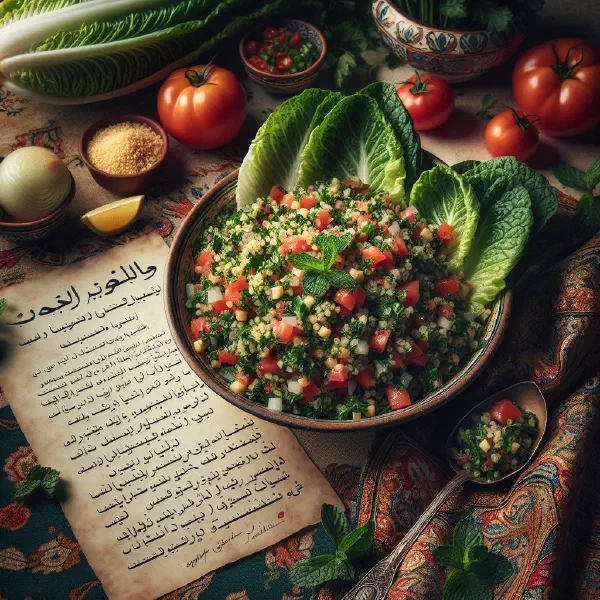
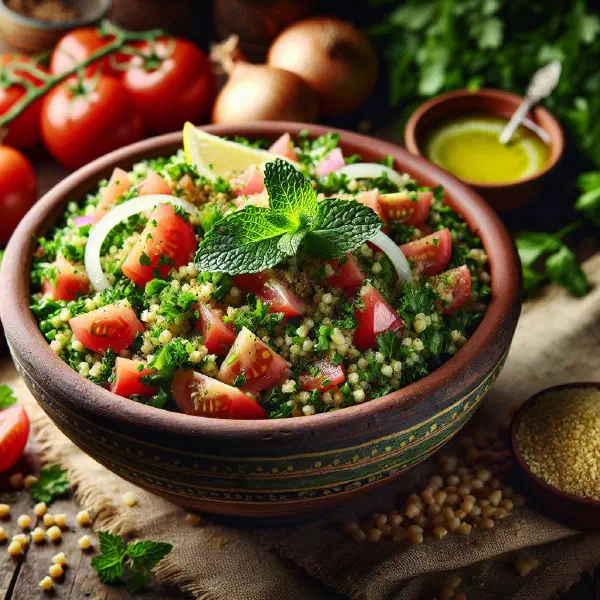
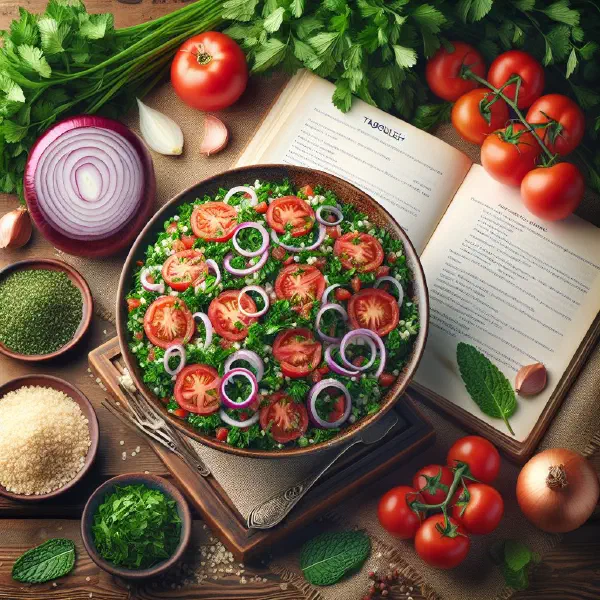
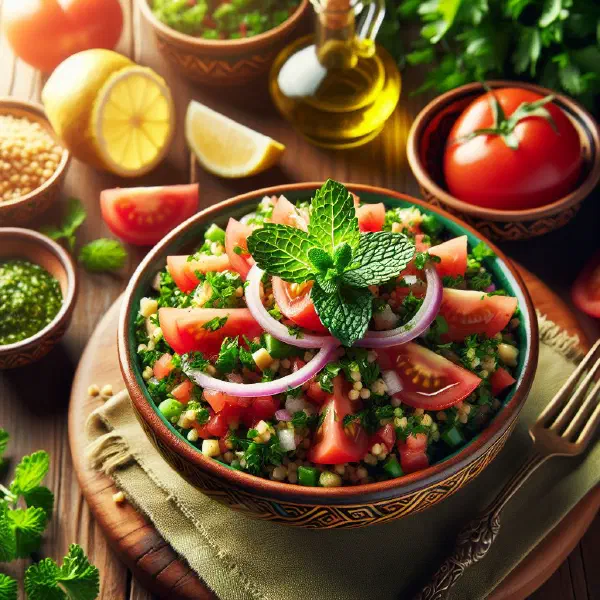
Tabbouleh is far more than just a salad. It is an aromatic temptation with its roots in the kitchens of the Middle East. In Syria in particular, its refreshing, health-boosting ingredients have earned it the status of a national dish. The characteristic combination of finely chopped parsley, bulgur, tomatoes, lemon juice and olive oil is what makes tabbouleh so special: it refreshes, nourishes and appeals to the palate all at once with a whole meadow’s worth of green, herbal flavours. Alongside classics such as Hummus and Fattoush, it is a cornerstone of any Levantine mezze table.
Ingredients (serves 1–2)
- 2 bunches fresh flat-leaf parsley (about 200 g)
- 100 g fine bulgur
- 3 ripe tomatoes
- 1 small onion or a few spring onions
- 30 g fresh mint
- Juice of 1 lemon
- 4 tablespoons olive oil
- Salt and black pepper, to taste
- Optional: 1 cucumber, finely diced
Shopping for the ingredients
When buying the parsley, look for fresh, lively leaves with no brown patches. For the bulgur, it is worth seeking out a fine grade, as it is not cooked but merely soaked. For the best flavour, reach for organic lemons and a good extra virgin olive oil.
Preparing the dish
Before you start assembling the salad, wash all the ingredients thoroughly. The parsley also needs to be shaken dry or spun in a salad spinner to remove any excess water, soggy herbs are the enemy of a good tabbouleh. Fine bulgur only needs a brief soak, so have a bowl and boiling water at the ready before you begin chopping.
Step-by-step instructions
- Soak the bulgur in boiling water and leave it to swell for 10–15 minutes.
- Meanwhile, finely chop the parsley and mint and place them in a bowl.
- Dice the tomatoes, onion and, if using, the cucumber, and add them to the herb mixture.
- Drain the soaked bulgur if necessary and add it to the remaining ingredients.
- Season everything with the lemon juice, olive oil, salt and pepper.
- Mix well and let the salad stand briefly before serving.
Gluten-free / lactose-free version
Tabbouleh contains no dairy at all, so it is naturally lactose-free. For a gluten-free version, simply replace the bulgur with quinoa. It soaks up the lemony dressing beautifully and keeps the salad light and wholesome. Cook the quinoa according to the packet instructions, let it cool completely and fold it through the herbs just as you would the bulgur.
Tips for vegans and vegetarians
Good news: classic tabbouleh is entirely plant-based, making it perfectly vegan just as it is. If you would like to turn it into a more substantial main course, stir in some chickpeas for extra protein. Vegetarians can also crumble in a little feta, which adds a salty, creamy note that works wonderfully with the fresh herbs and lemon.
More tips and tricks
For a more intense aroma, let the finished tabbouleh rest in the fridge for about an hour after preparing it. This gives the flavours time to mingle and develop fully, so the bulgur soaks up every drop of the lemon and olive oil dressing.
Adapting the recipe to your taste
If you prefer a gluten-free variation, you can swap the bulgur for quinoa. Beyond that, tabbouleh is easily transformed into an even more protein-rich dish by adding chickpeas or feta. It also makes a superb fresh counterpoint to hearty grilled dishes such as Shish Taouk.
Ingredient substitutions
If you cannot get hold of fresh mint, a pinch of dried mint or some fresh coriander makes a fine substitute. As an alternative to bulgur you could also use couscous, although the texture of the dish will change slightly.
Drink pairing ideas
A fresh, light white wine or a chilled rosé complements the flavours of tabbouleh beautifully. For non-alcoholic alternatives, try mint tea or freshly squeezed lemon juice topped up with water.
Serving and presentation ideas
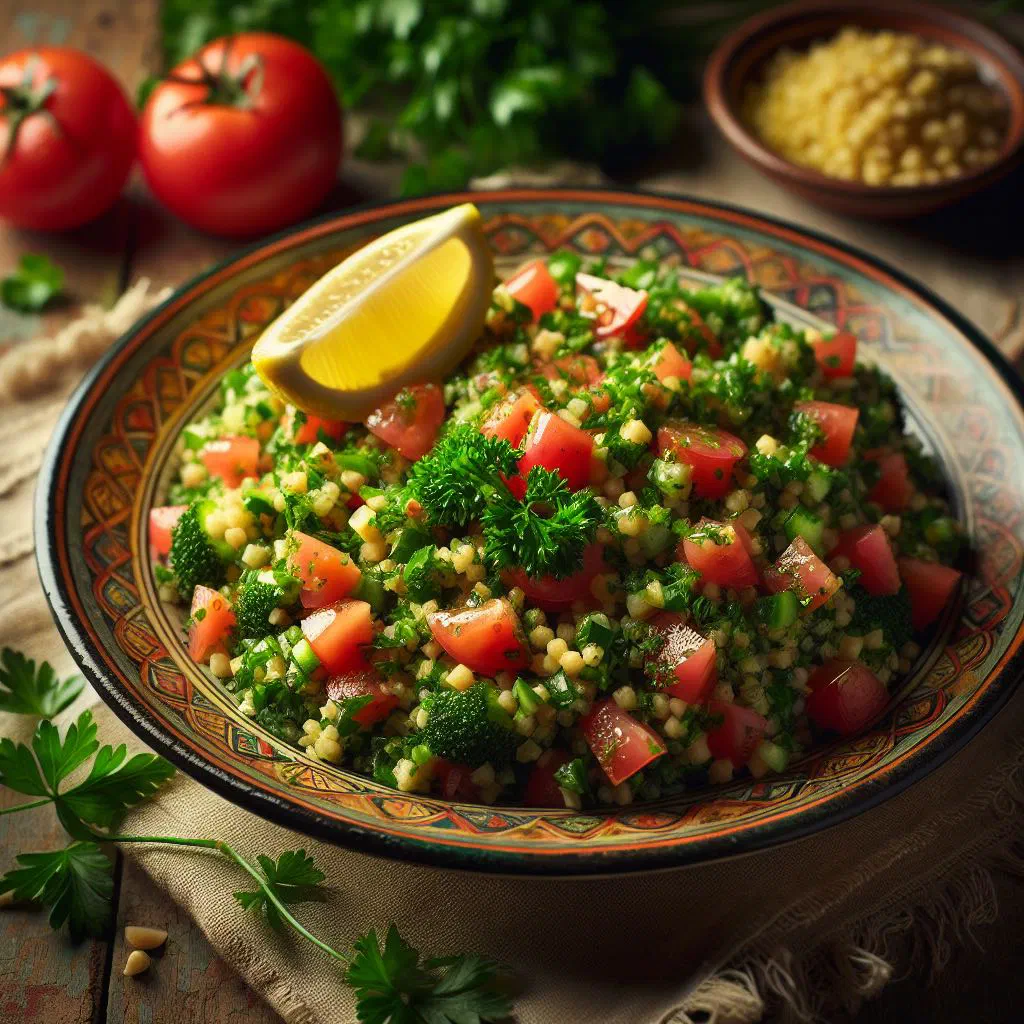
Present the tabbouleh in a pretty bowl, garnished with lemon wedges and a few whole parsley leaves. For an authentic experience, serve the salad with warm flatbread, or alongside crisp Falafel for a classic mezze pairing.
A bit of history
Tabbouleh has its origins in the Levant, a region that encompasses present-day countries such as Syria and Lebanon. It reflects the flavours and produce of the Mediterranean and has spread far beyond its borders, becoming an ambassador for Syrian cuisine around the world.
More recipe ideas
Summary: Tabbouleh
Tabbouleh is a simple, healthy and refreshing dish that earns its place on any menu. It is quick to prepare, endlessly adaptable and leaves plenty of room for creative variations. Give this Levantine classic a try, one forkful of its bright, herby freshness and you will understand why Syrians are so proud of it.