National Dish Tajikistan: Qurutob (Recipe)
In this article
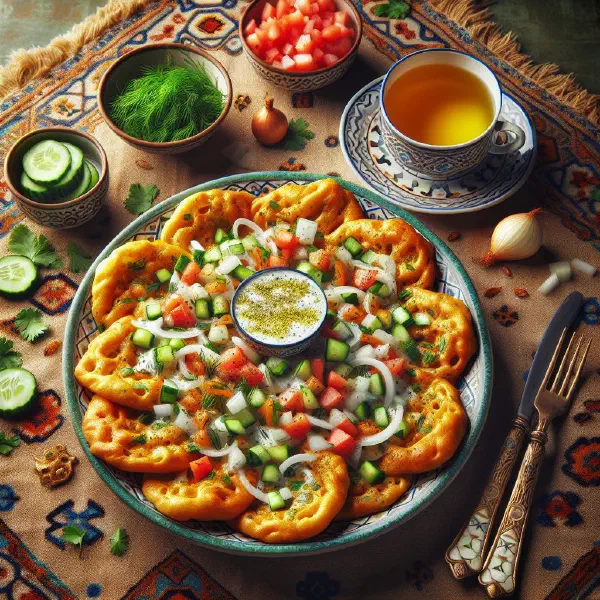
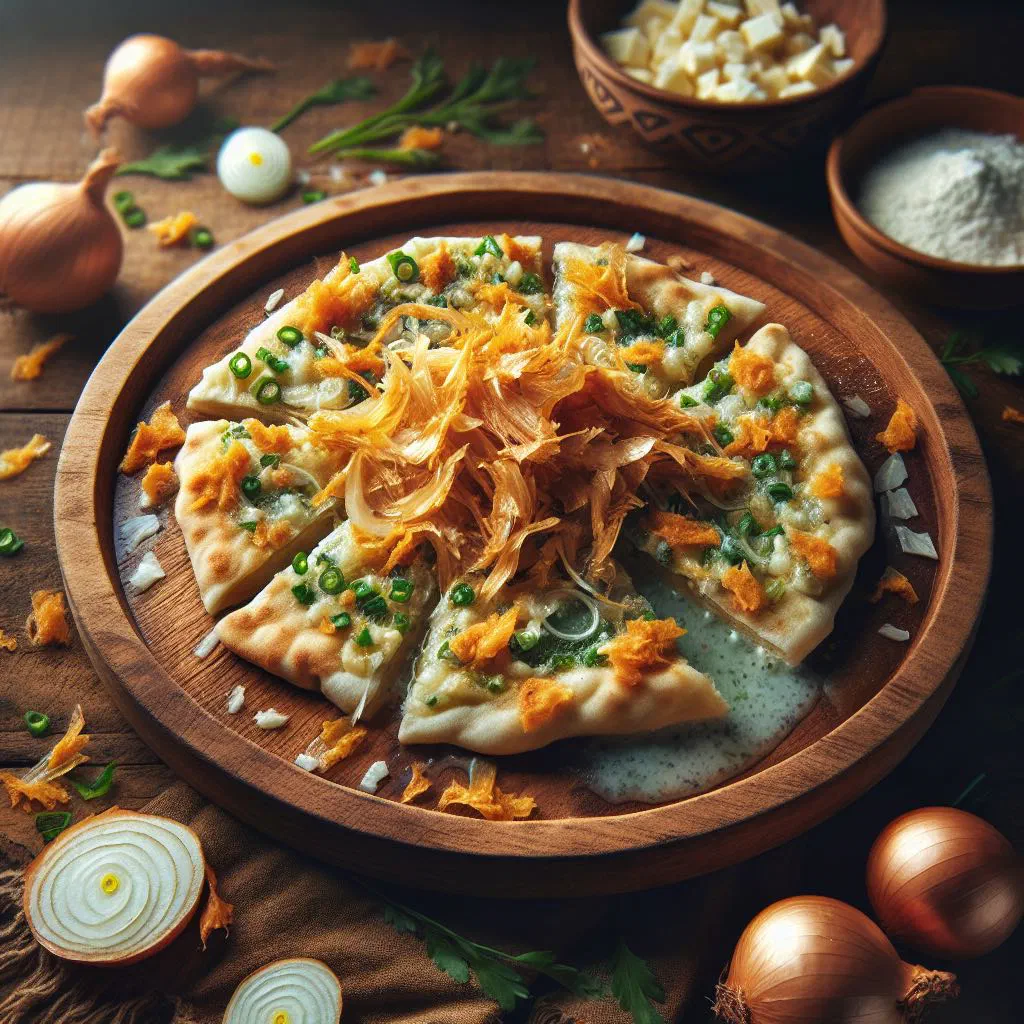
Qurutob is torn flatbread soaked in a broth made from dissolved dried yoghurt balls, topped with fried onions, tomato and a great deal of herbs. It is eaten by hand from a communal platter, and the name means qurut soaked.
About Qurutob
Qurut is dried, salted yoghurt formed into hard white balls that keep for years. Dissolved in hot water it makes a sharp, salty broth, and that broth is what makes qurutob.
The bread is fatir, a flaky layered flatbread made with fat. It absorbs the broth without dissolving, which ordinary flatbread does not.
Ingredients (serves 1–2)
- 2 pieces of fatir, or another flatbread base (about 200g)
- 50g spring onions, fresh and sliced
- 2 medium tomatoes, diced
- 100g fresh coriander, roughly chopped
- 50g fresh dill, chopped
- 2–3 pieces of qurut (dried yoghurt balls)
- 200ml water for the broth
- Salt and pepper to taste
- Optional: 100g cooked meat (beef or mutton), cut into strips
Shopping for the ingredients
Qurut is sold in Central Asian and Turkish shops, sometimes as kurut or qurt. It is rock hard and needs soaking. Greek yoghurt thinned with water and salted is the substitute and is noticeably milder. Fatir, or a layered paratha.
Preparing the dish
Soak the qurut in warm water for an hour, then work it with your fingers and strain it into a smooth, salty liquid. Tear the bread rather than cutting it, into pieces about 3 cm. Assemble at the last moment.
Step-by-step instructions
- Soak the qurut balls in warm water for an hour, then crush and strain into a smooth broth.
- Spread the torn bread across the base of a large bowl or platter.
- Fry the onions in a pan until they turn golden brown.
- Add the tomatoes, herbs and, if using, the meat, and let everything cook briefly.
- Heat the qurut broth until hot but not boiling.
- Season the broth with salt and pepper to taste; it may need none.
- Pour the broth over the bread, top with the onion and herb mixture, and serve immediately.
Gluten-free / lactose-free version
The bread is wheat, so a gluten-free flatbread is needed. Qurut is dairy and is the defining ingredient, so there is no meaningful lactose-free version.
Tips for vegans and vegetarians
Qurutob is vegetarian in its standard form; the meat is optional. A vegan version with a salted cashew or coconut yoghurt broth works reasonably, though the sharpness of real qurut is hard to match.
More tips and tricks
Taste before salting; qurut is very salty and the dish usually needs nothing added. Tear the bread rather than cutting it, so the edges are ragged and absorb better. And serve it immediately, because the bread turns to mush within minutes.
Adapting the recipe to your taste
Cream or butter stirred into the broth is a richer version. More herbs than seems reasonable is correct. Shakarob, the tomato and onion salad, is the summer relative.
Ingredient substitutions
Greek yoghurt thinned with water and heavily salted approximates qurut. Any flaky flatbread for fatir. Butter for the frying oil.
Drink pairing ideas
Green tea, drunk continuously in Tajikistan. Doogh, the salted yoghurt drink. Water alongside.
Serving and presentation ideas
One large shallow platter, no cutlery, everyone eating from the section in front of them with the right hand. That is the correct form and it is how the dish is served in Tajik teahouses.
A bit of history
Drying yoghurt into qurut is a preservation technique from a mountainous region with long winters, and it is common across Central Asia. Qurutob is specifically Tajik and is widely called the national dish. It anchors Tajik cuisine alongside plov.
More recipe ideas
Summary: Qurutob
Qurutob is torn flatbread soaked in dissolved dried-yoghurt broth with fried onions, tomato and herbs. Soak the qurut properly, tear the bread, taste before salting, and eat it at once.