National Dish Tanzania: Kisamvu (Recipe)
In this article
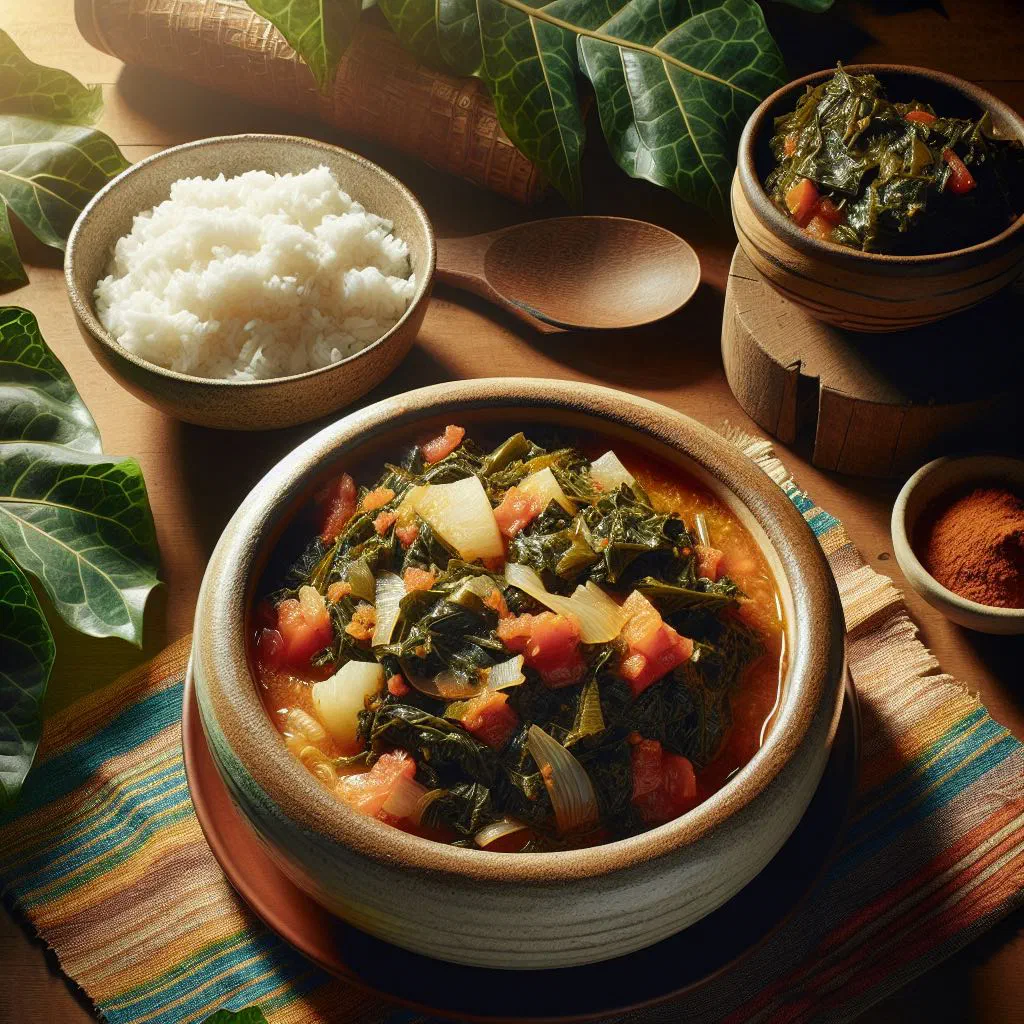
Discover Kisamvu, one of Tanzania’s most comforting everyday dishes. Tender cassava leaves are simmered down with garlic, chilli and creamy coconut milk, then finished with crushed roasted peanuts for a nutty richness that lingers. It is savoury, nourishing and endlessly satisfying, the kind of green stew that turns a plate of rice or ugali into a proper meal. A delicious journey into Tanzanian home cooking awaits.
About Kisamvu
Kisamvu is a traditional dish from Tanzania that wins people over with its deep, savoury flavour. The star ingredient is the leaf of the cassava plant, which plays an important role in kitchens right across Africa. The dish is delicious and genuinely nourishing and filling. The combination of aromatic spices and simple, honest ingredients makes kisamvu a real treat for the palate and a reflection of Tanzania’s rich and varied culture.
Ingredients (serves 1–2)
- 300 g cassava leaves
- 2 tablespoons peanuts, roasted and crushed
- 1 small onion, chopped
- 2 cloves of garlic, chopped
- 1–2 chillies, to taste
- 200 ml coconut milk
- Salt and pepper, to taste
- 2 tablespoons vegetable oil
- Fresh coriander, to garnish
Shopping for the ingredients
When making kisamvu, it is worth sourcing fresh ingredients wherever possible. Cassava leaves can be found in specialist African or Asian grocery shops, often frozen or finely pounded and ready to cook. The same shops usually stock the coconut milk and peanuts you need. If anything proves hard to track down locally, plenty of online retailers carry these staples and will deliver them to your door.
Preparing the dish
To give kisamvu the best possible start, wash the cassava leaves thoroughly and let them drain well. Chop the onion and garlic finely so their flavours melt into the sauce as it cooks. Add chilli to taste for a warming kick, or leave it out entirely for a gentler result. Have everything laid out beside the hob before you begin. It makes the cooking itself quick and relaxed.
Step-by-step instructions
- Heat the vegetable oil in a pan, add the onion and garlic, and sauté until golden brown.
- Add the chillies and the cassava leaves and fry for around 5–7 minutes.
- Pour in the coconut milk and stir until everything is well combined.
- Season with salt and pepper to taste, then stir in the roasted peanuts.
- Leave the kisamvu to simmer for another 10 minutes, until the flavours have come together.
- Serve hot, garnished with fresh coriander, alongside rice or Ugali.
Gluten-free / lactose-free version
Kisamvu is naturally gluten-free, as no gluten-containing ingredients go into it at any stage. To make sure the dish also suits anyone who is lactose intolerant, stick with coconut milk rather than dairy, which is exactly how it is made traditionally anyway. The full, creamy flavour stays intact without a trace of lactose. When buying peanuts, check the packaging for added gluten or milk-based coatings.
Tips for vegans and vegetarians
Kisamvu is an excellent choice for vegans and vegetarians, since every ingredient is plant-based from the outset. The combination of cassava leaves, coconut milk and peanuts delivers valuable nutrients and makes for a well-balanced plate. To make the dish even more substantial, add extra vegetables such as aubergine or peppers, much as you would in a Biringanya Curry. The method stays simple and the flavours harmonise beautifully.
More tips and tricks
To get the very best out of your kisamvu, adjust the seasoning as you go. Experiment with different spices such as turmeric or cumin to take the dish in new directions. A squeeze of lemon juice at the end lifts the aromas and adds a welcome freshness. Taste regularly while the pan simmers, so you can fine-tune the seasoning and hit exactly the right balance.
Adapting the recipe to your taste
One of the great strengths of kisamvu is how adaptable it is. The recipe can easily be shaped around your own personal preferences. If you like things hotter, add more chilli; if you prefer a creamier consistency, simply pour in more coconut milk. For a bit of crunch, scatter over toasted seeds or extra nuts as a topping, a small touch that adds real texture to the finished dish.
Ingredient substitutions
If you cannot find cassava leaves, spinach or Swiss chard make a fine stand-in and still give you a genuinely tasty result, much like the greens used in Mchicha or Matembele. Instead of peanuts you can use cashews or almonds for a different nutty note. The coconut milk can be swapped for another plant-based milk if you prefer. The key is simply that the ingredients work together in harmony.
Drink pairing ideas
Refreshing drinks round off a plate of kisamvu particularly well. A chilled tamarind juice or a glass of lemon water pairs beautifully with the dish’s savoury depth. If you prefer something sweeter, a fruit smoothie balances out the chilli heat nicely. Unsweetened teas and fruit infusions are equally welcome at the table.
Serving and presentation ideas
Presentation can make a real difference to how a meal is enjoyed. Serve kisamvu in a generous bowl and garnish it with freshly chopped coriander. Arranging it on a handsome plate with a side of rice or ugali shows off both the colours and the contrasting textures. Colourful dishes or wooden boards add a final authentic African touch to the table.
A bit of history
Kisamvu has deep roots in Tanzanian cooking and reflects the traditions of many different communities. Using cassava leaves is nourishing and a sustainable way of making the most of local resources. Nothing from the plant goes to waste. The dish often appears at large family gatherings and shared meals, underlining the sociability and togetherness at the heart of Tanzanian life. Its variety of ingredients makes it a classic example of the regional eating habits of Africa, passed down faithfully from one generation to the next within Tanzanian cuisine.
More recipe ideas
Summary: Kisamvu
Kisamvu is a delicious and nourishing dish that captures the essence of Tanzanian cooking. With its natural ingredients and its foundation of cassava leaves, it brings not only flavour but genuine cultural depth to the table. Whether for a special occasion or an ordinary weeknight supper, kisamvu is an outstanding choice for anyone drawn to the cuisines of the wider world.