National Dish Tunisia: Kabkabou (Recipe)
In this article
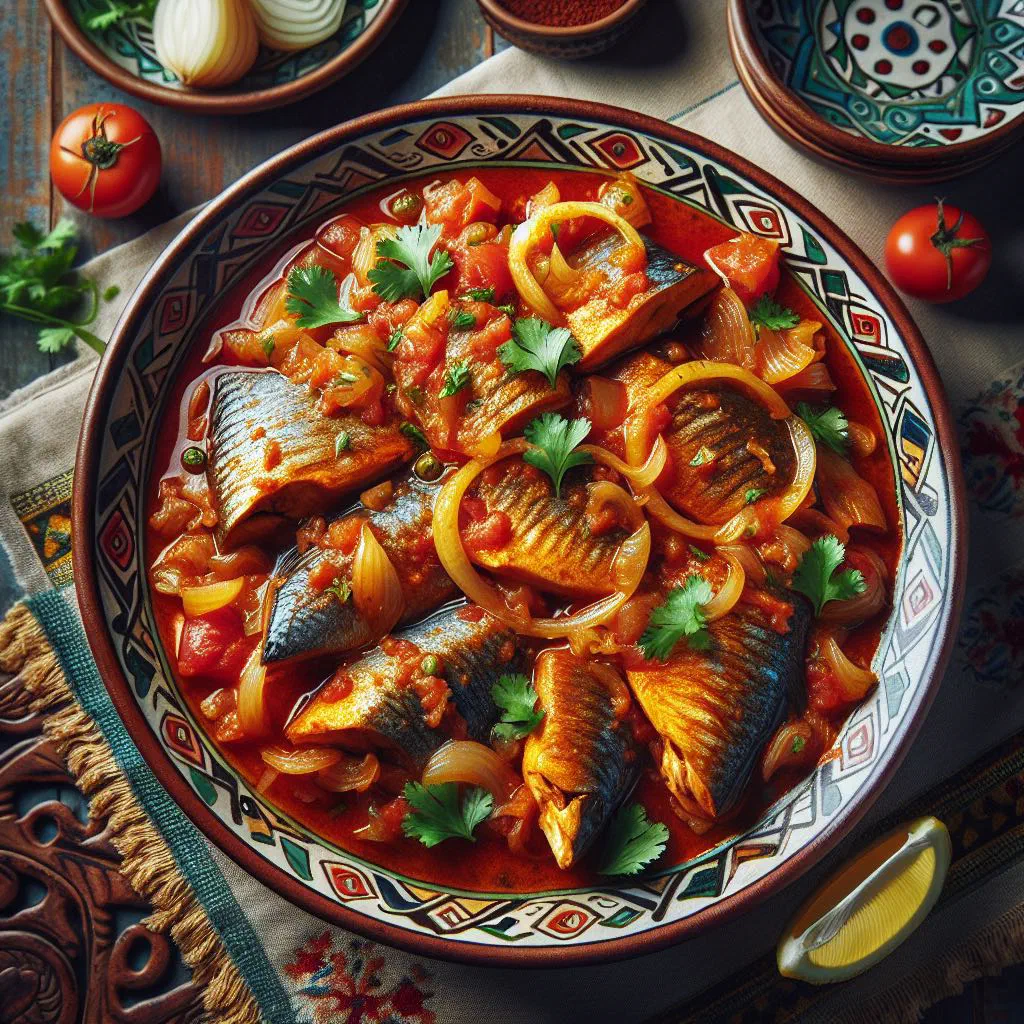
Kabkabou is Tunisian coastal cooking at its most characteristic: white fish braised in a tomato sauce sharpened with capers and preserved lemon and heated with harissa. The salt-lemon and the caper do the work that acidity does everywhere else, and the result is bright rather than heavy.
About Kabkabou
Kabkabou is the Tunisian fish stew that wins people over with a well-spiced tomato sauce, capers and preserved lemon. Firm white fish braises slowly in an aromatic sauce of tomatoes, garlic and harissa until it is meltingly tender. Served with fresh baguette or couscous, kabkabou is a classic of Tunisian coastal cooking, and it is on menus from Bizerte to Sfax.
Ingredients (serves 1–2)
- 2 fillets of firm white fish (cod, hake or grouper), about 300 g
- 1 large onion, finely diced
- 3 garlic cloves, chopped
- 2 tomatoes, peeled and diced (or 1 tin chopped tomatoes)
- 1 tablespoon tomato paste
- 2 tablespoons capers
- 1–2 slices preserved lemon, finely chopped (or lemon zest and juice)
- 1 teaspoon harissa, more to taste
- 1 teaspoon cumin
- 3 tablespoons olive oil
- Salt and pepper, to taste
- Fresh parsley or coriander, to garnish
Shopping for the ingredients
Preserved lemon is the ingredient that makes this dish Tunisian rather than merely Mediterranean, buy a jar from a North African or Middle Eastern shop and use only the rind, discarding the pulp. Harissa varies enormously in heat; taste yours first. Use a firm fish that will not break up.
Preparing the dish
Rinse the capers if they are salt-packed. Chop the preserved lemon rind finely. Season the fish and leave it aside while you build the sauce, the fish goes in only at the end and needs a few minutes at most.
Step-by-step instructions
- Heat the olive oil and soften the onion for 8 minutes until golden.
- Add the garlic, harissa and cumin and fry for 1 minute.
- Stir in the tomato paste and cook for 2 minutes.
- Add the tomatoes and 150 ml water and simmer for 15 minutes into a thick sauce.
- Stir in the capers and preserved lemon.
- Season with salt and pepper — go easy, since capers and lemon are salty.
- Lay the fish fillets into the sauce and spoon some over them.
- Cover and poach gently for 8–10 minutes; scatter with herbs and serve with bread or couscous.
Gluten-free / lactose-free version
Kabkabou is naturally gluten-free and lactose-free. Serve it with rice or couscous made from a gluten-free grain rather than bread if you need to avoid wheat; check the harissa label for additives.
Tips for vegans and vegetarians
The sauce is excellent without fish. Chickpeas, aubergine or cauliflower braised in it make a vegan version that keeps the capers and preserved lemon doing what they do best, and this is a genuinely common Tunisian variation.
More tips and tricks
Do not stir once the fish is in; spoon sauce over it instead, or it breaks up. Taste before salting, since capers and preserved lemon bring plenty. And use only the rind of the preserved lemon, the pulp is unpleasantly salty and bitter.
Adapting the recipe to your taste
Green olives alongside the capers are a common addition. Potatoes cooked in the sauce make it a fuller meal. More harissa is very much in keeping with Tunisian taste.
Ingredient substitutions
Any firm white fish works, and prawns are good too. Lemon zest with a pinch of salt approximates preserved lemon. Sambal or another chilli paste can stand in for harissa.
Drink pairing ideas
A Tunisian white or rosé, the country has a real wine industry, suits it well. Mint tea follows the meal. Sparkling water with lemon is the plain alternative.
Serving and presentation ideas
Serve kabkabou in the pan it cooked in, with plenty of baguette for the sauce and a bowl of harissa on the table. Lemon wedges and fresh herbs on top. It is family food and needs no arranging.
A bit of history
Tunisia’s long coastline gave it a fish-based cooking distinct from the lamb and couscous of the interior, and the combination of tomato, harissa and preserved lemon runs through it. Harissa itself is essentially Tunisia’s national condiment, present in almost everything savoury. It offers a genuine window onto Tunisian cuisine.
More recipe ideas
Summary: Kabkabou
Kabkabou is white fish poached in a harissa-spiced tomato sauce with capers and preserved lemon. Build the sauce first, add the fish last, and never stir once it is in.