
National Dish Turkey: Turkish Flatbread (Recipe)
In this article
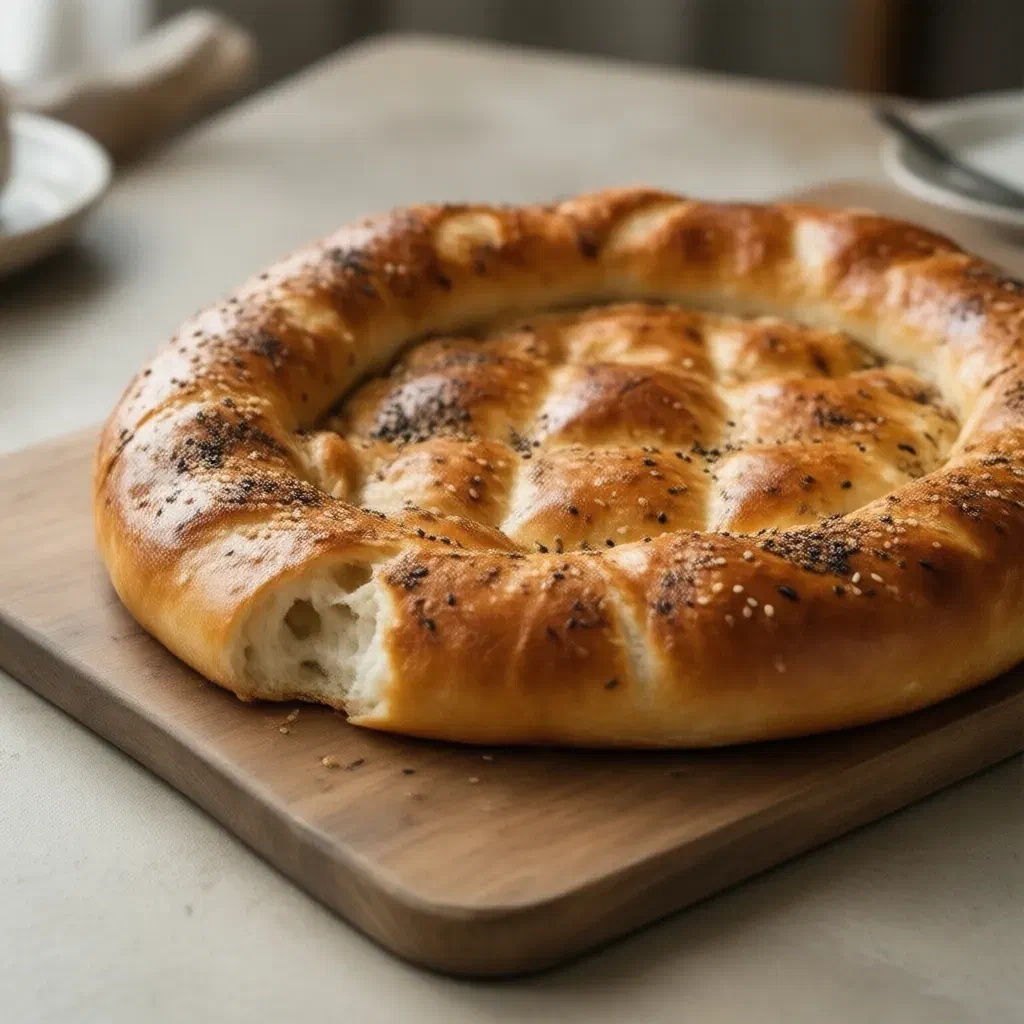
A Turkish flatbread is so soft inside that you tear it rather than slice it. The top is glossy, scattered with sesame and nigella seeds and marked with a diamond pattern that you press in with your fingers. For a loaf about 30 cm long you need 250 g of flour and around two hours, most of it waiting time.
About Turkish Flatbread
Turkish flatbread is the name given in Germany to the soft, oval yeast bread sold in Turkish bakeries and supermarkets. In Turkey its closest match is Ramazan Pidesi, which is baked fresh during the fasting month of Ramadan for breaking the fast in the evening. The dough is very soft and, after rising, is only pressed flat, never rolled out. Before baking it gets a glaze of egg yolk and yoghurt, which turns brown and glossy in the hot oven. The bread is mild, lightly salted and full of large holes. It is eaten with soups, salads and grilled meat, and in Germany above all as the wrap for döner.
Ingredients (serves 1–2)
- 250 g wheat flour, Type 550 (a medium-strength bread flour)
- 165 ml lukewarm water
- 5 g fresh yeast (or 1/2 tsp dried yeast)
- 1/2 tsp sugar
- 5 g salt (1 level tsp)
- 1 tbsp olive oil
- 1 egg yolk
- 1 tbsp plain yoghurt
- 1 tsp olive oil for the glaze
- 1 tsp white sesame seeds
- 1/2 tsp nigella seeds (çörek otu)
- a little flour for the work surface
Shopping for the ingredients
Nigella seed, often called black cumin, is not related to cumin. The small, black, angular seeds are called çörek otu in Turkish and taste slightly bitter, of onion and thyme. You will find them in Turkish grocers, Asian shops or the spice aisle of large supermarkets. Unhulled sesame seeds toast more strongly than hulled ones. Type 550 wheat flour absorbs more water than Type 405 and gives the bread structure. Fresh yeast is in the chiller cabinet, while dried yeast keeps for longer.
Preparing the dish
Dissolve the yeast and sugar in the lukewarm water and leave the mixture for 5 minutes, until small bubbles appear. The water should feel lukewarm on your fingertip, as anything over 40 °C harms the yeast. Have a bowl ready and oil it lightly. Line a baking tray with baking paper. For two loaves, double all the quantities and bake them side by side on one tray.
Step-by-step instructions
- Put the flour and salt in a bowl, pour in the yeast water and 1 tbsp olive oil, and knead everything for 8 to 10 minutes into a soft, slightly sticky dough.
- Place the dough in the oiled bowl, cover it and leave it to rise in a warm place for 60 to 75 minutes, until doubled in size.
- Tip the dough onto the floured tray and, with floured hands, press it into an oval of about 28 × 20 cm and 1.5 cm thick.
- Cover it with a cloth and leave it to rest for another 20 minutes. Meanwhile, preheat the oven to 240 °C (conventional, top and bottom heat).
- Stir together the egg yolk, yoghurt and 1 tsp olive oil and brush the mixture generously over the dough.
- With your fingertips, first press in a border of 1.5 cm, then press a diamond pattern deep into the dough, until your fingers can almost feel the tray.
- Scatter over the sesame and nigella seeds and bake the bread on the middle shelf for 12 to 15 minutes, until golden brown.
- Wrap the bread in a clean tea towel as soon as it comes out of the oven, so that the crust stays soft.
Gluten-free / lactose-free version
Gluten-free flatbread only works with a gluten-free bread mix that contains psyllium husk or guar gum. Use 250 g of it and around 220 ml water. The dough stays more like a thick paste, which you shape with wet hands. For the lactose-free version, replace the yoghurt in the glaze with lactose-free yoghurt or simply with 1 tbsp lactose-free milk. The dough itself contains no milk.
Tips for vegans and vegetarians
The bread is vegetarian anyway. For a vegan glaze, stir 1 tbsp soya yoghurt with 1 tsp olive oil, 1 tsp maple syrup and 1 tbsp oat drink. The crust turns out a little paler but still shines. You do not need to change the dough, as it is already vegan. If you want more colour, add a pinch of sugar to the glaze.
More tips and tricks
The dough must stay soft and a little sticky, so do not add extra flour while kneading. A dough that is too firm makes a dry bread. Press the pattern in really deeply, otherwise it closes up again in the oven. A dish of hot water on the floor of the oven keeps the crust thin. Flatbread tastes best on the day it is baked. Frozen, it keeps for two months, and reheated at 200 °C it turns soft again in 5 minutes.
Adapting the recipe to your taste
For a bread to go with a barbecue, scatter a little dried oregano or chilli flakes over it along with the sesame. Using 50 g wholemeal flour in place of part of the white flour gives a heartier loaf. Small flatbreads 12 cm across are good for köfte or falafel and need only 9 to 10 minutes. An extra teaspoon of sugar in the dough gives a darker crust.
Ingredient substitutions
If you have no nigella seeds, use only sesame or a little cumin. The flavour will be different but still works. Instead of egg yolk in the glaze, a whole beaten egg with a spoonful of milk will do. The yoghurt can be replaced with milk. You can swap the Type 550 wheat flour for Type 630 spelt flour, in which case use 10 ml less water.
Drink pairing ideas
In Turkey, flatbread with grilled food goes with Ayran, the salty yoghurt drink. At breakfast people drink black çay from small tulip-shaped glasses. A lemonade with fresh mint suits summer, and pomegranate juice topped up with sparkling mineral water goes well with hearty grilled dishes.
Serving and presentation ideas
Put the whole loaf on a wooden board in the middle of the table and tear it open along the diamonds only once everyone is seated. Small bowls of olive oil, Cacık or pepper paste for dipping go well alongside. For döner, cut a quarter open along the side and warm it briefly.
A bit of history
Flat breads made from wheat dough have a very long tradition in Anatolia. The patterned Ramazan Pidesi is closely tied to the fasting month, when bakeries in Turkey bake it in large quantities before sunset. Turkish migrant workers brought this kind of bread to Germany, where it is sold as Fladenbrot. It became famous as the bread for Döner Kebab, which is said to have been sold in bread for the first time in Berlin in the early 1970s. Who first served it that way is disputed.
More recipe ideas
For even more ideas, discover more Turkish recipes.
Summary: Turkish Flatbread
A soft dough, a deeply pressed pattern and strong heat are what make this bread. With 250 g of flour, a little patience while it rises and a glaze of egg yolk and yoghurt, it works in an ordinary home oven too. Wrapped in a cloth, it stays soft until you eat it.


