National Dish Uganda: Atapa (Recipe)
In this article
Meet Atapa, one of Uganda’s great everyday staples, a firm, satisfying dough of cassava and millet that turns any sauce into a proper meal. It is quick to make, needs barely a handful of ingredients and rewards nothing more than a steady arm and a wooden spoon. Serve it warm alongside beans, greens or a rich groundnut sauce, and you have a plate that families across eastern Uganda have relied on for generations.
About Atapa
Atapa is a classic staple dish in Uganda, usually cooked into a firm, dense paste that acts as the base for savoury sides. Its defining character comes from the combination of cassava flour and millet or sorghum flour, which together give the dish its body and gently nutty depth. Depending on the region, or simply the family cooking it, Atapa is made either neutral in flavour or lightly sour, often with a spoonful of tamarind stirred through. It is very much a dish of shared tables: broken off by hand, dipped and eaten with whatever stew is on offer.
Ingredients (serves 1–2)
- 150 g cassava flour (ideally fermented and dried, as is traditional)
- 50–80 g millet flour or sorghum flour
- 500–700 ml water, depending on how firm you want it
- 1 pinch of salt (optional)
- 1–2 teaspoons tamarind juice or tamarind paste (optional, for a gently sour note)
- A side of your choice: bean or groundnut sauce, vegetables, fish or meat
Shopping for the ingredients
Cassava flour and millet or sorghum flour are most easily found in African grocery shops or on the international shelves of a well-stocked supermarket. Look for finely milled flour, as this gives the smoothest result. If you would like to include tamarind, seek out tamarind paste or tamarind juice, usually stocked alongside the African and Asian ingredients. Everything else you need is likely already in your kitchen.
Preparing the dish
Begin by mixing the cassava flour and the millet or sorghum flour together while both are still dry, which prevents lumps from forming later on. Then stir in part of the water until you have a smooth, pourable mixture, rather like the starting point for a porridge. If you are using tamarind, add it straight into this mixture so the flavour is evenly distributed. Have your sauce or side ready before you start cooking, as Atapa is best eaten hot from the pan.
Step-by-step instructions
- Bring roughly 400 ml of water to the boil in a saucepan.
- In a bowl, whisk the cassava flour and millet or sorghum flour with 100–300 ml of cold water until completely smooth and free of lumps.
- Pour the slurry into the boiling water while stirring constantly.
- Reduce the heat to medium-low and keep stirring vigorously until the mixture thickens noticeably.
- Cook the Atapa for 5–10 minutes, still stirring, until you have a firm dough that pulls away from the base of the pan. If it stiffens too much, add hot water a splash at a time.
- Optional: season with a pinch of salt. If using tamarind, add only enough for a mild acidity.
- Serve hot — traditionally as a firm base for sauce or a side dish.
Gluten-free / lactose-free version
In its basic form Atapa is naturally gluten-free, since cassava, millet and sorghum all contain no gluten, and it is lactose-free as well. That makes it an excellent staple for anyone avoiding wheat. Do check the sides you serve alongside it, though: shop-bought sauces and stock cubes can hide gluten-containing thickeners or milk powder. A homemade bean or peanut sauce keeps the whole plate safely free of both.
Tips for vegans and vegetarians
Atapa is entirely plant-based on its own, so a vegan meal is simply a matter of what you put beside it. It goes beautifully with beans, okra, spinach and other greens, or with a rich peanut sauce such as Ugandan Peanut Sauce. For extra protein, add lentils, chickpeas or pan-fried tofu. A generous portion of stewed vegetables turns the dish into something genuinely nourishing rather than merely filling.
More tips and tricks
- Avoiding lumps: always mix the flour with cold water first, then add it to boiling water.
- Controlling the texture: more water makes it softer, less water makes it firm enough to slice.
- A traditional touch: a small amount of tamarind rounds out the flavour and adds a gentle tang.
Adapting the recipe to your taste
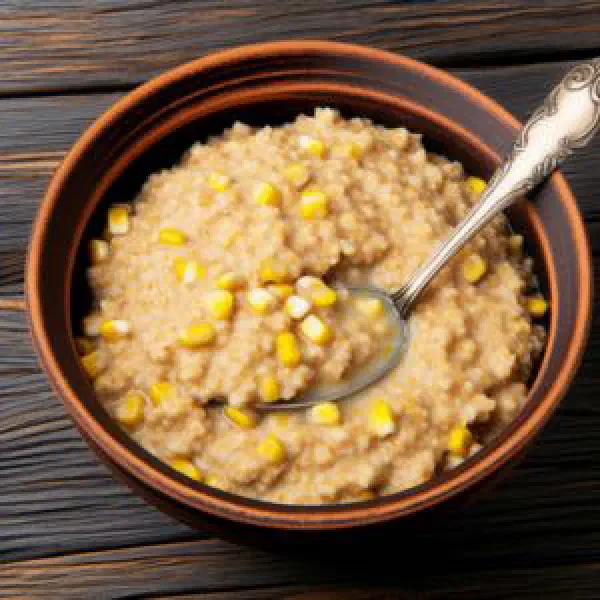
The ratio of flours is entirely yours to play with. More millet or sorghum gives Atapa a grainier, firmer character, while more cassava makes it smoother and softer on the palate. If you prefer things very mild, leave the tamarind out altogether. Some cooks also serve it slightly looser, closer to the texture of a porridge such as Millet Porridge, which suits it well at breakfast.
Ingredient substitutions
If sorghum flour is nowhere to be found, millet flour makes a straightforward swap, and vice versa. Should you have neither to hand, a pure cassava version is perfectly possible, though a second flour is usually added because it improves the structure and keeps the dough from turning sticky. Lemon juice can stand in for tamarind at a pinch, used sparingly for the same gentle sourness.
Drink pairing ideas
Water, unsweetened tea or fresh fruit juices such as mango or passion fruit all suit Atapa nicely, keeping the palate clear between mouthfuls of a robust sauce. For something more traditional, look to regional drinks according to what you can source, including Ugandan Banana Wine. A cool hibiscus infusion is another refreshing option on a warm day.
Serving and presentation ideas
Shape the Atapa with a spoon into a smooth dome, or turn it out as a firm block into a shallow bowl. Place the sauce or side beside it rather than mixing it in, so the consistency stays intact and each mouthful can be dipped as you go. A large communal platter with a mound of Atapa in the centre and several colourful sides around the edge makes for a generous, welcoming table.
A bit of history
Atapa, also known as Atap, is closely bound up with the regional food cultures of Uganda. The version most often described is built on cassava mixed with millet, sometimes sharpened with tamarind, and it has long served as a staple among the Iteso people of the east. Like other flour-based staples in Ugandan cuisine, think of Posho or Kalo, it grew out of the crops that thrive locally and the practical need for a filling, affordable base to accompany whatever stew the day allowed.
More recipe ideas
Summary: Atapa
Atapa is a traditional Ugandan staple made from cassava, typically combined with millet or sorghum and, if you like, seasoned with a little tamarind for a gentle sourness. Cooked into a firm paste that stands somewhere between a bread and a porridge, it is designed to be served with sauces and hearty sides. It is naturally gluten-free, endlessly adaptable and requires little more than flour, water and patience. Give it a try and discover one of the quiet cornerstones of Ugandan home cooking.