National Dish Uganda: Luwombo (Recipe)
In this article
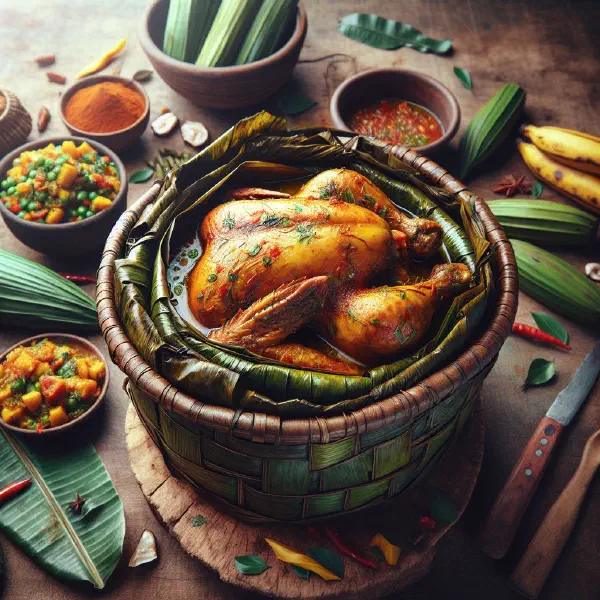
Few dishes tell the story of a country as neatly as Luwombo, Uganda’s celebrated steamed parcel of meat and rich sauce. Tender chicken or beef is bundled into softened banana leaves with onion, tomato, ginger and a spoonful of peanut butter, then gently steamed until everything turns meltingly soft. The parcel keeps every drop of juice and every wisp of aroma locked inside, and opening it at the table is half the pleasure.
About Luwombo
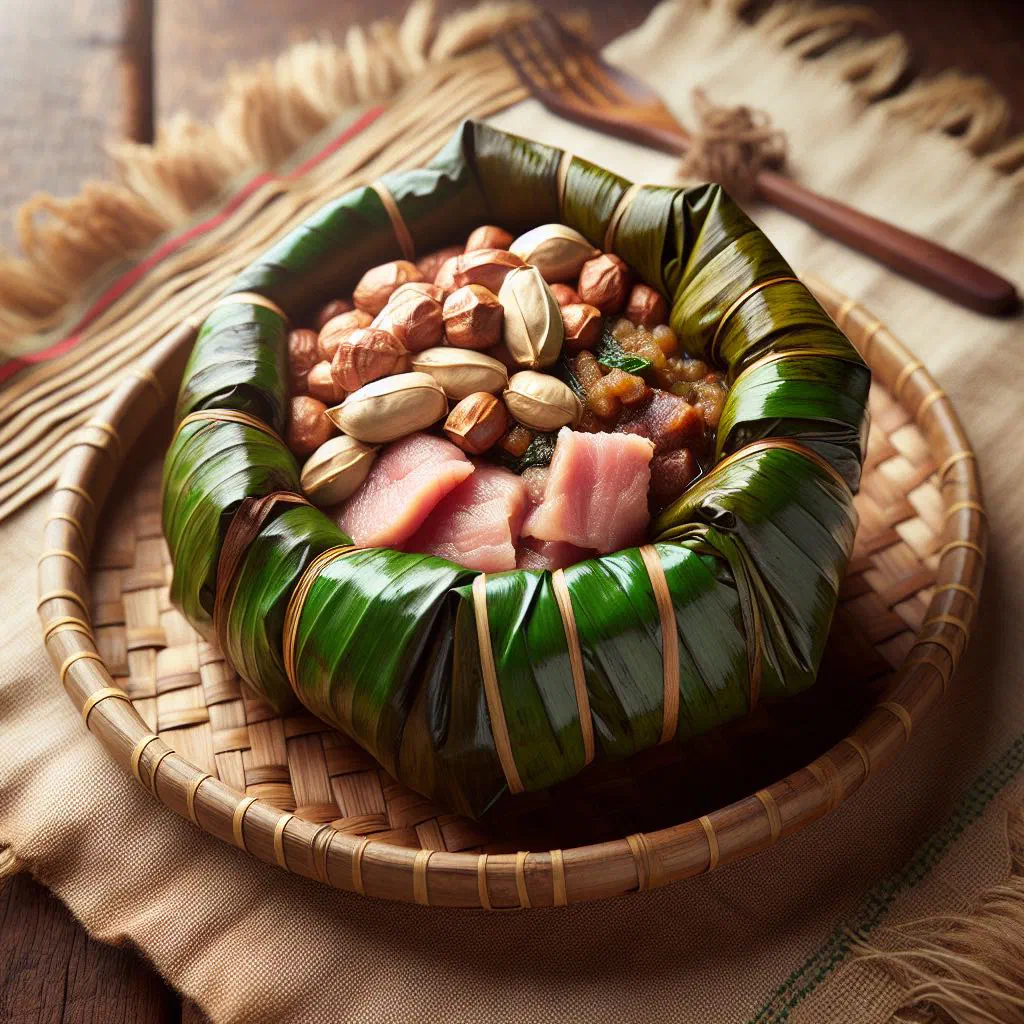
Luwombo is a traditional Ugandan dish in which seasoned meat is wrapped in banana leaves and cooked slowly over steam. The leaf acts as both cooking vessel and seasoning: it traps the sauce, concentrates the flavours and lends the finished dish a faint, grassy sweetness you simply cannot get from a pot. Chicken and beef are the most common fillings, though groundnuts, mushrooms and smoked fish all appear in regional versions. Reserved for weddings, holidays and important guests, Luwombo is a festive dish in the truest sense.
Ingredients (serves 1–2)
- 500 g chicken or beef, cut into pieces
- 2 large banana leaves, washed and dried
- 1 large onion, chopped
- 2 tomatoes, diced
- 2 garlic cloves, finely chopped
- 1 teaspoon freshly grated ginger
- 1 tablespoon peanut butter
- 1 cup chicken or vegetable stock
- Salt and pepper to taste
Shopping for the ingredients
Look out for fresh banana leaves, since they play a central role in the cooking process. Asian and African grocers usually stock them, either fresh or frozen, and frozen leaves work perfectly well once thawed. Choose good-quality meat and fresh aromatics too, with so few ingredients, each one carries real weight in the finished dish, much as it does in a simple Ugandan Meat Stew.
Preparing the dish
Before you start cooking, blanch the banana leaves by dipping them briefly into boiling water so they become supple and stop tearing when folded. It also helps to chop all your ingredients finely and lay them out in advance, so the assembly goes quickly and calmly. A well-prepared work surface makes wrapping the parcels far easier.
Step-by-step instructions
- Heat a little oil in a pan and brown the meat all over.
- In a separate bowl, whisk the peanut butter into the stock to make a smooth paste.
- Place the browned meat, chopped onion, tomatoes, garlic, ginger and the peanut-stock mixture onto a banana leaf.
- Season with salt and pepper.
- Fold the banana leaf carefully around the filling to form a neat parcel.
- Repeat with a second banana leaf to make sure none of the sauce can escape.
- Steam the parcel in a pan fitted with a steamer basket for about 1–2 hours, depending on the meat you have chosen.
- Once the meat is tender, open the parcel carefully and serve the Luwombo straight away.
Gluten-free / lactose-free version
Luwombo is naturally gluten-free and lactose-free, since it relies on meat, vegetables and banana leaves rather than flour or dairy. Do check that your stock and peanut butter carry no hidden additives, as some commercial brands include wheat-based thickeners or milk powder. Served with plain Matooke or steamed rice, the meal stays entirely free of both gluten and lactose.
Tips for vegans and vegetarians
A vegan Luwombo is straightforward: swap the meat for mushrooms, aubergine, beans or chunks of sweet potato, and use a well-flavoured vegetable stock. The peanut butter still provides the rich, nutty body that defines the sauce, so nothing essential is lost. Give plant-based fillings a shorter steam, around 45 minutes is usually plenty, so the vegetables stay firm rather than collapsing.
More tips and tricks
If you do not own a steamer basket, sit the parcel on a rack over a pan of boiling water and cover it with a tight lid. Make sure the water never touches the parcel itself, and top it up as it evaporates so the pan does not boil dry. Tying the bundle with a strip of banana leaf or kitchen string keeps it securely closed throughout the long, slow steaming.
Adapting the recipe to your taste
Luwombo takes happily to adjustment. Use vegetables in place of meat for a vegetarian version, or dial the heat up with chilli or paprika to suit your own palate. Some cooks add a handful of groundnuts for extra texture, while others lean into a smokier, deeper sauce in the style of Ugandan Peanut Sauce. The method stays the same whichever route you take.
Ingredient substitutions
If banana leaves are nowhere to be found, aluminium foil makes a workable stand-in, though it does soften the traditional character of the dish. Baking parchment tied into a parcel is a gentler alternative that behaves more like the leaf. Cashew or almond butter can replace peanut butter if nut preferences differ, and beef stock deepens the sauce nicely when you are cooking with red meat.
Drink pairing ideas
Robust wines such as a Pinotage or a rounded Chardonnay stand up well to the nutty richness of Luwombo. For something non-alcoholic, ice-cold hibiscus tea or a fruity juice cuts through the sauce beautifully. A locally inspired option is Ugandan Banana Wine, whose gentle sweetness echoes the banana leaf itself.
Serving and presentation ideas
Serve the Luwombo still in its banana leaf and open it at the table so your guests catch the first rush of fragrant steam. Garnish with fresh herbs for a burst of colour against the dark sauce. Bowls of Posho or soft steamed plantain alongside round out the plate and soak up every last spoonful.
A bit of history
Luwombo is said to have been created in the late nineteenth century by the personal cook of the Kabaka, the king of Buganda. It was devised for royal banquets and has kept its ceremonial standing ever since, appearing at weddings, introductions and other important gatherings. That royal origin explains why the dish sits at the very heart of Ugandan cuisine, representing a living link between the country’s culture and its history.
More recipe ideas
Summary: Luwombo
Luwombo is an authentic Ugandan dish full of aroma and tradition, and one that rewards a little patience at the stove. The banana leaf does far more than hold the food together. It shapes the flavour of everything inside it. Beef or vegetables, the result is a tender, richly sauced meal with real occasion about it. Give this recipe a go and step straight into the flavours of East Africa.